|
 |
 | | | | | | |||||||||||||||||||||||||||||||||||||||||||||||||||||||||||||||||||||||||||||||||||||||||||||||||||||||||||||||||||||||||||||||||||||||||||||||||||||||||||||||||||||||||||||||||||||||
| | | You are in: Business | |||||||||||||||||||||||||||||||||||||||||||||||||||||||||||||||||||||||||||||||||||||||||||||||||||||||||||||||||||||||||||||||||||||||||||||||||||||||||||||||||||||||||||||||||||||||||
|
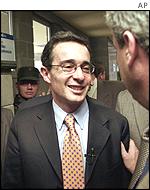
| | Friday, 24 May, 2002, 14:39 GMT 15:39 UK Colombian unions demand change Trade unions want an end to paramilitary murders Trade unions in Colombia have called for a radical change in government in elections this Sunday, as the number of their members killed by paramilitaries this year hits 60. Eleven candidates are contesting the presidential poll, with the neo-liberal Alvaro Uribe set to take over from President Andres Pastrana and his Conservative party, according to opinion polls.
"We live in barbarity in Colombia," said Luis Hernandez, president of Colombian public sector union Sintraemcali, told BBC News Online. The country, where the civil war claims over 20,000 lives annually, is considered the most dangerous place in the world to be a trade unionist by the International Labour Organisation (ILO). "The whole process of persecution is because of our fight against privatisation, neo-liberalism and globalisation," said Mr Hernandez. "The reason paramilitaries target and assassinate trade union leaders is that they interfere with the smooth running of business," he said adding a member of his union was murdered on last Monday. ILO has reported that 185 trade unionists were killed last year and that the situation is deteriorating. Colombian choice Alvaro Uribe, formerly of the Liberal party, favours an escalation of the military solution to the civil war and supports free trade and further integration with the US. Horacio Serpa, the official Liberal party candidate who is second in the opinion polls, opposes Mr Uribe's military stance, advocates greater state intervention in the economy, and closer regional economic integration.
He has campaigned for complete break with the current economic programme. "He is very different from the traditional parties that control Colombia," said Mr Hernandez, adding "he is not contaminated". Mr Pastrana's Conservative party is so unpopular it has chosen not to field a candidate. If no candidate obtains more than 50% of the vote, run-off elections will be held on 16 June. Economic crisis The International Monetary Fund in February praised Colombia's "considerable macroeconomic stabilisation". It said the present government "acknowledged" the need to continue with the lenders economic policies of debt repayment, cuts in public spending and privatisations.
Seventy-eight percent of Colombia's 42 million citizens live below the poverty line and unemployment is at record levels of about 20%. The economy will have to grow by at least 4% a year for more than a decade to reduce poverty to below its pre-recession level, estimates the World Bank. Last month, Bogota forecast the economy would grow at 10% next year, but this year it is projecting 2.5%, well below the poverty reduction target. Crippling debt Foreign debt, from both the public and private sectors, reached $39.4bn in the year to February, up 7.4% from last year. Servicing the debt, the equivalent of about $1,000 per man, woman and child, costs Colombia 53% of its annual revenues. "To reform the Colombian economy, the key is to stop paying the foreign debt," said Mr Hernandez. "All governments which started paying the foreign debt only indebted themselves further," he said. The government's finances have been further exacerbated by low prices for its two main foreign income earners, oil and coffee. Continuing conflict The lack of public security is a key concern for foreign investors who have largely fled the country, leaving the government as the key investor in the economy. Peace talks between the Revolutionary Armed Forces of Colombia (FARC) and the government failed to end the civil war last year, and resulted in an escalation of hostilities. The US is the biggest foreign investor through the "Plan Colombia" anti-drugs offensive, making the country the third-largest recipient of US military aid after Israel and Egypt. Over $1.3bn has been spent by the US and President George W. Bush has requested an additional $98m to secure the country's key oil pipeline, used by Occidental Petroleum, which was blown up a 178 times last year by FARC and other groups. "All this is a central part of Plan Colombia, it is not a social plan but a plan for war," said Mr Hernandez. Cocaine is Colombia's biggest cash crop, producing 80% of world supply, 90% of which is consumed in the US, but the results of "Plan Colombia" are inconclusive with no indication of a fall in output or prices in the US. | |
See also:  19 May 02 | Americas 21 May 02 | Americas 01 May 02 | Country profiles Internet links: The BBC is not responsible for the content of external internet sites Top Business stories now: Links to more Business stories are at the foot of the page. | |||||||||||||||||||||||||||||||||||||||||||||||||||||||||||||||||||||||||||||||||||||||||||||||||||||||||||||||||||||||||||||||||||||||||||||||||||||||||||||||||||||||||||||||||||||||
| |
|  E-mail this story to a friend E-mail this story to a friend |
| |
| Links to more Business stories |
| | | ||
 | ||||
 | | Back to top
| ||
| ---------------------------------------------------------------------------------- To BBC Sport>> | To BBC Weather>> | To BBC World Service>> ---------------------------------------------------------------------------------- © MMIII | News Sources | Privacy |