|
 |
 | | | | | | ||||||||||||||||||||||||||||||||||||||||||||||||||||||||||||||||||||||||||||||||||||||||||||||||||||||||||||||||||||||||||||||||||||||||||||||||||||||||||||||||||||||||||||||||||||||||||||||||||||||||||||
| | | You are in: Asia-Pacific | ||||||||||||||||||||||||||||||||||||||||||||||||||||||||||||||||||||||||||||||||||||||||||||||||||||||||||||||||||||||||||||||||||||||||||||||||||||||||||||||||||||||||||||||||||||||||||||||||||||||||||||||
|
| | Wednesday, 6 November, 2002, 10:41 GMT China by region 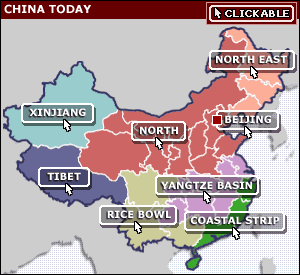 China is just one country, but it stretches further than the distance of London to Cairo or Washington to Caracas. Although its 1.3bn people share a nationality, there are many issues specific to individual regions. Click on the map above to read more about what matters most in different places. China is just one country, but it stretches further than the distance of London to Cairo or Washington to Caracas. Although its 1.3bn people share a nationality, there are many issues specific to individual regions. Click on the map above to read more about what matters most in different places.Beijing China's capital is an important shop window for the country, and a key target for protesters wanting to challenge the government.
The rules were reintroduced this year after a 20-year hiatus in the city, which is still said to be reeling from a scandal surrounding party boss and Beijing Mayor Chen Xitong who was jailed in 1998 for his part in a $27m scam. Corruption in official circles is said to be one of the main concerns of Chinese citizens and, if unchecked, could produce more problems for the government and its credibility and support. But with local officials' pay still said to be relatively meagre, correspondents say bribery is far from extinct in Beijing.
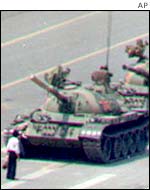
The vast expanse of Tiananmen Square in the heart of Beijing has long been central to Chinese symbolism - it was here that Mao Zedong proclaimed the People's Republic and the square hosts displays for visiting dignitaries and national celebrations. But the wide-open spaces are also seen as the best place by protesters wishing to challenge the rulers of the day. Since the 1989 killing of pro-democracy demonstrators, any activity in the area has been restricted. But protesters such as followers of the outlawed Falun Gong spiritual sect continue to try and highlight their complaints in the square, ensuring that its importance as a symbol will continue. Beijing is a city which is 800 years old, laid out on imperial lines with the Forbidden City at its centre.
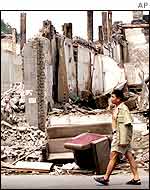
But the long march of progress into the 21st century is claiming old neighbourhoods as its victims, with the destruction of the ancient hutongs, the walled compounds once home to the city's elite. After the Communists took power, families were crowded into the compounds which authorities now say need to be redeveloped for health reasons. But the prime, central location of many of the hutongs leads sceptics to believe that their commercial value is more important. But as one ancient Beijing feature is destroyed, another is reborn with the rebuilding of the medieval wall. Pulled down on the orders of Mao, it is now due to be recreated ahead of the 2008 Olympics. North-East Area: 786,000 square kilometres
Millions of workers have lost their jobs in the last decade, especially in the industrial north-east, as the government has tried to reform loss-making state-owned enterprises. In Liaoyang, residents claim half the workforce is unemployed. There have been street protests by workers demanding blocked redundancy payments and back-pay. Protest leaders have been detained indefinitely. The Asian Development Bank predicted that China's industrial and services sector would be helped by China's entry into the World Trade Organisation, but added that would offer little comfort to the unemployed in the north-east's "rust belt". The heavy industrial past of the north-eastern provinces has taken a severe toll on their environment. Factory waste dumped into the Liao River plus inadequate sewage systems meant that its water had become so polluted it could not be used for farming. Water-borne diseases were also prevalent around the river basin. The World Bank has decided that cleaning up the environment around China's major river basins and, in particular, improving water quality should be a priority. It has approved a $100m loan for projects in the area which it says will include education about water management as well as immediate clean-up action.
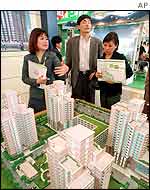
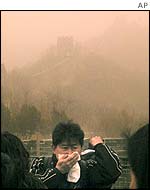
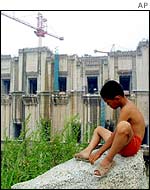
Sandstorms in 2002 have been particularly bad, worsened by winter droughts, deforestation and over-grazing. Tree-planting schemes have so far had made little impact on the progress of the dust created by 20 years of desertification. The village of Longbaoshan has started to be swallowed up under the encroaching dust, forcing the village's farmers from their land. Coastal strip Area: 438,000 square kilometres From China's largest city of Shanghai down to its tropical tourist island of Hainan, the coastal strip has been transformed by the pursuit of wealth. Shanghai's landscape is dominated by skyscrapers. Paddy fields have been paved over as communities develop as near as they can to the boom areas of Hong Kong and Taiwan. But the residents of the coastal strip are finding that problems often accompany prosperity.
Figures collated by the Ministry of Labour showed that the private sector created 30% of new jobs in the first three months of 2002, and other statistics reveal that private firms now produce one-third of the country's GDP. The richest people in China, who once would have had to fear for their lives, can now look forward to helping to set their country's agenda. President Jiang Zemin said last year the Communist Party would have to recruit capitalists and Guangdong made history in May by electing private business leaders to its decision-making congress.
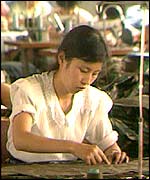
Employers and city dwellers have seemed more than willing to use the cheap labour which pours off the cross-country trains every day, putting them to work on construction sites or as domestic helpers. But migrant workers in China face special problems, since people can lose their rights to healthcare and schooling if they move out of their designated home area.
In the affluent parts of cities such as Shanghai and Guangzhou, newly wealthy families now have the flat, car and domestic servant their predecessors could never have known. Many believe that China's entry into the World Trade Organisation will mean cheaper imports, more American films and opportunities to travel. But psychologists warn that the new social mobility and freedoms available to the middle classes can bring their own problems. Self-help books are now a common sight in Shanghai bookshops. Back to map Yangtze basin Area: 1.04 million square kilometres The mighty Yangtze River - the longest in China - has been called the cradle of Chinese civilisation and remains a vital artery through the country. But even as ancient settlements in the vast flood plains disappear under planned reservoirs, the region continues to innovate in other areas.
Generations have been plagued by its floods. Plans to try to tame the river have been around for more than eight decades. But now that the project to dam the river and harness its power to produce electricity is well under way, those who live on the flood plains face new trials. More than one million people will have to leave their homes by the time the dam is completed and a 600-kilometre long reservoir covers the Three Gorges. Critics say they are being forcibly resettled on poorer land.
While the government still runs the country's 1,500 or so TV stations, propaganda is no longer the main subject. Hunan TV is one of the stations leading the way, producing variety shows that get huge audiences as well as attracting the advertising which is also become a more and more important part of the industry. Its talk show - Take It Easy - would have been recognisable to American audiences with its discussion of divorce, adultery and teenagers. But the government showed it still maintained its right to intervene, and the series was cancelled - reportedly after officials were upset by features on homosexuality and China's growing wealth gap.
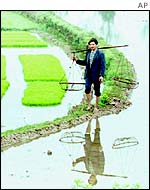
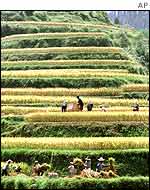
In Anhui province, officials collected agricultural taxes, education surcharges, village road maintenance fees, family planning fees and military training charges. "Taxes" were also invented for farmers doing such seemingly innocuous things as growing bananas or slaughtering a pig. Now much of the antagonism generated by taxes has been abolished along with the taxes themselves as the authorities in Anhui try a new system whereby farmers pay far smaller set amounts and, instead of spending their time collecting tax after tax, officials work on improving the economy. Greater subsidies are now being provided by the central authorities to pay for projects that used to be funded from the farmers' pockets. Rice bowl Area: 1.09 million square kilometres With warm climates and sufficient rainfall, Sichuan, Yunnan and Guangxi are important agricultural areas, known as the "rice bowl" of China. Yunnan forms China's borders with Burma, Laos and Vietnam and falls into the Golden Triangle of drug production and trafficking.
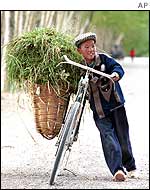
Improving agricultural methods and profitability has been a key plank of the political and economic agenda in China, particularly in the run-up to China's accession to the World Trade Organisation. Many farms are still trapped not only with old cultivation methods but also with the wrong crops - continuing to grow the same things they were told to under the old collective systems rather than what markets demand. But Mr Zhu promised that the reforms that he has put in place, such as cutting oversupply of land, would work and would lift rural workers' incomes while still feeding the massive population.
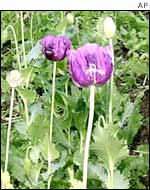
Beijing has been critical of what it saw as a lack of commitment on Rangoon's part to stop the production and distribution of illicit drugs. But from late 2001, the two countries agreed to share intelligence and the number of arrests and seizures increased. But with production of opium poppies greatly affected by the war in Afghanistan, the Golden Triangle crop became the world's largest supply of heroin. Almost all of that crop still passes through China to be sold to local users or shipped around the world.
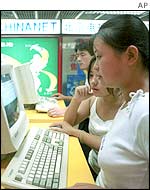
While it would be a gross exaggeration to suggest that more than a fraction of Chinese people use the internet, its use has spread rapidly throughout the country. The China Internet Network Information Centre said the number of internet users soared by 12 million people in the first six months of this year to reach 45.8 million users. And though the majority of websites still come out of Beijing, Shanghai and Guangdong, there are now more than 10,000 produced from Guangxi, Sichuan and Yunnan with 62% of Chinese users able to access the net from home. Tibet Area: 1.2 million square kilometres Most of Tibet is situated on a plateau 5,000 metres above sea-level on the "roof of the world", bordered by the Himalayas in the south and the Kunlun ranges to the north. Though many Han Chinese have moved to Tibet, particularly the eastern part of the area, most inhabitants have a Mongolian ethnic background. The ethnic divide, mass support for Buddhism and other issues stemming from China's invasion of Tibet in 1950 and its bloody crackdown of an anti-government uprising in 1959 make Tibet one of China's most controversial regions.
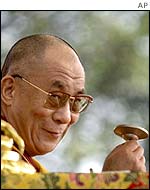
But the Dalai Lama has been in exile since 1959. Monks in Tibet loyal to him are not even allowed to display his picture. And there is an ongoing dispute over another spiritual leader, the Panchen Lama. The six-year-old boy identified by the Dalai Lama in 1995 as the latest reincarnation of the Panchen Lama was rejected by Beijing, and Chinese officials took the boy into custody and picked a different youngster as the legitimate heir, causing lasting opposition and resentment among many Tibetans. The role of the Panchen Lama is crucial in Tibetan Buddhism as it will be he who decides who will become Tibet's spiritual leader and the next Dalai Lama after the death of the incumbent, who is now 67; that is an issue that could again leave Tibet divided. One of China's most controversial projects has been its plan to resettle tens of thousands of ethnically Han Chinese farmers in Tibet and on its borders. Beijing won promises of at least $40m from the World Bank for the programme it described as helping some of its poorest people. But critics said it was an attempt to dilute the ethnically Tibetan and Mongolian peoples with Han Chinese who account for nearly 92 per cent of China's population. The offer was withdrawn and China is now using internal funds to pay for the plan it says is supported by the traditional people in the area. Exiled Tibetan groups continue to oppose the resettlements, saying they threaten traditional Tibetan language, culture and identity.
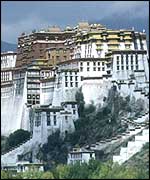
In addition to the numbers of Han Chinese being moved into Tibet and the neighbouring province of Qinghai, a railway is being built to link Tibet to the main rail network. The face of the Tibetan capital of Lhasa is also changing. Houses that used to nestle at the foot of the Potala Palace - the home of the Dalai Lama since the 7th century - were destroyed to create a huge plaza and monument. A 37-storey tourist tower topped with a revolving restaurant has also been announced in what China says is part of a nationwide campaign to support Tibet's economic development. North Area: 3.127 million square kilometres The vast north of China is relatively lightly populated, partly because of inhospitable terrain and a climate that makes only around 10% of the area possible to cultivate. Poverty has taken its toll, not just in terms of deprivation, but in the way farmers have felt driven to sell their blood or rush to dig the region's coal resources in dangerous and unregulated mines. The area's few cities do make their mark, with Xian's army of terracotta warriors set to attract record numbers of visitors while Tianjin remains a key military base and port.
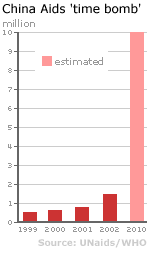
Farmers had been selling their blood to illegal blood banks and many became infected with HIV during the process. By 2001, it was estimated that two-thirds of the Henan village of Wenlou were infected with the virus that can lead to Aids. UN officials say HIV is still being spread through illegal blood sales as well as sex. The UNAids agency says China's government is not doing enough to educate people to stop transmission. It predicts a possible 10 million cases in China by 2010. The 10,000 miners ordered to pack their bags as their mines were being shut down could actually be seen as among the lucky ones in their industry, which claims that many lives in accidents every year. Authorities regularly try to close down illegal mines and impose safety standards on the industry, but there is often huge pressure from workers and the authorities who want their share of the revenues the mines provide. Correspondents say new illegal mines spring up as soon as others are shut down, with peasant farmers travelling long distances in the hope they can earn the lucrative wages unknown in their home villages. The continuing supply of labour, and the continuing demand for the coal that supplies China with 70% of its energy, suggests the disasters will continue.
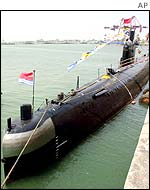
President Jiang Zemin ordered that the PLA cut back on its vast economic empire which laid the army open to charges of corruption or caring more about business than defence. In Tianjin, the PLA handed over control of a mobile phone network it had run to a private company. Tianjin was also believed to be the first garrison to hold civil trials in its military courts - another part of the modernisation ordered by central government to ensure that the army also abided by the country's laws and that disputes with civilians were handled properly. Xinjiang Area: 1.6 million square kilometres Xinjiang is enclosed by mountain ranges to the north, south and west. Much of the province is barren - there are large grazing lands, but also a vast desert and the Lop Nur dried-up salt lake which China uses for its nuclear test explosions. The mainly Muslim Uighur people now make up around half of the population, which endures extremes of heat in the summer and cold in the winter. Once on the Silk Road trading route, there are now moves to revitalise the area.
More than half of Xinjiang's population is from the Muslim Uighur ethnic minority and they had been allowed to study in their native tongue since the People's Republic was founded. Some Uighurs say that the crackdown on their language - explained by the university as a need to raise standards - is part of Beijing's broader campaign against dissent and separatism. They say that Xinjiang is the "other Tibet" and that their separate identity, language and culture are under threat. In a break with the past, the central government has raised the issue of separatist violence in Xinjiang, denouncing some activists as being linked to Osama Bin Laden and pledging to stop their activities.
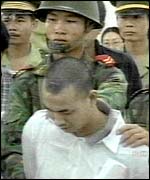
China's "Strike Hard" campaign promises harsh penalties for those involved in crimes such as drug trafficking. It has also been used to deal with separatists in areas such as Xinjiang, Amnesty says. There are several reports each year of Xinjiang separatists being executed for their activities, but the human rights group said in July 2002 that authorities had extended the range of the "Strike Hard" mission to target people involved in "illegal religious activities" in Xinjiang.
They want the same living standards and opportunities in provinces such as Xinjiang as are available in the wealthy coastal cities. | |
Top Asia-Pacific stories now:  Links to more Asia-Pacific stories are at the foot of the page. | ||||||||||||||||||||||||||||||||||||||||||||||||||||||||||||||||||||||||||||||||||||||||||||||||||||||||||||||||||||||||||||||||||||||||||||||||||||||||||||||||||||||||||||||||||||||||||||||||||||||||||||
| |
|  E-mail this story to a friend E-mail this story to a friend |
| |
| Links to more Asia-Pacific stories |
| | | ||
 | ||||
 | | Back to top
| ||
| ---------------------------------------------------------------------------------- To BBC Sport>> | To BBC Weather>> | To BBC World Service>> ---------------------------------------------------------------------------------- © MMIII | News Sources | Privacy |