|
 |
 | | | | | | ||||||||||||||||||||||||||||||||||||||||||||||||||||||||||||||||||||||||||||||||||||||||||||||||||||||||||||||||||||||||||||||||||||||||||||||||||||||||||||||||||||||||||||||
| | | You are in: Asia-Pacific | ||||||||||||||||||||||||||||||||||||||||||||||||||||||||||||||||||||||||||||||||||||||||||||||||||||||||||||||||||||||||||||||||||||||||||||||||||||||||||||||||||||||||||||||||
|
| | Tuesday, 6 August, 2002, 23:40 GMT 00:40 UK Waiting on China's middle-class 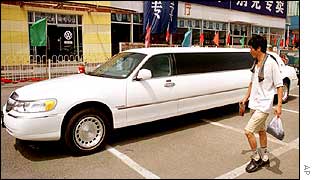 After the car and home, rich Chinese now want a maid
"We read about the school for servants over the internet," he said. "So we went to the school and picked one out." One month later, Mr Li - a well-off telecom engineer - and his family had a fully trained, live-in housekeeper.
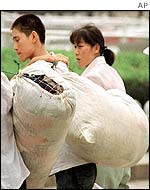
China's emerging middle-class has bought a car, owns its own apartment and had an overseas holiday. Now it wants to be waited upon. That is where the Fuping Vocational School sensed a market. In demand The school trained its first batch of maids in March this year. Now it is turning out 15 young women a month. Nearly all of them get snapped up by families like the Lis - China's newly rich, white-collar elite. The school's facilities are basic. The classrooms are housed in a group of ramshackle buildings in the Beijing suburbs and the students live six-to-a-room in a stuffy dormitory.
Principal Sui Guozhe stresses that this is not about silver service, or training people to work in top hotels. "These girls are from poor families in the countryside," she said. "We're teaching them basic city ways so that they can earn a living." On a recent visit to the school, the students were lined up in a sweltering classroom, each standing at an ironing board, practising getting a starched collar just right. Before they graduate, they will also master how to clean a toilet and defrost a refrigerator.
Growing up in a village in Shandong Province she had wanted to be a beautician, but the family finances got in the way. "My parents are struggling, they don't have enough money," she said. "At least if I train as a maid I can earn a living." 'Economic sense' The school is the brainchild of an economist, Tang Min. Educated in America and expensively dressed, Mr Tang argues that supplying China's new middle-class with domestic help is about the laws of economics.
"But in the urban area many people are getting richer and they can afford help. So really the school is matching supply and demand." There are others in China, however, who think that the trend for servants points to a more worrying development. Just 30 years ago, there was virtually no separation between rich and poor in Communist China. Today, 120 million Chinese still live in abject poverty. But in cities like Beijing and Shanghai, a prosperous middle class buys imported cars and lives in gated communities.
"If China's wealth gap keeps on widening, there will be problems," he said. "When poor people feel poor they breed unrest." Trainee maid Jia Mingli is one of those poor people. But for the moment - like most of China's poor - she is more focussed on catching up with the rich than causing social instability. She starts her new job next week and already admires her new employers. "They earned their money, and they had to work hard for it," she said. "Rich people are really the same as us." | | See also:  02 Feb 02 | Media reports 29 Jun 02 | From Our Own Correspondent 06 Aug 02 | Country profiles Top Asia-Pacific stories now: Links to more Asia-Pacific stories are at the foot of the page. | ||||||||||||||||||||||||||||||||||||||||||||||||||||||||||||||||||||||||||||||||||||||||||||||||||||||||||||||||||||||||||||||||||||||||||||||||||||||||||||||||||||||||||||||
| |
|  E-mail this story to a friend E-mail this story to a friend |
| |
| Links to more Asia-Pacific stories |
| | | ||
 | ||||
 | | Back to top
| ||
| ---------------------------------------------------------------------------------- To BBC Sport>> | To BBC Weather>> | To BBC World Service>> ---------------------------------------------------------------------------------- © MMIII | News Sources | Privacy |