|
 |
 | | | | | | |||||||||||||||||||||||||||||||||||||||||||||||||||||||||||||||||||||||||||||||||||||||||||||||||||||||||||||||||||||||||||||||||||||||||||||||||||||||||||||||||||||||||||||||||
| | | You are in: Africa | |||||||||||||||||||||||||||||||||||||||||||||||||||||||||||||||||||||||||||||||||||||||||||||||||||||||||||||||||||||||||||||||||||||||||||||||||||||||||||||||||||||||||||||||||||
|
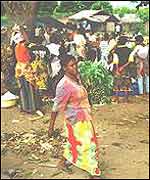
| | Tuesday, 24 December, 2002, 15:12 GMT A Christmas to forget in Kinshasa  The poor in particular feel the pressure at Christmas
Christmas is an unhappy time in Kinshasa, capital of the Democratic Republic of Congo. A decade-long economic crisis means few families can celebrate the way they would like to.
This year things have been made worse, however, by fluctuations in Congo's currency which have left people even less well off than before. Wages drop In the money-changing district of Kinshasa, known as Wall Street, dozens of well-dressed and well-built women sit by the side of the road behind tables loaded with large bundles of the Congolese franc, which they change for US dollars. But for the past week, Wall Street has been quieter than usual after the exchange rate made an unexpected and dramatic fall. Ten dollars used to buy almost 4,000 Congolese francs, but overnight this fell just below the 3,000 mark.
Normally, this would be good news - a sign that the government's efforts to strengthen the local currency were working. However, in Kinshasa, where faith in the Congolese franc is understandably low, most people's salaries are pegged to the dollar, so when the dollar drops in value, so do their wages. Prices always take longer to follow. During the week before Christmas, when even the poorest families are under pressure to buy something special for the holiday, most people found themselves 25% worse off. No official reasons have yet been given as to why the exchange rate changed so dramatically, and the money-changers on Kinshasa's Wall Street blame a handful of speculators for flooding the market with US dollars and making a killing. For everyone else, this will be a holiday season to forget. | |
See also:  29 Oct 02 | Africa 26 Oct 02 | Africa 25 Oct 02 | Africa 24 Oct 02 | Africa Top Africa stories now: Links to more Africa stories are at the foot of the page. | |||||||||||||||||||||||||||||||||||||||||||||||||||||||||||||||||||||||||||||||||||||||||||||||||||||||||||||||||||||||||||||||||||||||||||||||||||||||||||||||||||||||||||||||||
 | |
|  E-mail this story to a friend E-mail this story to a friend |
| |
| Links to more Africa stories |
| | | ||
 | ||||
 | | Back to top
| ||
| ---------------------------------------------------------------------------------- To BBC Sport>> | To BBC Weather>> | To BBC World Service>> ---------------------------------------------------------------------------------- © MMIII | News Sources | Privacy |






 Most people's salaries are pegged to the dollar, so when the dollar drops in value, so do their wages