|
 |
 | | | | | | ||||||||||||||||||||||||||||||||||||||||||||||||||||||||||||||||||||||||||||||||||||||||||||||||||||||||||||||||||||||||||||||||||||||||||||||||||||||||||||||||||||||||
| | | You are in: Africa | ||||||||||||||||||||||||||||||||||||||||||||||||||||||||||||||||||||||||||||||||||||||||||||||||||||||||||||||||||||||||||||||||||||||||||||||||||||||||||||||||||||||||||
|
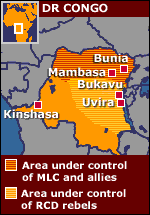
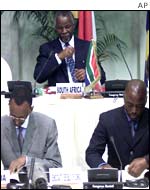
| | Friday, 25 October, 2002, 09:47 GMT 10:47 UK Foreign troops leaving DR Congo 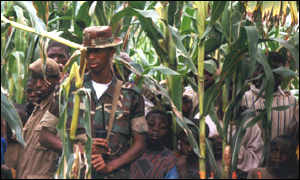 Fighting has been continuing in eastern Congo All foreign troops supporting the Democratic Republic of Congo Government are expected to leave the country by the end of next week. Recent troop withdrawals have raised hopes that peace talks, due to resume on 26 October in South Africa, could make real progress towards ending a multi-stranded conflict and lead to the forming of a coalition government and free elections. Angola, Zimbabwe and Namibia all sent troops to DR Congo four years ago to protect the government from advancing Rwandan and Ugandan-backed rebels. But a United Nations monitored ceasefire along the front line and advances in the peace process, means the foreign army is no longer needed. Fears Speaking in the Congolese capital, Kinshasa, at the end of a day long summit attended by the presidents of the four allied countries, Angola's President Eduardo dos Santos said it was now safe for the full withdrawal of their troops.
Countries backing rebels who control eastern DR Congo say they too have withdrawn most of their men. However, the withdrawals have also prompted warnings of potential massacres in the east of the country, where militia groups are taking advantage of the power vacuum caused by the departure of foreign troops to intensify their activities. In a joint communique in Kinshasa, the pro-Kinshasa leaders called for the UN to beef up their peacekeeping role in DR Congo to ensure security. Looting On Monday, a UN report accused all foreign armies operating in DR Congo of profiting from the country's natural riches.
In July, DR Congo and Rwanda signed a peace agreement and Rwanda says it has now completed the pull-out of its soldiers. However, a senior UN official said recently that Burundian and Rwandan forces had gone back into the country, after clashes near their borders. The Pretoria talks will follow on from similar meetings in Sun City, South Africa, in March and April. A South African Foreign Ministry official said representatives from the main rebel groups, the Rwandan-backed Rally for Congolese Democracy (RCD) and Ugandan-supported Congolese Liberation Movement (MLC), had already . Reuters news agency reports that under the plan to be discussed, Congolese President Joseph Kabila would keep his post in an inclusive coalition government for a transition period of two to three years, with the main rebel and opposition groups sharing vice-president posts. It is estimated that more than two million people have died, most from starvation and hunger, during the four year war. | |
See also:  24 Oct 02 | Africa 22 Oct 02 | Africa 18 Oct 02 | Africa Internet links: The BBC is not responsible for the content of external internet sites Top Africa stories now: Links to more Africa stories are at the foot of the page. | ||||||||||||||||||||||||||||||||||||||||||||||||||||||||||||||||||||||||||||||||||||||||||||||||||||||||||||||||||||||||||||||||||||||||||||||||||||||||||||||||||||||||
| |
|  E-mail this story to a friend E-mail this story to a friend |
| |
| Links to more Africa stories |
| | | ||
 | ||||
 | | Back to top
| ||
| ---------------------------------------------------------------------------------- To BBC Sport>> | To BBC Weather>> | To BBC World Service>> ---------------------------------------------------------------------------------- © MMIII | News Sources | Privacy |