|
 |
 | | | | | | ||||||||||||||||||||||||||||||||||||||||||||||||||||||||||||||||||||||||||||||||||||||||||||||||||||||||||||||||||||||||||||||||||||||||||||||||||||||||||||||||||||||||
| | | You are in: Africa | ||||||||||||||||||||||||||||||||||||||||||||||||||||||||||||||||||||||||||||||||||||||||||||||||||||||||||||||||||||||||||||||||||||||||||||||||||||||||||||||||||||||||||
|
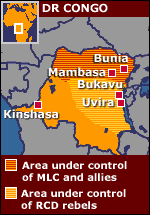
| | Saturday, 26 October, 2002, 16:38 GMT 17:38 UK Peace hopes for DR Congo 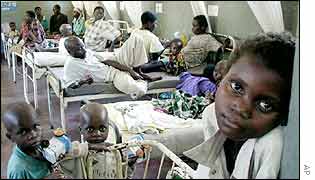 The conflict has made millions of orphans Talks aimed at working out a final peace deal to end the four-year war in the Democratic Republic of Congo have begun in the South African capital, Pretoria. The Congolese Government and two main rebel groups, which control vast parts of the country, are discussing a power-sharing plan.
Aides to South African President Thabo Mbeki - who drew up the proposals - said they hoped this round of talks would lead to a final settlement. The negotiations are attended by a delegation from the Congolese Government and representatives from the Rwanda-backed Rally for Congolese Democracy (RCD) and the Uganda-supported Congolese Liberation Movement (MLC). The proposed interim administration would be led by President Kabila, and include four vice-presidents - one each from the government, the RCD, the MLC and Congo's unarmed political opposition. The plan also allows for a 31-member interim cabinet. The current talks are a continuation of negotiations held in South Africa earlier this year, when the government and the MLC struck a deal with the RCD. Power vacuum The search for peace in DR Congo gained fresh momentum in recent weeks, as the foreign countries involved started to withdraw troops.
Rwanda says it has completely withdrawn, while Zimbabwe, Angola and Namibia have pledged to pull out all troops by the end of next week. However, the withdrawals have also prompted warnings of potential massacres in the east of the country, where militia groups are taking advantage of the power vacuum caused by the departure of foreign troops to intensify their activities. About 1,000 Ugandan troops have remained at the request of the United Nations, which fears their departure would cause a huge security void. It is estimated that more than two million people have died, most from starvation and hunger, during four years of war. | |
See also:  25 Oct 02 | Africa 24 Oct 02 | Africa 22 Oct 02 | Africa 18 Oct 02 | Africa Internet links: The BBC is not responsible for the content of external internet sites Top Africa stories now: Links to more Africa stories are at the foot of the page. | ||||||||||||||||||||||||||||||||||||||||||||||||||||||||||||||||||||||||||||||||||||||||||||||||||||||||||||||||||||||||||||||||||||||||||||||||||||||||||||||||||||||||
| |
|  E-mail this story to a friend E-mail this story to a friend |
| |
| Links to more Africa stories |
| | | ||
 | ||||
 | | Back to top
| ||
| ---------------------------------------------------------------------------------- To BBC Sport>> | To BBC Weather>> | To BBC World Service>> ---------------------------------------------------------------------------------- © MMIII | News Sources | Privacy |