|
 |
 | | | | | | ||||||||||||||||||||||||||||||||||||||||||||||||||||||||||||||||||||||||||||||||||||||||||||||||||||||||||||||||||||||||||||||||||||||||||||||||||||||||||||||||||||||||||||||||||||||||||||||||||
| | | You are in: Africa | ||||||||||||||||||||||||||||||||||||||||||||||||||||||||||||||||||||||||||||||||||||||||||||||||||||||||||||||||||||||||||||||||||||||||||||||||||||||||||||||||||||||||||||||||||||||||||||||||||||
|
| | Friday, 20 December, 2002, 09:53 GMT Rwanda hails DR Congo peace deal  Rwandan troops left DR Congo earlier this year Rwandan President Paul Kagame has said he is confident that the deal to share power in neighbouring Democratic Republic of Congo will succeed. Rwanda backs the largest Congolese rebel faction, the Congolese Rally for Democracy (RCD), which started the rebellion in August 1998.
Rwanda has withdrawn its many thousands of troops from DR Congo, following an agreement signed in July. At the height of the conflict, there were some 50,000 foreign troops involved in the what was dubbed "Africa's first world war". Disarm militias "The agreement should work, and we should all make sure that it works," Mr Kagame said in a statement. "The beginning may not be satisfactory to everybody, but the process must start somewhere, and people should take a long-term view focusing on achieving better things in the future," he said.
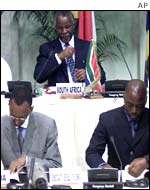
However, he also said that the Congolese Government had not fulfilled its side of the July agreement - to disarm and repatriate the ethnic Hutu Rwandan militias accused of carrying out the 1994 genocide, which are based in DR Congo. Under a complex deal, Congolese President Joseph Kabila will stay in his post for two years, but rebel forces and the political opposition will be given government portfolios, including three of the four vice presidential posts. Elections In South Africa, President Thabo Mbeki said an end to the conflict would help bring peace to neighbouring countries. "Once we have peace and stability in the DR Congo, it will have a positive impact on the whole region," he said.
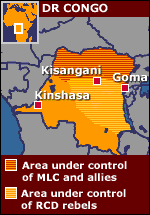
Our correspondent in Kinshasa, Mark Dummett, says that while ordinary people have welcome a deal that should reunify the country, its implementation will depend on the good will of DR Congo's leaders, in whom few have much faith. The two main rebel groups - the RCD and the Congolese Liberation Movement (MLC) - will each have one vice president, as will the political opposition and supporters of President Kabila. Ministerial posts will also be divided equally between these four blocks until multi-party elections are held in two years' time. Although government and rebel spokesmen have declared their satisfaction with the deal, they have also expressed serious reservations about how the new government will function. Demobilised Information Minister Kikaya Bin Karubi told the BBC's Focus on Africa programme that rebel forces had to be demobilised and integrated into the army before the new government could be in place.
But he still hoped this could happen early next year. He also said that the peace deal meant that a peace-keeping force was no longer necessary. There are currently some 5,000 United Nations troops in DR Congo. | |
See also:  17 Dec 02 | Africa 04 Dec 02 | Africa 29 Jul 02 | Africa Internet links: The BBC is not responsible for the content of external internet sites Top Africa stories now: Links to more Africa stories are at the foot of the page. | ||||||||||||||||||||||||||||||||||||||||||||||||||||||||||||||||||||||||||||||||||||||||||||||||||||||||||||||||||||||||||||||||||||||||||||||||||||||||||||||||||||||||||||||||||||||||||||||||||
 | |
|  E-mail this story to a friend E-mail this story to a friend |
| |
| Links to more Africa stories |
| | | ||
 | ||||
 | | Back to top
| ||
| ---------------------------------------------------------------------------------- To BBC Sport>> | To BBC Weather>> | To BBC World Service>> ---------------------------------------------------------------------------------- © MMIII | News Sources | Privacy |





 The beginning may not be satisfactory to everybody, but the process must start somewhere