|
 |
 | | | | | | |||||||||||||||||||||||||||||||||||||||||||||||||||||||||||||||||||||||||||||||||||||||||||||||||||||||||||||||||||||||||||||||||||||||||||||||||||||||||||||||||||||||
| | | You are in: Africa | |||||||||||||||||||||||||||||||||||||||||||||||||||||||||||||||||||||||||||||||||||||||||||||||||||||||||||||||||||||||||||||||||||||||||||||||||||||||||||||||||||||||||
|
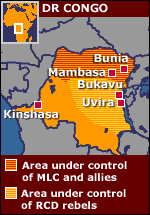
| | Wednesday, 4 December, 2002, 17:58 GMT UN boost for DR Congo force 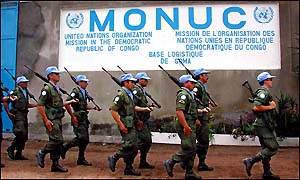 The UN are already under strength The United Nations Security Council has authorised an increase in the size of the UN force monitoring a ceasefire in the Democratic Republic of Congo. In a boost to peacekeeping efforts, the UN has approved the sending of 3,000 more troops increasing the potential size of the mission to more than 8,500 military observers and troops. However, UN Secretary General Kofi Annan has warned that "in the past it has been extremely difficult for the United Nations to obtain such troops from member states". AFP news agency says the UN Mission in DR Congo's (Monuc) actual strength is only 4,258 - 455 military observers and about 3,600 soldiers - which is some 1,000 troops less than already approved. Congo The extra peacekeeping troops are likely to be deployed in stages, mainly in eastern Congo. They will be expected to supervise the process of disarming, demobilising and resettling of armed Congolese groups. These groups pose an immediate threat to Congolese civilians and nations like Rwanda, that border the Democratic Republic of Congo, who have long claimed that some of the armed groups include Hutu militia, responsible for mass killings during the 1994 genocide in Rwanda. The search for peace in DR Congo has gained fresh momentum in recent months, as the foreign countries involved in the war withdrew the bulk of their forces. The war broke out in 1998 and sucked in neighbouring countries, with Rwanda and Uganda supporting the rebels while Zimbabwe, Angola and Namibia backed the Kinshasa government.
Rwanda, Zimbabwe, Angola and Namibia all announced the withdrawal of their forces. However, these pull outs have also prompted warnings of potential massacres in the east of the country, where militia groups have taken advantage of the power vacuum caused by the departure of foreign troops to intensify their activities. About 1,000 Ugandan troops have remained at the request of the United Nations, which fears their departure would cause a huge security void. It is estimated that more than two million people have died, most from starvation and hunger, during four years of war. | |
See also:  21 Nov 02 | Africa 15 Nov 02 | Africa 29 Oct 02 | Africa 29 Oct 02 | Africa 26 Oct 02 | Africa 25 Oct 02 | Africa 24 Oct 02 | Africa Internet links: The BBC is not responsible for the content of external internet sites Top Africa stories now: Links to more Africa stories are at the foot of the page. | |||||||||||||||||||||||||||||||||||||||||||||||||||||||||||||||||||||||||||||||||||||||||||||||||||||||||||||||||||||||||||||||||||||||||||||||||||||||||||||||||||||||
| |
|  E-mail this story to a friend E-mail this story to a friend |
| |
| Links to more Africa stories |
| | | ||
 | ||||
 | | Back to top
| ||
| ---------------------------------------------------------------------------------- To BBC Sport>> | To BBC Weather>> | To BBC World Service>> ---------------------------------------------------------------------------------- © MMIII | News Sources | Privacy |