
|
 |
 | | | | | | ||||||||||||||||||||||||||||||||||||||||||||||||||||||||||||||||||||||||||||||||||||||
| | | You are in: UK: Scotland | ||||||||||||||||||||||||||||||||||||||||||||||||||||||||||||||||||||||||||||||||||||||||
|
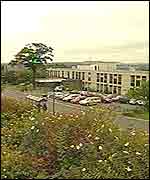
| | Friday, 27 September, 2002, 07:22 GMT 08:22 UK Second health woe for hospital  Two patients died after an outbreak of sickness Traces of the Legionella bacterium have been found at a hospital already in the midst of a viral outbreak. Officials at Perth Royal Infirmary said one member of staff fell ill with suspected Legionnaires' disease but is now recovering. On Wednesday it was revealed that two elderly people, who were already seriously ill, died after a viral infection which struck patients in the Tay ward, a geriatric ward in the hospital.
Seven people in the geriatric ward are still suffering from the virus. The traces of Legionella were found in three areas of the hospital after routine testing. Dr Drew Walker, the trust's director of public health, said small traces of the bacteria were found in sluices - side rooms used for waste disposal. They are areas used only by staff.
Dr Walker said: "There is no risk to patients from Legionella being found in sluices because patients do not go into these areas. "Measures to remove the infection are well understood and are known to be effective. "The discovery of Legionella demonstrates that our monitoring and control procedures are working properly." One health care worker from the hospital was understood to have acquired the infection and is now recovering at home. The general medical ward where nine patients were taken ill has been closed to new admissions. Relatives have been asked to keep patient visits to a minimum. Water sources An outbreak control team was formed when the outbreak came to light. Legionnaires' disease, which is also known as Legionellosis, is a rare form of pneumonia. It is most often contracted through inhalation of moisture from water sources like whirlpool baths, showers, and air cooling systems contaminated with Legionella pneumophila. The disease can most often strike those with an existing health problem, the elderly and smokers. It was first identified in 1976 after an outbreak among members of the American Legion, an ex-servicemen's organisation, attending a conference in Philadelphia. The symptoms include diarrhoea, vomiting and stomach cramps and usually improve within 48 hours. Legionnaires' is most often treated with the antibiotics and recovery often takes several weeks. | | See also:  25 Sep 02 | Scotland 25 Jan 02 | Scotland 22 Jan 02 | Scotland 22 Jan 02 | T-Z 22 Jan 02 | Health 22 Jan 02 | Scotland 21 Jan 02 | Scotland Internet links: The BBC is not responsible for the content of external internet sites Top Scotland stories now: Links to more Scotland stories are at the foot of the page. | ||||||||||||||||||||||||||||||||||||||||||||||||||||||||||||||||||||||||||||||||||||||
 | |
|  E-mail this story to a friend E-mail this story to a friend |
| |
| Links to more Scotland stories |
| | | ||
 | ||||
 | | Back to top
| ||
| ---------------------------------------------------------------------------------- To BBC Sport>> | To BBC Weather>> | To BBC World Service>> ---------------------------------------------------------------------------------- © MMIII | News Sources | Privacy |




 There is no risk to patients from legionella