|
 |
 | | | | | | |||||||||||||||||||||||||||||||||||||||||||||||||||||||||||||||||||||||||||||||||||||||||||||||||||||||||||||||||||||||||||||||||||||||||||||||||||||||||||||||||||||||||
| | | You are in: South Asia | |||||||||||||||||||||||||||||||||||||||||||||||||||||||||||||||||||||||||||||||||||||||||||||||||||||||||||||||||||||||||||||||||||||||||||||||||||||||||||||||||||||||||||
|
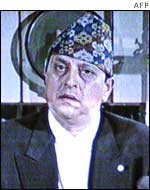
| | Wednesday, 9 October, 2002, 16:41 GMT 17:41 UK Nepal leaders await talks 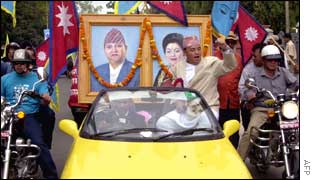 The king's action has received some support The leaders of Nepal's main political parties say they are still awaiting talks with King Gyanendra over forming an interim government.
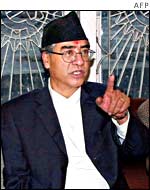
The king left the capital on Wednesday to take part in a Hindu festival in Gorkha, 150 kilometres (95 miles) away. Political leaders say it is now up to the king to either meet them collectively or unilaterally name a temporary administration. Politicians have warned that choosing the latter could put the throne on a collision course with the government. The BBC's Daniel Lak says the continuing uncertainty is leading to growing unease ordinary people, who fear Maoist rebels may use the political vacuum to step up attacks. Deadline The king sacked Prime Minister Sher Bahadur Deuba last Friday after the premier asked him to postpone a November general election for one year, citing threats from Maoist rebels. The king had given the parties until Wednesday to suggest names, including that of an interim prime minister who could organise - but not contest - any future elections. He also wants nominees who do not have any history of corruption allegations.
King Gyanendra has met with some political leaders on an individual basis but has yet to have collective discussions. Royal palace aides say the king will hand over power to a new government by the end of this week. The move by King Gyanendra last week was the first time a Nepali king had assumed direct power since parliamentary democracy replaced the absolute monarchy in the world's only Hindu kingdom in 1990. Political parties condemned his move as undemocratic and a major protest rally was held in Kathmandu on Tuesday against the king. However, there has also been support for King Gyanendra, with some citizens' groups across the country holding rallies backing him. Analysts fear the latest crisis could damage the Nepal's economy and image. Revered King Gyanendra officially has a ceremonial role, but is commander of the army and some traditional elements of the population consider the king to be an incarnation of the Hindu god Vishnu. Mr Deuba took office in July 2001 vowing to broker peace with the Maoists, but talks collapsed four months later over Maoist demands that the monarchy be scrapped. The Maoist revolt, which began in 1996 and hopes to replace the constitutional monarchy with one-party communist rule, has led to the deaths of nearly 5,000 people. | |
See also:  12 Sep 02 | Country profiles 08 Oct 02 | South Asia 04 Oct 02 | South Asia 04 Oct 02 | South Asia 11 Sep 02 | South Asia 05 Oct 02 | South Asia Top South Asia stories now: Links to more South Asia stories are at the foot of the page. | |||||||||||||||||||||||||||||||||||||||||||||||||||||||||||||||||||||||||||||||||||||||||||||||||||||||||||||||||||||||||||||||||||||||||||||||||||||||||||||||||||||||||
| |
|  E-mail this story to a friend E-mail this story to a friend |
| |
| Links to more South Asia stories |
| | | ||
 | ||||
 | | Back to top
| ||
| ---------------------------------------------------------------------------------- To BBC Sport>> | To BBC Weather>> | To BBC World Service>> ---------------------------------------------------------------------------------- © MMIII | News Sources | Privacy |