|
 |
 | | | | | | |||||||||||||||||||||||||||||||||||||||||||||||||||||||||||||||||||||||||||||||||||||||||||||||||||||||||||||||||||||||||||||||||||||||||||||||||||||||||||||||||||||||||||||||||
| | | You are in: South Asia | |||||||||||||||||||||||||||||||||||||||||||||||||||||||||||||||||||||||||||||||||||||||||||||||||||||||||||||||||||||||||||||||||||||||||||||||||||||||||||||||||||||||||||||||||||
|
| | Tuesday, 8 October, 2002, 09:09 GMT 10:09 UK Nepal's leaders to discuss crisis 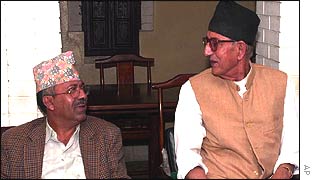 Political leaders want reassurances from the king
The leaders of major political parties in Nepal are hoping to meet King Gyanendra to discuss the country's political crisis.
He has set Tuesday as a deadline for the parties to suggest names for an interim government. The meeting was originally meant to take place that day, but political leaders said they had yet to hear from the king. Following the meeting, the political parties are expected to make a final decision on whether they would join a government. Joint meeting None of the six political parties which had members in the dissolved parliament has as yet decided whether or not to join the interim government. After holding separate meetings with the king earlier, they decided on Monday to seek a joint meeting with the monarch. They said that they wanted to first be clear about the shape of the government and the process by which it is formed. King Gyanendra has pledged to constitute a government consisting of people who, he said, have a clean image and who would not contest the elections. Constitutional solution The political parties have placed the emphasis on a constitutional solution which they believe could lie in the formation of an interim government by the parties which had members in the dissolved parliament. They believe that any other arrangement would be unconstitutional. King Gyanendra has been holding consultations with a number of other leaders to discuss an interim government which he said would hold early elections - although a date for polls has not been set. Nepal's political crisis deepened after last week's dismissal of Prime Minister Deuba. King Gyanendra said he was dismissing Mr Deuba because he was unable to hold elections on schedule in November. The move by the constitutional monarch was unprecedented in 12 years of democracy. The king says he has acted within the constitution. Opposition parties say it was undemocratic and unconstitutional. | |
See also:  12 Sep 02 | Country profiles 04 Oct 02 | South Asia 04 Oct 02 | South Asia 11 Sep 02 | South Asia 05 Oct 02 | South Asia Top South Asia stories now: Links to more South Asia stories are at the foot of the page. | |||||||||||||||||||||||||||||||||||||||||||||||||||||||||||||||||||||||||||||||||||||||||||||||||||||||||||||||||||||||||||||||||||||||||||||||||||||||||||||||||||||||||||||||||
| |
|  E-mail this story to a friend E-mail this story to a friend |
| |
| Links to more South Asia stories |
| | | ||
 | ||||
 | | Back to top
| ||
| ---------------------------------------------------------------------------------- To BBC Sport>> | To BBC Weather>> | To BBC World Service>> ---------------------------------------------------------------------------------- © MMIII | News Sources | Privacy |