|
 |
 | | | | | | |||||||||||||||||||||||||||||||||||||||||||||||||||||||||||||||||||||||||||||||||||||||||||||||||||||||||||||||||||||||||||||||||||||||||||
| | | You are in: Science/Nature | |||||||||||||||||||||||||||||||||||||||||||||||||||||||||||||||||||||||||||||||||||||||||||||||||||||||||||||||||||||||||||||||||||||||||||||
|
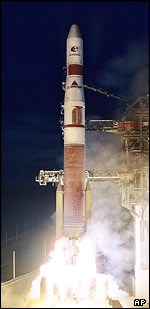
| | Thursday, 13 February, 2003, 15:24 GMT Ariane space launch postponed  The Ariane 4 rocket is being retired Bad weather has forced a delay to the final launch of Europe's Ariane 4 rocket. It was scheduled to blast off early on Wednesday from Kourou in French Guiana. "Wind conditions are not compatible for a launch," said Jean-Charles Vincent, director in Kourou of rocket operator Arianespace. He said that weather conditions would be reviewed on Wednesday evening; it is hoped the launch will go ahead on Thursday.
A decision for the next launch attempt will be "based on the evolving weather conditions", it added. Setbacks The Ariane 4, the workhorse of the European space industry, is being retired to pave the way for the giant Ariane 5, capable of hurling larger loads into orbit. Its 116th and final launch will mark the end of an era for the European Space Agency (Esa) and Arianespace. Flight 159 was to be a triumphant event but the loss of the space shuttle Columbia and problems with the new launch vehicle have cast a shadow over space exploration. The European space industry must now rely on the Ariane 5 rocket, which has a poor track record. Out of 14 launches so far, two rockets have exploded and two have put satellites into the wrong orbits. The latest setback was on 11 December, when a new heavyweight version of the Ariane 5 veered off course and had to be destroyed minutes after launch. Esa was later forced to delay its billion-euro comet-chasing probe, Rosetta, because of doubts over the Ariane 5. It has shaken confidence, said Dr Andrew Coates from University College London's Mullard Space Science Laboratory. He believes there is an argument for keeping the Ariane 4 for longer, although that would require a policy decision. Bigger, cheaper The phasing out of the Ariane 4 is borne out of the need to put bigger commercial satellites into orbit at a cheaper cost.
It took Esa 10 years and $7bn to produce the Ariane 5, a rocket intended to give Europe dominance in the commercial space business. The recent failure of the new beefed-up version of the rocket will play into the hands of its competitors, Lockheed Martin's Atlas 5 and Boeing's Delta 4. It comes amid a backdrop of budget constraints, a shrinking satellite launch market and the recent reminder of the dangers of putting astronauts into space. | |
See also:  12 Dec 02 | Science/Nature 12 Dec 02 | Science/Nature 21 Nov 02 | Science/Nature Internet links: The BBC is not responsible for the content of external internet sites Top Science/Nature stories now: Links to more Science/Nature stories are at the foot of the page. | |||||||||||||||||||||||||||||||||||||||||||||||||||||||||||||||||||||||||||||||||||||||||||||||||||||||||||||||||||||||||||||||||||||||||||
 | |
|  E-mail this story to a friend E-mail this story to a friend |
| |
| Links to more Science/Nature stories |
| | | ||
 | ||||
 | | Back to top
| ||
| ---------------------------------------------------------------------------------- To BBC Sport>> | To BBC Weather>> | To BBC World Service>> ---------------------------------------------------------------------------------- © MMIII | News Sources | Privacy |