|
 |
 | | | | | | |||||||||||||||||||||||||||||||||||||||||||||||||||||||||||||||||||||||||||||||||||||||||||||||||||||||||||||||||||||||||||||||||||||||||||||||||||||||||||||||||||||||||||||||||||||||||||||||||||||||||
| | | You are in: Programmes: Panorama | |||||||||||||||||||||||||||||||||||||||||||||||||||||||||||||||||||||||||||||||||||||||||||||||||||||||||||||||||||||||||||||||||||||||||||||||||||||||||||||||||||||||||||||||||||||||||||||||||||||||||||
|
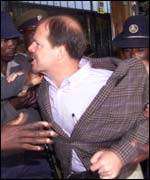
| |  Intimidation and inflation  Police crackdown on a protest in Harare
Panorama went into Zimbabwe undercover in May, during the Zimbabwe/England cricket test at Lords and found people living in terror and an economy on its knees. President Robert Mugabe's regime has become more brutal. Anybody who challenges the president or his government risks being seized and tortured by the police or the notorious Central Intelligence Organisation. There is an opposition party but it faces constant harassment. Opposition MP Job Sikhala, whom we followed for the Five Days in May programme, was tortured earlier this year. Panorama reporter Fergal Keane interviewed him at his bedside. A nation that queues
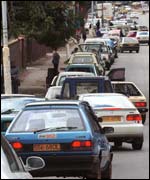
Describing his torture to Panorama, Job said: "They brought some electric gadgets which they used to some electric wires. "After that they put another electric wire around my genitals... electric current was also applied to my tongue and my left ear." As well as intimidation, the people of Zimbabwe face a collapsing economy and soaring inflation. The largest bank note - 500 Zimbabwean dollars - is only worth 10p and, because of because of inflation, actually costs 800 dollars to manufacture. The crisis means Mugabe's government has also failed to pay the bills and has been cut off. Loafing People now queue for days for alternative supplies and the poor are forced to sleep in their cars overnight. Those with money employ people to sit in the queue for them or use the black market. One motorist told us: "After sleeping in the petrol queue for two to three days in Harare, our Bulawayo employers start to think that we are loafing or chasing after prostitutes using their cars." MP Job Sikhala added: "I never thought that I would one day queue for bread in my country, that I will queue for salt and queue for cooking oil and even a tank of petrol." Matters are further compounded by Zimbabwe's unemployment rate - currently around 80 per cent. Gagging the press
Even if you are unhappy with life, people don't complain.The new Public Order bill has made it illegal to insult the president. Criticising Mugabe can now land you with a year's jail sentence or a 20,000 dollar fine. Zimbabwe state television and radio is also controlled by the government, and opposition figures such as the Mayor of Harare are not given any air time. A number of independent newspapers still survive. But all journalists risk being imprisoned for "engendering feelings of hostility towards the President". The Guardian's Andrew Meldrum was the last to fall foul of the public order bill - he was ejected from the country on May 16. Is this cricket?
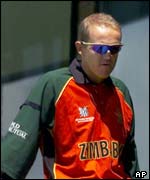
But it was the torture of Job Sikhala that prompted Zimbabwe's cricketers Henry Olonga and Andy Flower to wear black armbands during the World Cup in January 2003. Both men are now living in the UK. But despite considerable personal cost to themselves, Henry and Andy don't regret making a stand. In fact, Andy was more concerned about the ordinary people than himself. He told the programme: "The story is not so much that black armband stuff, the story is really the people that are suffering in Zimbabwe and what's happening to them, the injustices that are going on there." The final push While Panorama was inside Zimbabwe, the opposition party, Movement For Democratic Change, was organising mass demonstrations. Many people were talking about "the final push" - the idea being forcibly to oust President Mugabe from power. But the final push was met with a brutal response: tear gas, beatings, the death of an opposition activist, and the closure of businesses that dared join the strike. The "final push" became a "tentative prod". What can be done? It is widely believed that Zimbabwe's powerful neighbour South Africa is the only nation which can resolve the current crisis. It controls Zimbabwe's electricity supply and provides the country with large quantities of food aid. Yet President Mbeki and South Africa's ANC party seem reluctant to meet the challenge head on - preferring instead quiet, very quiet, diplomacy. Reporter Fergal Keane spoke to a number of South African figures to find out why South Africa is stalling on the question of Zimbabwe. Panorama: Five days in May was broadcast at 22:15 BST on Sunday, 15 June, 2003 on BBC One. | |
Top Panorama stories now:  Links to more Panorama stories are at the foot of the page. | |||||||||||||||||||||||||||||||||||||||||||||||||||||||||||||||||||||||||||||||||||||||||||||||||||||||||||||||||||||||||||||||||||||||||||||||||||||||||||||||||||||||||||||||||||||||||||||||||||||||||
 | |
|  E-mail this story to a friend E-mail this story to a friend |
| | | ||
 | ||||
 | | Back to top
| ||
| ---------------------------------------------------------------------------------- To BBC Sport>> | To BBC Weather>> | To BBC World Service>> ---------------------------------------------------------------------------------- © MMIII | News Sources | Privacy |