|
 |
 | | | | | | ||||||||||||||||||||||||||||||||||||||||||||||||||||||||||||||||||||||||||||||||||||||||||||||||||||||||||||||||||||||||||||||||||||||||||||||||||||||||||
| | | You are in: In Depth: Leicester 2002 | ||||||||||||||||||||||||||||||||||||||||||||||||||||||||||||||||||||||||||||||||||||||||||||||||||||||||||||||||||||||||||||||||||||||||||||||||||||||||||||
|
| |  Friday, 13 September, 2002, 16:31 GMT 17:31 UK Friday, 13 September, 2002, 16:31 GMT 17:31 UK Battle of the sexes 'prehistoric style' 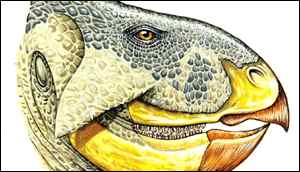 Beaks, horns, frills: Why did dinos have them?
The males showed off their ornate frills and crests, while the females looked on, said Scott Sampson of the Utah Museum of Natural History.
Some think they were used for temperature control - to cool or heat the blood - or as weapons. But Dr Sampson had a more prosaic explanation - sex. He argued the structures were the dinosaur's equivalent of the peacock's tail and were used to compete for a mate. The reason, he said, was that frills and horns vary widely in different dinosaur species, so were unlikely to have a single biological function. Dinosaur dating "A lot of these animals probably would have faced off side-to-side to increase the apparent size of their bodies," Dr Sampson told BBC News Online. "They might have raised their tails in the air and swung the tail around and things like that. "Modern animals certainly do things like that to raise their stature and increase their apparent size. "So I don't see any reason why dinosaurs wouldn't have done that," he added. Evidence of male and female dinosaurs has been hard to demonstrate from the fossil record, however. The most famous is a Tyrannosaurus Rex on display in the United States. The skeleton was thought to be female and was given the name Sue. But some palaeontologists are not convinced. "The evidence is weak to nil," Dr Sampson told reporters at the British Association festival of science in Leicester. Oldest sex In a separate presentation, Professor David Siveter of the University of Leicester spoke of evidence of separate sexes in the fossil record. He said sexual dimorphism (males and females) first appeared more than 500 million years ago. The oldest sex act preserved in the fossil record is found in 100 million year old rock from Brazil, he claimed. The species in question was an ostracod, he said - an ancient crustacean only one millimetre across. | |
See also:  05 Sep 02 | Science/Nature 29 Aug 02 | UK 21 Mar 02 | Science/Nature Internet links: The BBC is not responsible for the content of external internet sites Top Leicester 2002 stories now: Links to more Leicester 2002 stories are at the foot of the page. | ||||||||||||||||||||||||||||||||||||||||||||||||||||||||||||||||||||||||||||||||||||||||||||||||||||||||||||||||||||||||||||||||||||||||||||||||||||||||||
| |
|  E-mail this story to a friend E-mail this story to a friend |
|  |
| Links to more Leicester 2002 stories |
| | | ||
 | ||||
 | | Back to top
| ||
| ---------------------------------------------------------------------------------- To BBC Sport>> | To BBC Weather>> | To BBC World Service>> ---------------------------------------------------------------------------------- © MMIII | News Sources | Privacy |