|
 |
 | | | | | | ||||||||||||||||||||||||||||||||||||||||||||||||||||||||||||||||||||||||||||||||||||||||||||||||||||||||||||||||||||||||||||||||||||||||||||||||||||||||||
| | | You are in: In Depth: Leicester 2002 | ||||||||||||||||||||||||||||||||||||||||||||||||||||||||||||||||||||||||||||||||||||||||||||||||||||||||||||||||||||||||||||||||||||||||||||||||||||||||||||
|
| |  Tuesday, 10 September, 2002, 11:54 GMT 12:54 UK Tuesday, 10 September, 2002, 11:54 GMT 12:54 UK Carbon burial experiment works 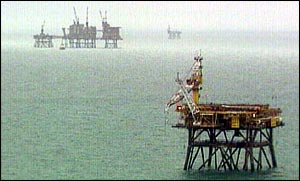 It could become standard practice in the North Sea
An experiment has been running in the Sleipner Field since 1996, in which waste CO2 that comes up with the extracted methane is separated off and then pumped back under ground. It would normally be vented into the atmosphere.
It has been suggested that carbon sequestration, as it has become known, could be a practical tool that allows humans to keep using fossil fuels without contributing to any global warming effect. It could become normal practice not just for oil and gas companies but electricity generation companies as well. It is possible that power stations could collect their CO2 for storage and burial. 'Technically feasible' "If we wish to stabilise atmospheric concentrations of CO2 at present levels, we will have to reduce emissions to zero in the next 50 years," Dr Chadwick told the BBC. "And carbon sequestration is probably one of the most powerful techniques we have in that time for reducing those emissions. "We believe it is safe; it is certainly technically feasible and really has very little environmental downside." The experiment, run under the direction of the Norwegian Statoil company, uses established technology to separate out the 9% CO2 "impurity" in the methane. This is then sent back down, in the form of a fluid that is just lighter than water, into an 800-metre-deep layer of porous sandstone. So far, Statoil has returned five million tones of CO2 to the sub-surface rocks in this way. Expensive option Seismic imaging conducted by Dr Chadwick shows the plume of CO2 is behaving normally and is not leaking. In the last two years, it has reached the top of the reservoir. The bubble has a lateral extent of about 1.7 kilometres. Separating CO2 from methane in a gas field is relatively straightforward. The great prize would be to find an inexpensive and practical technique for scrubbing the emissions from power stations. "There are major cost implications," Dr Chadwick said. "The overall efficiency of a modern gas-fired power station would be substantially reduced. "Also, you'd have to find suitable locations to store the carbon. There are plenty of locations in the North Sea - the obvious locations are exhausted oil and gas fields which have proven ceiling capacity where we know gas cannot easily escape from." | |
See also:  10 Nov 00 | Science/Nature 01 Aug 02 | Science/Nature 29 Nov 00 | Science/Nature Internet links: The BBC is not responsible for the content of external internet sites Top Leicester 2002 stories now: Links to more Leicester 2002 stories are at the foot of the page. | ||||||||||||||||||||||||||||||||||||||||||||||||||||||||||||||||||||||||||||||||||||||||||||||||||||||||||||||||||||||||||||||||||||||||||||||||||||||||||
| |
|  E-mail this story to a friend E-mail this story to a friend |
|  |
| Links to more Leicester 2002 stories |
| | | ||
 | ||||
 | | Back to top
| ||
| ---------------------------------------------------------------------------------- To BBC Sport>> | To BBC Weather>> | To BBC World Service>> ---------------------------------------------------------------------------------- © MMIII | News Sources | Privacy |