|
 |
 | | | | | | ||||||||||||||||||||||||||||||||||||||||||||||||||||||||||||||||||||||||||||||||||||||||||||||||||||||||||||||||||||||||||||||||||||||||||||||||||||||||||||||||||||||||||||||||||||||||
| | | You are in: In Depth: Leicester 2002 | ||||||||||||||||||||||||||||||||||||||||||||||||||||||||||||||||||||||||||||||||||||||||||||||||||||||||||||||||||||||||||||||||||||||||||||||||||||||||||||||||||||||||||||||||||||||||||
|
| |  Monday, 9 September, 2002, 09:55 GMT 10:55 UK Monday, 9 September, 2002, 09:55 GMT 10:55 UK Antarctic animals feel the heat 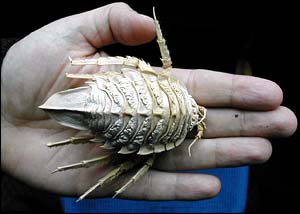 Isopods could not migrate away from warmer waters
Studies conducted by the British Antarctic Survey showed the many cold-blooded invertebrates which populate the edge of the icy continent will struggle to survive if the environment changes as expected. Professor Lloyd Peck and colleagues looked at how sea spiders, clams, isopods and other animals reacted when the temperature of their habit waters was raised in line with climatologists' forecasts. Every organism in the study died, Professor Peck told the British Association's festival of science in Leicester. "In this part of the world we have some of the most exotic animals on the planet. These groups are under threat." Early problems The periphery of Antarctica has seen some extreme changes in recent years. The Peninsula region, for example, has warmed up faster than almost anywhere on Earth - an increase of 2.5 degrees Celsius in the last 50 years. And computer models suggest sea temperatures in this area could rise by four or five degrees in the next 100 years - perhaps as a result of human effects. Professor Peck said such rises would challenge the physiology of many creatures. "The problem that they have is that they have a limited ability to carry oxygen around the body. As their temperature goes up with the temperature of the sea, their requirement for oxygen goes up and eventually they reach a point where they can't supply enough to their tissues and they basically asphyxiate at their upper lethal temperatures." And Professor Peck stressed that the animals began to experience problems even at lower temperature rises of only two to three degrees. Good news But if the outlook is grim for some seabed creatures, it may not be quite as bad for krill, the shrimp-like crustaceans that are a staple food for so many of Antarctica's fish and sea mammals such as whales. Using a mini-sub to investigate the krill's behaviour in the region, Dr Andrew Brierly, from St Andrews University, has found that the crustaceans tend to swarm at the edge of the shelves where their own algal foodsource is abundant. This means that even if global warming reduces sea-ice area in Antarctica, the impact on the krill will be minimal. "You can do the maths yourself," Dr Brierly told the BBC. "Even if you have a 25% reduction in area, that equates only to a 9% reduction in the extent of the sea-ice edge. And the reductions in ice area being forecast are by no means accepted by the whole scientific community." | |
See also:  24 Jan 02 | Science/Nature 07 Mar 02 | Scotland Internet links: The BBC is not responsible for the content of external internet sites Top Leicester 2002 stories now: Links to more Leicester 2002 stories are at the foot of the page. | ||||||||||||||||||||||||||||||||||||||||||||||||||||||||||||||||||||||||||||||||||||||||||||||||||||||||||||||||||||||||||||||||||||||||||||||||||||||||||||||||||||||||||||||||||||||||
| |
|  E-mail this story to a friend E-mail this story to a friend |
|  |
| Links to more Leicester 2002 stories |
| | | ||
 | ||||
 | | Back to top
| ||
| ---------------------------------------------------------------------------------- To BBC Sport>> | To BBC Weather>> | To BBC World Service>> ---------------------------------------------------------------------------------- © MMIII | News Sources | Privacy |