|
 |
 | | | | | | ||||||||||||||||||||||||||||||||||||||||||||||||||||||||||||||||||||||||||||||||||||||||||||||||||||||||||||||||||||||||||||||||||||||||||||||||||||||||||||||||||||||||||||||||||||||||||||||||||
| | | You are in: Europe | ||||||||||||||||||||||||||||||||||||||||||||||||||||||||||||||||||||||||||||||||||||||||||||||||||||||||||||||||||||||||||||||||||||||||||||||||||||||||||||||||||||||||||||||||||||||||||||||||||||
|
| | Monday, 9 December, 2002, 12:54 GMT Why Serbs won't elect a president 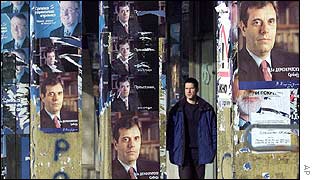 Serbs are disillusioned by the political landscapes For a second time, Serbia's voters have failed to turn out in enough numbers to elect their president. On Sunday, only 45% of voters cast their ballots in a re-run of October's presidential elections. That left the vote short of the 50% turnout needed for the result to count and, as in October, made the poll invalid.
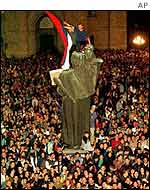
What has made Serbs so apathetic they can't be bothered to choose a president? Just two years ago they took to the streets en masse to overthrow Slobodan Milosevic and demand a democratic government. Dusan Janjic, co-ordinator of the Forum for Ethnic Relations in Belgrade, says people are disillusioned after hoping for change, but then seeing the new guard indulging in the same practices as the Milosevic regime. "Our people really distrust democracy," said Mr Janjic. "If people don't trust democratic procedures, if government doesn't work on strengthening the influence of democracy, we're really in trouble". He pinpoints three root causes for Sunday's poor turnout:
He said they had failed to engage the electorate. But pollster Srdjan Bogosalljavic says the problem is as much the outgoing president as the challengers. "[Voters] are fed up with the arguments of politicians but they have doubts about the importance of the president of Serbia," he said. Milan Milutinovic, who currently holds that post, is an old hand from the Milosevic regime. Like Mr Milosevic, he is indicted for war crimes at the Hague tribunal and he has been almost invisible from the political scene since Mr Kostunica and Mr Djindjic took the helm. "It's very hard to explain to the population of Serbia that it's an extremely important position now but it was not an extremely important position for the last two years," said Mr Bogosalljavic. Struggle ahead So what happens now? Will there be elections again and again until enough people turn up to vote?
When Mr Milutinovic steps down in early January, the speaker of the Serbian parliament, Natasa Micic is expected to fill in the position until a successor is found. In Mr Bogosalljavic's view, a successful third round of elections would be all but impossible. Instead, he sees Mr Kostunica trying to fight it out with Mr Djindjic. Mr Kostunica will be out of a job soon when the Yugoslav federation becomes a loose union between Serbia and Montenegro, doing away with his post of Yugoslav president. He may not yet have his hands on the Serbian presidency, but he will be keen to keep up his influence on the Serbian political scene. Mr Bogosalljavic expects him to try to bring down Mr Djindzic's administration in the Serbian parliament, provoking early national parliamentary elections. But, he warns, it will be messy. "It is not realistic that they will succeed very easily. My expectation is that we will have a whole year of struggle between these two groups". | |
See also:  09 Dec 02 | Europe 14 Oct 02 | Europe 14 Oct 02 | Europe 30 Sep 02 | Europe 11 Oct 02 | Europe 09 Aug 02 | Europe 08 Dec 02 | Europe Internet links: The BBC is not responsible for the content of external internet sites Top Europe stories now: Links to more Europe stories are at the foot of the page. | ||||||||||||||||||||||||||||||||||||||||||||||||||||||||||||||||||||||||||||||||||||||||||||||||||||||||||||||||||||||||||||||||||||||||||||||||||||||||||||||||||||||||||||||||||||||||||||||||||
| |
|  E-mail this story to a friend E-mail this story to a friend |
| |
| Links to more Europe stories |
| | | ||
 | ||||
 | | Back to top
| ||
| ---------------------------------------------------------------------------------- To BBC Sport>> | To BBC Weather>> | To BBC World Service>> ---------------------------------------------------------------------------------- © MMIII | News Sources | Privacy |