|
 |
 | | | | | | ||||||||||||||||||||||||||||||||||||||||||||||||||||||||||||||||||||||||||||||||||||||||||||||||||||||||||||||||||||||||||||||||||||||||||||||||||||||||||||||||||||||||||||||||||||||||||||||||||
| | | You are in: Europe | ||||||||||||||||||||||||||||||||||||||||||||||||||||||||||||||||||||||||||||||||||||||||||||||||||||||||||||||||||||||||||||||||||||||||||||||||||||||||||||||||||||||||||||||||||||||||||||||||||||
|
| | Monday, 9 December, 2002, 12:03 GMT Crisis looms after Serbian poll failure 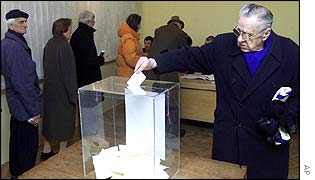 The failed ballot may see the government challenged Yugoslav President Vojislav Kostunica has vowed to contest the latest round of Serbian presidential elections after too few people turned out to make the result valid.
Sunday's poll repeated a fiasco seen in October, when the first attempt to elect a president also fell foul of the 50% threshold. Mr Kostunica won almost 60% of votes cast on Sunday and got two-thirds of the votes first time round. But he has complained electoral lists were inflated with more than half a million non-existent voters, making the 50% hurdle harder to cross. The bitter enmity between Mr Kostunica and his political rival, Serbian Prime Minister Zoran Djindjic means the scene is now set for a power struggle which could rip the Serbian political establishment apart. Mr Kostunica accuses Mr Djindjic of scuppering attempts to completely annul the law imposing the 50% threshold, after the failure of the October election.
Mr Kostunica is currently Yugoslav President - a post that will cease to exist under the new union of Serbia and Montenegro that is to be formed. Serbian analysts are speculating that Mr Kostunica's party may seek to destabilise, or even bring down the Serbian Government, in an attempt to prevent Mr Kostunica from being sidelined by Mr Djindjic. 'Crime' "We will not recognise the results of this election," Mr Kostunica said after the results of Sunday's vote were announced. "Crime is the right word for what happened here".
The term of current Serbian President Milan Milutinovic runs out in January. He is then likely to be extradited to The Hague where he has been indicted for war crimes alongside Mr Milosevic. The Serbian parliament speaker, Natasa Micic, is likely to fill in the presidency until a successor can be found. Kostunica blamed Observers blamed the low turnout on the first winter snows and continuing voter apathy and popular discontent with politicians. "I voted last time but not now. Why should I vote since they only argue about their positions?" Milutin Bajevic, a 58-year-old dentist from Belgrade, told the AFP news agency. But Prime Minister Djindjic blamed Mr Kostunica for the failure of voters to turn up. ''The exclusive responsibility ... is on Kostunica," Mr Djindjic said. ''I did not see any campaign. The voters were not animated.'' Mr Kostunica went to court to challenge the annulment of the October election, alleging that only the addition of 630,000 "ghost" voters to the electoral roll had prevented turnout crossing the 50% threshold. But the court said he should have objected before the election. Last month parliament amended the election law removing the 50% threshold for the second round of the vote, but leaving it in place for the first round. | |
See also:  14 Oct 02 | Europe 14 Oct 02 | Europe 30 Sep 02 | Europe 11 Oct 02 | Europe 09 Aug 02 | Europe 08 Dec 02 | Europe Internet links: The BBC is not responsible for the content of external internet sites Top Europe stories now: Links to more Europe stories are at the foot of the page. | ||||||||||||||||||||||||||||||||||||||||||||||||||||||||||||||||||||||||||||||||||||||||||||||||||||||||||||||||||||||||||||||||||||||||||||||||||||||||||||||||||||||||||||||||||||||||||||||||||
| |
|  E-mail this story to a friend E-mail this story to a friend |
| |
| Links to more Europe stories |
| | | ||
 | ||||
 | | Back to top
| ||
| ---------------------------------------------------------------------------------- To BBC Sport>> | To BBC Weather>> | To BBC World Service>> ---------------------------------------------------------------------------------- © MMIII | News Sources | Privacy |