|
 |
 | | | | | | |||||||||||||||||||||||||||||||||||||||||||||||||||||||||||||||||||||||||||||||||||||||||||||||||||||||||||||||||||||||||||||||||||||||||||||||||||
| | | You are in: Entertainment | |||||||||||||||||||||||||||||||||||||||||||||||||||||||||||||||||||||||||||||||||||||||||||||||||||||||||||||||||||||||||||||||||||||||||||||||||||||
|
| | Tuesday, 18 February, 2003, 10:51 GMT Interactive TV still 'teletext on steroids'  Do viewers want interactive services?
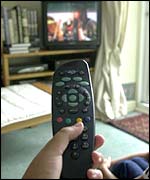
How often do you use your red button? And what do you use it for? Half of us now live in homes with digital television, so half of us have some kind of interactive service. But how big a difference has it made?
We have duly voted in our millions. But often those votes are delivered by phone, text or e-mail, not via the red button. And digital interactivity was supposed to offer far more than simple "yes-no" or "select 1,2 or 3"-type choices. Some of the things it offered we turned out not to want. Shopping from the sofa, for instance. Handful BSkyB quietly withdrew its Open service, a commercial venture in which interactive capacity was rented out to the likes of Woolworths. It has been replaced by a much-reduced service called Sky Active, boasting offerings from a handful of brands like Asda and Domino's Pizza. I made the mistake the other day of telling the BBC's director of new media, Ashley Highfield, that I was a sceptic about interactive television. His response was admirably restrained and polite but you could tell he was miffed. He rattled off a barrage of statistics to persuade me I was wrong. Eight million people used their red button while watching sport on the BBC last year. Last year's Children in Need received �1m from people using their red buttons to make donations, though he admitted that interactive services are still little more than "teletext on steroids". On-screen betting Over at Sky there are mixed messages. The company's financial results for the six months to 31 December show that revenue from interactive services, at �91m, had not increased from the same period the previous year. Just under half of that (�43m) came from on-screen betting, down slightly on the year before. But Sky Active revenues increased 15% to �48m, thanks mainly to people playing games on their TV screens and to an increase in interactive advertising. In my view the jury is still out on interactive TV, not least because there will always be a conflict between those members of a household who want to use the digital set for betting or playing games and those who want to watch old-fashioned TV programmes. But I am prepared to accept that I may have been too hasty in writing it off. And ITV apparently agrees with me. Last week it signed a deal to use Sky's interactive technology. Last Saturday it launched an interactive version of Who Wants to be a Millionaire. | |
See also:  13 Sep 02 | Entertainment 05 Nov 02 | Technology 09 Apr 02 | Entertainment Internet links: The BBC is not responsible for the content of external internet sites Top Entertainment stories now: Links to more Entertainment stories are at the foot of the page. | |||||||||||||||||||||||||||||||||||||||||||||||||||||||||||||||||||||||||||||||||||||||||||||||||||||||||||||||||||||||||||||||||||||||||||||||||||
 | |
|  E-mail this story to a friend E-mail this story to a friend |
| |
| Links to more Entertainment stories |
| | | ||
 | ||||
 | | Back to top
| ||
| ---------------------------------------------------------------------------------- To BBC Sport>> | To BBC Weather>> | To BBC World Service>> ---------------------------------------------------------------------------------- © MMIII | News Sources | Privacy |