|
 |
 | | | | | | ||||||||||||||||||||||||||||||||||||||||||||||||||||||||||||||||||||||||||||||||||||||||||||||||||||||||||||||||||||||||||||||||||||||||||||||||
| | | You are in: Entertainment | ||||||||||||||||||||||||||||||||||||||||||||||||||||||||||||||||||||||||||||||||||||||||||||||||||||||||||||||||||||||||||||||||||||||||||||||||||
|
| | Friday, 13 September, 2002, 16:40 GMT 17:40 UK Warning over TV 'red key fatigue'  Viewers can watch news bulletins on demand
Interactive TV, the technology that gives viewers extra choice and information through remote controls, faces the risk of being stillborn, television executives have been warned. "Red key fatigue", referring to the button viewers press to access interactive TV (iTV), has already set in because many of the current features are not good enough, a conference has been told. Progress has been slow because equipment manufacturers and iTV producers have not lived up to promises, Europe's biggest broadcasting trade fair, IBC, heard.
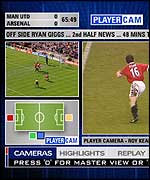
The long-held view in the industry was that iTV services would generate a fortune in revenues. Interactive games and sports viewing is currently where the short-term money is being made. But the BBC's Richard Cooper cautioned that "red key fatigue" had already set-in because some of the content is not compelling. Mr Cooper used the conference to showcase the corporation's successes in iTV, and said they had moved on from the acclaimed Wimbledon 2001 multi-screen and results service to more regular interactive output.
Testing across the muddle of digital systems, terrestrial, cable and satellite also means that time is lost. Media consultant Philip Langsdale, formerly of BBC Technology, said broadcasters have been too slow to launch interactive services. "Real interactivity will only come through integration of broadcast and internet", which could be reached within three to five years, he said. Despite the setbacks, Mr Langsdale believes that true interactivity will be a key factor in hooking viewers because it offers control, personalisation, immediacy and choice. It will keep viewers interested and help reinforce brands. Financial problems Matthew Huntingdon, Open TV's director of projects, said the lowest common denominator - suited to the slowest digital platform - was often the result of current projects. In Europe, dominated by pay-TV, the operators want the best use to be made of their systems, but this is a challenge for the multi-platform iTV producers. iTV has also been hit hard by the financial problems in European TV. In the last year, Europe's digital TV operators have seen their revenues shrink - especially in the UK and Spain - and media advertising spend has fallen. Not a priority All this is taking place against a background of turmoil among telecom companies, internet sector collapse and uncertainty over government policy on digital migration in several European countries. In today's media economy, interactivity is no longer a priority. Fixing all the problems will require an extremely complex system infrastructure, as well as very deep pockets to support the significant investment involved. Equally crucial, media analysts said, will be collaboration, rather than competition. Producers, broadcasters, telecom companies, software developers and equipment manufacturers must work together - but they have traditionally found it hard to co-operate. | | See also:  09 Apr 02 | Entertainment 20 Nov 01 | Entertainment 04 Dec 01 | Entertainment 06 Mar 02 | Entertainment 18 Feb 02 | Entertainment 15 Nov 01 | Entertainment Internet links: The BBC is not responsible for the content of external internet sites Top Entertainment stories now: Links to more Entertainment stories are at the foot of the page. | ||||||||||||||||||||||||||||||||||||||||||||||||||||||||||||||||||||||||||||||||||||||||||||||||||||||||||||||||||||||||||||||||||||||||||||||||
| |
|  E-mail this story to a friend E-mail this story to a friend |
| |
| Links to more Entertainment stories |
| | | ||
 | ||||
 | | Back to top
| ||
| ---------------------------------------------------------------------------------- To BBC Sport>> | To BBC Weather>> | To BBC World Service>> ---------------------------------------------------------------------------------- © MMIII | News Sources | Privacy |