|
 |
 | | | | | | |||||||||||||||||||||||||||||||||||||||||||||||||||||||||||||||||||||||||||||||||||||||||||||||||||||||||||||||||||||||||||||||||||||||||||||||||||||||||||||||||||||
| | | You are in: Business | |||||||||||||||||||||||||||||||||||||||||||||||||||||||||||||||||||||||||||||||||||||||||||||||||||||||||||||||||||||||||||||||||||||||||||||||||||||||||||||||||||||||
|
| | Friday, 14 February, 2003, 12:05 GMT Bali tourism struggles to its feet  Many of the bomb's victims were young tourists
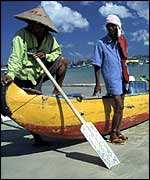
Four months after his bar was blown up, Balinese entrepreneur Kadek Wiranatha is launching an airline. "As a Balinese, if I don't do this who will?" says the 44-year old civil engineer who owns four hotels plus taxi firms, restaurants, a nightclub and a catamaran cruising business - all of which are now struggling for business.
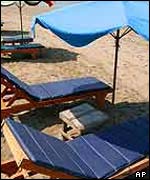
One of the bombs destroyed Paddy's Pub, a popular nightspot which was part of Mr Wiranatha's business empire. Elsewhere, the resort of Kuta is beginning to bustle again but the blast site remains desolate. Back to golf "It's empty, there is scaffolding, a partition around the site: left and right you can see shops opening and lights on, people still pay their respects when they go by, but around the place it's getting back," says hotelier Michel Kottray, general manager of the Sheraton Nusa Indah Resort. It's a good image for Bali's tourism industry, from which 70% of islanders make their living. After the bombing, the Indonesian government hit back with a mix of golf tournaments, celebrity visits and concerts. The state president brought a big entourage and some government conferences were switched to Bali. Empty hotel rooms With the Christmas season wrecked, it launched an emergency drive to get Indonesian tourists to fill the hotel rooms left empty by nervous Westerners.
The strategy worked: official figures show visitor numbers jumped 17.6% in December to 281,928 compared to 239,774 in November, but hotel rooms are still only one third full and most hotel workers are on half time. Unfortunately, catering for domestic tourists is less lucrative, even in normal times. Indonesian tourist packages cost about 50% of the prices demanded of Westerners, says Peter Semone Vice-President of industry umbrella group Pacific Asia Travel Association (PATA) and an ex-Bali resident and tour operator. Comfort factor Getting Westerners, particularly Australians who were the main victims, to feel comfortable in Bali again is vital to bring back prosperity.
Arrivals have picked up to 2,000 foreign visitors a day, better than 800 a day after the blast, but far below the normal 5,000 foreigners a day, says Mr Semone. Many of Bali's 35,000 hotel rooms are shuttered and staff are relying on relatives in farming villages to support them. "We try to work two weeks on, two weeks off," says Mr Wiranatha, who is trying to avoid layoffs. "I rotate them." Vivid images Bali's tourism industry is gearing up to promote itself to the Australian public again after a deliberate four month pause during which efforts focused on reassuring tour operators about new security measures. "We felt that promoting the destination very heavily just after the bomb is not the right thing to do," says Mr Kottray, one of a 45-member alliance of four and five star hotel managers. "The memory was still too vivid for public consumption", agrees Mr Semone. Hotels now have security checkpoints and a police hotline and staff scan underneath cars with mirrors. The Indonesian government has hired international PR firm Gavin Anderson to restore Bali's image: "In the short term," says director Andrew Woodward, the focus will be on "deals to get people there, rather than undertake big image advertising". Signs of hope There are signs that discounting is working.
Publicity will be stepped up too. Gavin Anderson is planning a big blitz of tourism officials and trade fairs ahead of the summer season. Creating demand among tour operators is vital to getting numbers up as airlines will only restore flights to Bali if they can be sure of seat sales. "The good news is that there is capacity coming back into Bali, a lot of airlines are looking at increasing capacity from the second quarter or so (of 2003)," says Mr Woodward. Cheap and cheerful? In the longer term, he worries that discounting could be hard to reverse. Some emergency measures could lead to better facilities; hotelier Mr Kottray is avoiding layoffs by sending section heads to other Sheratons abroad for training, for instance. Mr Wiranatha, who was forced to delay the launch of Air Paradise last October, is convinced that discounting is the way ahead if it brings visitors back to Bali, and has switched to cheap family holidays from his previous market of trendy young travellers and weekenders. "Why build the pub for young people? Because there's no young people in Bali yet, I build my airline," he says. | |
See also:  17 Oct 02 | Business 25 Jan 03 | From Our Own Correspondent 17 Jan 03 | Asia-Pacific 16 Jan 03 | Asia-Pacific Internet links: The BBC is not responsible for the content of external internet sites Top Business stories now: Links to more Business stories are at the foot of the page. | |||||||||||||||||||||||||||||||||||||||||||||||||||||||||||||||||||||||||||||||||||||||||||||||||||||||||||||||||||||||||||||||||||||||||||||||||||||||||||||||||||||
 | |
|  E-mail this story to a friend E-mail this story to a friend |
| |
| Links to more Business stories |
| | | ||
 | ||||
 | | Back to top
| ||
| ---------------------------------------------------------------------------------- To BBC Sport>> | To BBC Weather>> | To BBC World Service>> ---------------------------------------------------------------------------------- © MMIII | News Sources | Privacy |