|
 |
 | | | | | | ||||||||||||||||||||||||||||||||||||||||||||||||||||||||||||||||||||||||||||||||||||||||||||||||||||||||||||||||||||||||||||||||||||||||||||||||||||||||||||||||||||||
| | | You are in: Business | ||||||||||||||||||||||||||||||||||||||||||||||||||||||||||||||||||||||||||||||||||||||||||||||||||||||||||||||||||||||||||||||||||||||||||||||||||||||||||||||||||||||||
|
| | Saturday, 19 October, 2002, 07:04 GMT 08:04 UK Indonesia's moment of truth? 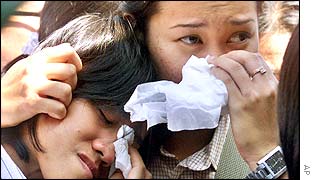 The scale of the bombing shocked many
The last time companies activated this initial stage of alert was after the 11 September attacks on the World Trade Center.
"White alert" - the first of four stages that culminate in "red alert" and the evacuation of all employees - has already exerted a dampening influence on Indonesia's ex-pat communities. In the oil town of Balikpapan in East Kalimantan, ex-pats have been warned to put aside $500 in cash and have passports at the ready. Security guards outside office blocks, marine facilities and oil wells now carry machine guns and check for bombs under cars. Time to flee? Meanwhile, wives and families are mulling advice from various foreign offices around the world to leave the country.
Those left behind are finding their work disrupted by bomb threats - the Jakarta Stock Exchange was forced to evacuate its premises on Thursday. The spectre of a mass exodus will no doubt deal yet another blow to Indonesia's already fragile business confidence. "The impact on business sentiment is potentially more serious that the direct impact on tourism," says Andrew Steer, the World Bank's country director for Indonesia. Toughing it out To some extent, however, the world's oil, gas and mining companies are familiar with the modus operandi in Indonesia. Only four years ago, as ethnic riots rocked Jakarta, multinationals removed non-essential personnel by the plane-load.
"Oil people are not easily frightened," says Dr Jonathan Pincus from the School of African and Oriental Studies (SOAS) in London. Following the Bali bombing, ExxonMobil is reviewing its security and putting appropriate measures in place. However, for all its trials, there is never talk of pulling out. "We are committed to long-term investment in Indonesia," says spokeswoman Deva Rachman. Indonesia's status as one of Asia's most prospective oil zones remains a powerful lure not only for ExxonMobil, but also for France's TotalfinaElf, and America's Unocal and ChevronTexaco (Caltex). The last straw? But, however robust the oil companies may be, Indonesia's economy is still very vulnerable to this latest shock. "I do believe it's a threat to Indonesia's ongoing recovery," says the World Bank's Mr Steer.
The World Bank has attempted to nurse the country back to health and was recently encouraged by a "slow" recovery. Economic growth picked up in 2000 at nearly 5%, before slowing to 3.3% in 2001. This year the economy was forecast to expand at almost 4%, but Mr Steer says that the Bali bombing and subsequent drop-off in tourism could knock off about 1%. "It's very bad news for the economy - it couldn't come at a worse time," adds SOAS' Dr Pincus. "Exports are down and investment is very low." Megawati's moment But the real concern will be the impact on Indonesian consumers, who may decide to keep their wallets firmly in their pockets with the threat of more violence and general economic uncertainty.
"You could argue that this will tip the balance." Most agree that Indonesia's fate hinges on the resolve of its president, Megawati Sukarnoputri, and her ability to restore confidence. "The worst-case scenario will be if we don't see any legitimate security response from the government," says John Green, a political analyst at the consulting and advisory firm, Eurasia, in New York. "In the past Megawati has been a notoriously inactive and impassive personality." 'A very energetic spirit' However, there are hopes that the scale of the Bali bombing, relative to previous attacks in the country, will spur the government into action. "Until now security was not taken seriously enough at the political level," says one observer in Jakarta. "This has woken up the government and broken the opposition. "The Security Minister Susilo Bambang Yudhoyono is almost delighted that no one can deny there is a problem anymore." The World Bank's Mr Steer is also optimistic that the new momentum will yield economic reform. "We are working closely with the government and we see a very positive attitude - it is not cheerful - but the government is in a very energetic spirit." Certainly, while the identity of the bombers behind the Bali tragedy remains murky, investors will be looking for maximum reassurance. And in the many cities like Jakarta and Balikpapan, many more people will be hoping to resume normal life again - or at least as normal as it gets in Indonesia. 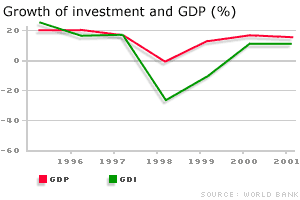 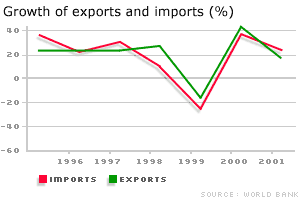 | |
See also:  18 Oct 02 | Politics 18 Oct 02 | Asia-Pacific 17 Oct 02 | Business 17 Oct 02 | Business 19 Aug 02 | Asia-Pacific 12 Jun 02 | Business 25 Apr 02 | Business 06 Mar 02 | Business 25 Feb 02 | Business 08 Nov 01 | Business 23 Jul 01 | Business Internet links: The BBC is not responsible for the content of external internet sites Top Business stories now: Links to more Business stories are at the foot of the page. | ||||||||||||||||||||||||||||||||||||||||||||||||||||||||||||||||||||||||||||||||||||||||||||||||||||||||||||||||||||||||||||||||||||||||||||||||||||||||||||||||||||||
| |
|  E-mail this story to a friend E-mail this story to a friend |
| |
| Links to more Business stories |
| | | ||
 | ||||
 | | Back to top
| ||
| ---------------------------------------------------------------------------------- To BBC Sport>> | To BBC Weather>> | To BBC World Service>> ---------------------------------------------------------------------------------- © MMIII | News Sources | Privacy |