|
 |
 | | | | | | |||||||||||||||||||||||||||||||||||||||||||||||||||||||||||||||||||||||||||||||||||||||||||||||||||||||||||||||||||||||||||||||||||||||||||||||||||||||||||||||||||||||||||||||||||||||||||||||||||||||||||||||||||||||||||||
| | | You are in: Asia-Pacific | |||||||||||||||||||||||||||||||||||||||||||||||||||||||||||||||||||||||||||||||||||||||||||||||||||||||||||||||||||||||||||||||||||||||||||||||||||||||||||||||||||||||||||||||||||||||||||||||||||||||||||||||||||||||||||||||
|
| | Monday, 30 December, 2002, 10:39 GMT Analysis: North Korea - US plays it cool  The US agenda and that of North Korea are far apart
But it raises the question as to why it is threatening war against Iraq while offering talks to North Korea.
"We are looking for ways to communicate with the North Koreans so some sense can prevail," he said. "We have no plans to attack North Korea," he added. The US Assistant Secretary for East Asia, James Kelly, is to return to the region soon but but is not expected to go to North Korea. Security Council role Washington wants the UN Security Council to become involved, probably after a meeting on 6 January of the International Atomic Energy Agency, whose monitoring of North Korea's nuclear facilities has now been made impossible. But North Korea's neighbours, too, might be asked to cut back on economic links. And there are suggestions that the United States might intercept North Korean exports of its currency-earning missiles. The idea would be to squeeze North Korea until it decided to negotiate. The policy is being called "tailored containment", according to US officials quoted by the New York Times.
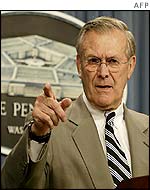
The United States, facing a conflict with Iraq, would prefer to deal with one war at a time, even though its strategy, as the Defence Secretary Donald Rumsfeld reminded people recently, is to be able to fight two. Agreement hopes But diplomacy is also being pursued because of a belief that it might be successful. This approach worked in 1994 when North Korea was persuaded to freeze its nuclear weapons programme in exchange for the provision of two modern nuclear power plants and fuel oil to bridge the gap.
But it is also that agreement which gives some hope that North Korea is in principle interested in talks and that its aggressive moves are part of a negotiating ploy. Positions far apart The diplomatic track is not an easy one. The negotiating positions of North Korea and the United States are far apart. And there are fears in some diplomatic quarters that there is no real prospect of a negotiation - but the likelihood of a confrontation in which North Korea would simply go on developing its nuclear programme until it had a bomb. For a start, according to a senior Bush administration official, Washington will not even open talks until the North suspends its nuclear programme. And President Bush's agenda for a negotiation includes not only the renunciation by North Korea of nuclear weapons, but a halt to its export of missile technology, greater human rights internally and the pursuit of re-unification talks with the South. In exchange, there could be a lifting of sanctions and, eventually perhaps, the US might recognise the North as other Western countries have done. North Korean agenda The North Korean leader Kim Jong-il, insofar as one can judge him at all, appears to see in the Bush plans a blueprint for the demise of his regime. He therefore proposes a different one - a non-aggression pact, outright recognition by the US and plenty of economic aid.
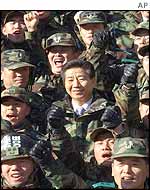
South Korea is pressing for a purely diplomatic approach without too much pressure on the North. The South Korean President-elect Roh Moo-hyun was helped to office by his pledge to continue the "sunshine" policy towards the North of the outgoing President Kim Dae-jung. Washington is also mobilising support from Japan, Russia and especially China which is thought, rightly or wrongly, to retain some influence over North Korea. UN involvement The US, Japan and South Korea are meeting in January under the Trilateral Co-ordination and Oversight group under which they balance their policies towards North Korea. The group building the two overdue reactors, the Korean Peninsula Energy Development Organisation (Kedo) - financed largely by Japan and South Korea - will also meet soon to decide their future.
Governments do not always see their own long-term interests as others do. The options then would be continued isolation of the North or war. There is a precedent for an air strike to be considered. In 1994, President Clinton's Defence Secretary William Perry drew up plans for a raid on the North's nuclear plants. He wrote in a recent article in the Washington Post: "We made our willingness to use military force crystal clear... by positioning forces to strike Yongbyon [the key nuclear plant] and reinforcing our military units that were deployed to defend South Korea." Such an air strike could well lead North Korea to launch its million-man army across the demarcation line into the South. War in three phases War games by the Americans have indicated that an attack could be stopped before it took the South Korean capital, Seoul, but at great cost. The South would not be a pushover. It has an army of 650,000 and the Americans have a force of 37,000 there, though hundreds of thousands of reserves would also be needed. Above all, the US has its air force. Three phases of a war are foreseen:
That at least is the plan. Nobody wants it put to the test. | |
See also:  27 Dec 02 | Asia-Pacific 24 Dec 02 | Asia-Pacific 22 Dec 02 | Asia-Pacific 15 Dec 02 | Asia-Pacific Internet links: The BBC is not responsible for the content of external internet sites Top Asia-Pacific stories now: Links to more Asia-Pacific stories are at the foot of the page. | |||||||||||||||||||||||||||||||||||||||||||||||||||||||||||||||||||||||||||||||||||||||||||||||||||||||||||||||||||||||||||||||||||||||||||||||||||||||||||||||||||||||||||||||||||||||||||||||||||||||||||||||||||||||||||||
 | |
|  E-mail this story to a friend E-mail this story to a friend |
| |
| Links to more Asia-Pacific stories |
| | | ||
 | ||||
 | | Back to top
| ||
| ---------------------------------------------------------------------------------- To BBC Sport>> | To BBC Weather>> | To BBC World Service>> ---------------------------------------------------------------------------------- © MMIII | News Sources | Privacy |






 We are looking for ways to communicate with the North Koreans so some sense can prevail