|
 |
 | | | | | | ||||||||||||||||||||||||||||||||||||||||||||||||||||||||||||||||||||||||||||||||||||||||||||||||||||||||||||||||||||||||||||||||||||||||||||||||||||||||||||||||||||||||||||||||
| | | You are in: Asia-Pacific | ||||||||||||||||||||||||||||||||||||||||||||||||||||||||||||||||||||||||||||||||||||||||||||||||||||||||||||||||||||||||||||||||||||||||||||||||||||||||||||||||||||||||||||||||||
|
| | Monday, 14 October, 2002, 12:57 GMT 13:57 UK Rescue workers struggle to cope 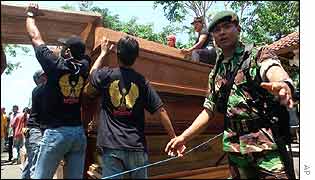 Efforts have been hampered by a lack of facilities The immense effort to aid survivors and identify and preserve the dead following Saturday's bomb explosion in Bali, which killed 188 people, is proving almost overwhelming for rescue workers.
Australian radio reported that Balinese hospital authorities faced a race against time to identify bodies before they decompose beyond recognition in the intense heat and humidity. And friends and families face an anxious wait as forensic officials have been forced to work from dental and fingerprint records. 'Chaotic' Employees at the Sanglah General Hospital morgue in Bali are struggling to preserve the bodies of those killed, injecting them with formalin, a formaldehyde-based chemical which embalms bodies, French news agency AFP reported.
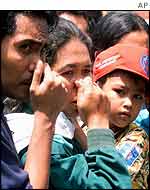
However stocks of the chemical are reportedly running out, and workers are having to place blocks of ice next to the bodies in an attempt to keep them cold and prevent them from decomposing. "That is about the only easy thing we can do to help preserve the bodies, chill them with ice," Doctor Budi Sampurno told AFP. "It is not a question of a shortage of formalin, it is just that everything is too chaotic at the moment and we have been unable to properly inject every incoming body with it." Britain and Australia are to send refrigeration containers to aid with preserving the remains. Lack of facilities Hospital officials have been placing corpses which remain intact in yellow body bags, laying them in rows in a hallway outside the morgue. Body parts and incomplete corpses were placed in black bags to await identification, but doctors pleaded for international aid to assist with the process. "The bodies will remain at the hospital until we can identify them and send them to the respective countries," one doctor said. "I don't know how we are going to cope and we may need foreign help." Efforts to aid those injured have also been hampered by lack of facilities - there is no specialist burns unit on the island and only a few doctors are equipped to deal with trauma cases. Sad search Families filed into the hospital in the search for victims, some weeping as they clutched pictures of their loved ones.
"We have been pleading with the authorities for two days for information about who was killed and I've had to find out this way, by looking at the bodies of all these young people," said father John Golotta, who lost his daughter Angela. "They were all innocents, it's a nightmare." Australian hospitals are also struggling to cope with the influx of victims, who were flown back to their country for treatment by specially chartered commercial flights or Australian Government planes. Many of the victims are suffering from horrific burns over their entire bodies; one victim died during one of the flights home, while another reportedly died soon after arrival, hospital officials said. Hospitals in Darwin, Sydney and the western city of Perth have been forced to issue an appeal for blood donations after the scale of the rescue operation became clear. | |
Internet links:  The BBC is not responsible for the content of external internet sites Top Asia-Pacific stories now: Links to more Asia-Pacific stories are at the foot of the page. | ||||||||||||||||||||||||||||||||||||||||||||||||||||||||||||||||||||||||||||||||||||||||||||||||||||||||||||||||||||||||||||||||||||||||||||||||||||||||||||||||||||||||||||||||
| |
|  E-mail this story to a friend E-mail this story to a friend |
| |
| Links to more Asia-Pacific stories |
| | | ||
 | ||||
 | | Back to top
| ||
| ---------------------------------------------------------------------------------- To BBC Sport>> | To BBC Weather>> | To BBC World Service>> ---------------------------------------------------------------------------------- © MMIII | News Sources | Privacy |