|
 |
 | | | | | | ||||||||||||||||||||||||||||||||||||||||||||||||||||||||||||||||||||||||||||||||||||||||||||||||||||||||||||||||||||||||||||||||||||||||||||||||||||||||||||||||||||||||||||||||||||||||||||||||||||||||||||||||
| | | You are in: Asia-Pacific | ||||||||||||||||||||||||||||||||||||||||||||||||||||||||||||||||||||||||||||||||||||||||||||||||||||||||||||||||||||||||||||||||||||||||||||||||||||||||||||||||||||||||||||||||||||||||||||||||||||||||||||||||||
|
| | Friday, 20 September, 2002, 07:59 GMT 08:59 UK North Korea pressed on South's missing 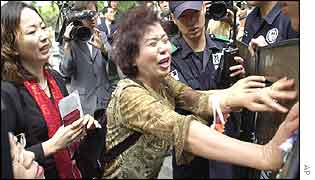 Relatives of the missing are pressing Seoul to act South Korea has said it will step up efforts to persuade North Korea to return hundreds of its citizens it believes the Stalinist state has abducted and is holding against their will.
The ministry said that North Korean has abducted 3,790 South Koreans since the end of the 1950-53 Korean War. Most of these people were fishermen, and 486 of them had still not been returned. Separately, Seoul officials also believe at least 481 South Korean prisoners of war are still alive in the North. North Korean denial "We have a different case from that of Japan, considering we had a war (with North Korea)," the ministry statement said. "We will continue efforts to resolve the issue via inter-Korean dialogue." North Korea denies the alleged kidnappings. The South's unification ministry said the government had raised the issue with Pyongyang in the early 1990s but had failed to make progress. But the two sides did agree in September, at their latest Red Cross talks, to search for people missing in action from the Korean War. Following the admission by North Korean leader Kim Jong-il over the kidnapped Japanese, a dozen angry relatives of missing South Koreans visited the Unification Ministry on Thursday to demand their government win a similar concession from the North.
South Korean newspapers have quoted former North Korean agents as saying that kidnapped South Koreans have been used to train spies. In Japan, the public is still reeling from the shock of learning that eight of its abductees are now dead. There is also public anger at the news that Tokyo initially withheld the dates of their deaths. On Thursday it emerged that two of them - Keiko Arimoto and Toru Ishioka - died on the same day in November 1988, two months after one of them smuggled a letter home. And according to Japan's Asahi Shimbun, of the four women who died, three were in their 20s and one was in their 30s at the time of death. Mr Kim says the abductees died from natural causes or natural disasters, but many Japanese suspect foul play. | |
See also:  18 Sep 02 | Media reports 17 Sep 02 | Asia-Pacific 17 Sep 02 | Asia-Pacific 17 Sep 02 | Asia-Pacific Internet links: The BBC is not responsible for the content of external internet sites Top Asia-Pacific stories now: Links to more Asia-Pacific stories are at the foot of the page. | ||||||||||||||||||||||||||||||||||||||||||||||||||||||||||||||||||||||||||||||||||||||||||||||||||||||||||||||||||||||||||||||||||||||||||||||||||||||||||||||||||||||||||||||||||||||||||||||||||||||||||||||||
| |
|  E-mail this story to a friend E-mail this story to a friend |
| |
| Links to more Asia-Pacific stories |
| | | ||
 | ||||
 | | Back to top
| ||
| ---------------------------------------------------------------------------------- To BBC Sport>> | To BBC Weather>> | To BBC World Service>> ---------------------------------------------------------------------------------- © MMIII | News Sources | Privacy |