|
 |
 | | | | | | |||||||||||||||||||||||||||||||||||||||||||||||||||||||||||||||||||||||||||||||||||||||||||||||||||||||||||||||||||||||||||||||||||||||||||||||||||||||||||||||||||||||||||
| | | You are in: Asia-Pacific | |||||||||||||||||||||||||||||||||||||||||||||||||||||||||||||||||||||||||||||||||||||||||||||||||||||||||||||||||||||||||||||||||||||||||||||||||||||||||||||||||||||||||||||
|
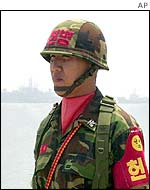
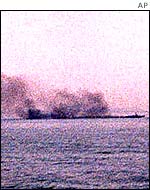
| | Tuesday, 2 July, 2002, 17:38 GMT 18:38 UK US halts talks after Korean battle Up to 35 sailors were killed in the naval clash The United States has put off a visit to North Korea by a high-level delegation for planned security talks.
The two sides remain at loggerheads over who was responsible for the sea battle which is believed to have killed around 35 sailors. The US said another problem was that Pyongyang had not replied to the offer of talks with leading diplomat James Kelly, though they could be resumed at a later date. Mr Kelly, the Assistant Secretary of State for East Asian Affairs, had been planning to travel to North Korea next week. More talks offered State Department spokesman Richard Boucher said: "We're very concerned about this incident, about the armed provocation. "We've also made proposals for further talks. "Once we hear from them, we'll consider it all together."
The main issue for the US is Pyongyang's missile development and export programme. Both North and South Korea blame each other for starting the shooting on Saturday, though the North has said the US was clearly behind the skirmish. Four South Korean sailors were killed, one is missing and 19 others injured in the Yellow Sea clash, west of the Korean peninsula. It is estimated that 30 North Koreans died in the worst maritime clash between the two sides for three years. South Korean President Kim Dae-jung has demanded that North Korea apologise for the "provocation" that sparked the naval battle.
"We strongly demand an apology, the punishment of those responsible and steps to prevent it from happening again." A North Korean foreign ministry statement said the US was trying to "drive a wedge" between the two Koreas, and must have known what was happening because of its close links with the South Korean military. Armistice 'violated' Donald Rumsfeld, the US Defence Secretary, said the battle had violated the terms of the armistice. "It's clear that the North Korean vessel came south," he said. The Koreas remain technically at war as the 1950-53 Korean War ended in a truce, not a peace treaty. But in recent years, efforts have been made at reconciliation, including a series of organised reunions of families split up by the North-South divide. The 20-minute sea battle took place on the border unilaterally imposed by the United Nations after the war, and which the North does not recognise. | |
See also:  02 Jul 02 | Asia-Pacific 30 Jun 02 | Media reports 30 Jun 02 | Asia-Pacific 29 Jun 02 | Asia-Pacific 07 May 02 | Asia-Pacific 29 Jun 02 | Media reports Internet links: The BBC is not responsible for the content of external internet sites Top Asia-Pacific stories now: Links to more Asia-Pacific stories are at the foot of the page. | |||||||||||||||||||||||||||||||||||||||||||||||||||||||||||||||||||||||||||||||||||||||||||||||||||||||||||||||||||||||||||||||||||||||||||||||||||||||||||||||||||||||||||
| |
|  E-mail this story to a friend E-mail this story to a friend |
| |
| Links to more Asia-Pacific stories |
| | | ||
 | ||||
 | | Back to top
| ||
| ---------------------------------------------------------------------------------- To BBC Sport>> | To BBC Weather>> | To BBC World Service>> ---------------------------------------------------------------------------------- © MMIII | News Sources | Privacy |