|
 |
 | | | | | | ||||||||||||||||||||||||||||||||||||||||||||||||||||||||||||||||||||||||||||||||||||||||||||||||||||||||||||||||||||||||||||||||||||||||||||||||||||||||||||||||
| | | You are in: Americas | ||||||||||||||||||||||||||||||||||||||||||||||||||||||||||||||||||||||||||||||||||||||||||||||||||||||||||||||||||||||||||||||||||||||||||||||||||||||||||||||||||
|
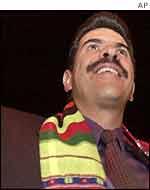
| | Tuesday, 9 July, 2002, 03:39 GMT 04:39 UK Congress to choose Bolivia president Evo Morales second place came as a surprise Electoral officials in Bolivia say the former President and businessman, Gonzalo Sanchez de Lozada, has won the most votes in the country's presidential elections - though not enough to win outright. Mr Sanchez de Lozada - a right-wing pro-market reformer - obtained nearly 22.5% of the vote.
Under Bolivian law it now falls to Congress to choose the president between the two leading candidates ahead of the 6 August inauguration. Officials said 0.3% of the votes have yet to be counted, but said they would not make a difference to the results already announced. Anti-US campaigner Bad weather delayed the counting process by over a week, with heavy snows blocking access to parts of the south of the country.
Initial results had Mr Reyes Villa, a former army captain and mayor, running neck and neck with Mr Sanchez de Lozada. Mr Morales' success came as a surprise - exit polls had placed him third, with around 16% of the vote. An Aymara Indian and leader of a peasant movement, Evo Morales is well-known for organising anti-government protests and for his opposition to the US-backed drug-eradication programmes. Changes promised Before the election, the United States warned that financial aid could be withdrawn if Mr Morales became president. An intervention, correspondents say, that is likely to have benefited the Mr Morales amid growing public frustration with what many Bolivians see as foreign interference in their country. All three leading candidates promised major changes during their campaigns. And correspondents say whoever is chosen as president, is likely to move away from free market policies - which have so far failed to improve Bolivia's position as one of the poorest countries in Latin America. The nine parties represented in Congress are now expected to try and form alliances to reach the necessary 80 out of 157 votes to choose a president. | | See also:  28 Jun 02 | Americas 29 Jun 02 | Americas 21 Jun 01 | Business 20 Dec 00 | Americas 05 May 02 | Americas 28 Mar 02 | Country profiles Internet links: The BBC is not responsible for the content of external internet sites Top Americas stories now: Links to more Americas stories are at the foot of the page. | ||||||||||||||||||||||||||||||||||||||||||||||||||||||||||||||||||||||||||||||||||||||||||||||||||||||||||||||||||||||||||||||||||||||||||||||||||||||||||||||||
| |
|  E-mail this story to a friend E-mail this story to a friend |
| |
| Links to more Americas stories |
| | | ||
 | ||||
 | | Back to top
| ||
| ---------------------------------------------------------------------------------- To BBC Sport>> | To BBC Weather>> | To BBC World Service>> ---------------------------------------------------------------------------------- © MMIII | News Sources | Privacy |