|
 |
 | | | | | | |||||||||||||||||||||||||||||||||||||||||||||||||||||||||||||||||||||||||||||||||||||||||||||||||||||||||||||||||||||||||||||||||||||||||||||||||||||||||||||||||||||||||||||||||||||||||||||||||||||||||||||||||||||||||||||||||||||||||||||||||||||||||
| | | You are in: Americas | |||||||||||||||||||||||||||||||||||||||||||||||||||||||||||||||||||||||||||||||||||||||||||||||||||||||||||||||||||||||||||||||||||||||||||||||||||||||||||||||||||||||||||||||||||||||||||||||||||||||||||||||||||||||||||||||||||||||||||||||||||||||||||
|
| | Wednesday, 26 June, 2002, 09:45 GMT 10:45 UK Analysis: The summit for Africa? African countries want a new deal from the West
A resort in the Canadian Rockies is about as far from Africa as you can get - but the French want to call it the Summit of Africa. That is because the leaders of the G8 industrialised countries intend it to be the place where a grand bargain is struck between the West and Africa.
For the Americans, worried about a possible new attack by Osama Bin Laden's followers, the emphasis will also be on President George W Bush's war on terrorism. And now, following Mr Bush's Middle East speech calling for a new Palestinian leadership, there is a new focus. European leaders are openly opposing the President's policy. As often happens with summits, a sudden new issue will dominate headlines - though not necessarily the discussions among leaders. But it is a divisive issue, with George Bush choosing to be at his most combative on the eve of an meeting with his allies. The Africa initiative is called Nepad - the New Partnership for Africa's Development.
The idea is that African countries will work to prevent and resolve conflicts on the continent and will promise better government. The G8 will pledge economic help, ranging from direct aid for health and education to debt relief and the removal of trade restrictions. Start of process It will not all happen at once and some, or much of it, might not happen at all. It is the start of a process. But Africa wants it - indeed South African President Thabo Mbeki has strongly promoted it and will be at the summit with other African leaders. Now the G8 has to put its money where its hopes are. "We want the African people to prosper," said the Canadian Prime Minister and the meeting's host, Jean Chretien. "It is not charity. It is an investment. But we have to give them a chance to compete."
It is not a pledging session in the sense that vast sums of new money will be announced. Not long ago, western countries promised $12bn to poorer countries in general at a meeting in Mexico. But during the G8 summit in Kananaskis, there will be pressure to get much of that money directed towards Africa. There have already been individual donations to sweeten the atmosphere. Mr Bush, for example, has announced $500m to fight Aids in Africa and $100m for education. Canada has set up a $500m (Canadian) Africa Fund. Britain has announced a 60% increase in aid for Africa and says it will give �1bn a year by 2006, though the British Prime Minister, Tony Blair, is not alone in thinking that trade not aid is the best way to help the poor.
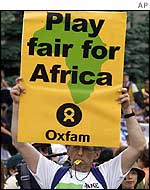
Those in the West campaigning on Africa's behalf say that trade has to be fair and that aid should be generous. A report from the British-based aid agency Oxfam says that the G8 and other donors should be giving $49bn a year. Oxfam's Africa manager, Anneka Van Woudenberg, said: "It is morally indefensible that millions of people, whose lives are a daily struggle, are ignored. We are hoping for commitments which go beyond just words." War on terror The discussion on terrorism will centre on the prosecution of the multi-faceted war announced by Mr Bush after 11 September. He said recently of his anti-terrorism coalition: "They are kind of looking at the United States, and if I blink, it's likely they'll go to sleep.
"So we've got to stay strong and determined to lead - to lead the world to defend our freedoms and I'll do just that." But underneath the words of encouragement, differences of emphasis might emerge. Some European countries are worried about the next stage of the war - a possible attack on Iraq. Reassurance needed Mr Bush will have to reassure and explain his policies, though he is not expected to seek detailed support for an Iraq campaign at this stage. And if he now faces disgreements over his policy towards Yasser Arafat, an even larger rift could develop if he one day decides to use military force against Saddam Hussein. | |
See also:  24 Jun 02 | Business 24 Jun 02 | Business 23 Jun 02 | Business 24 Jun 02 | Business Internet links: The BBC is not responsible for the content of external internet sites Top Americas stories now: Links to more Americas stories are at the foot of the page. | |||||||||||||||||||||||||||||||||||||||||||||||||||||||||||||||||||||||||||||||||||||||||||||||||||||||||||||||||||||||||||||||||||||||||||||||||||||||||||||||||||||||||||||||||||||||||||||||||||||||||||||||||||||||||||||||||||||||||||||||||||||||||
| |
|  E-mail this story to a friend E-mail this story to a friend |
| |
| Links to more Americas stories |
| | | ||
 | ||||
 | | Back to top
| ||
| ---------------------------------------------------------------------------------- To BBC Sport>> | To BBC Weather>> | To BBC World Service>> ---------------------------------------------------------------------------------- © MMIII | News Sources | Privacy |