|
 |
 | | | | | | ||||||||||||||||||||||||||||||||||||||||||||||||||||||||||||||||||||||||||||||||||||||||||||||||||||||||||||||||||||||||||||||||||||||||||||||||||||||||||||||||||||||||||||||||||
| | | You are in: Business | ||||||||||||||||||||||||||||||||||||||||||||||||||||||||||||||||||||||||||||||||||||||||||||||||||||||||||||||||||||||||||||||||||||||||||||||||||||||||||||||||||||||||||||||||||||
|
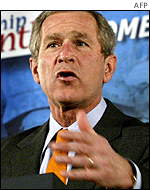
| | Sunday, 23 June, 2002, 07:59 GMT 08:59 UK The US as 'Lone Ranger' President Bush has proposed $500m for HIV prevention
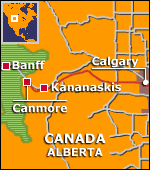
As world leaders gear up for this year's G8 meeting in Canada, BBC News Online examines why the US appears so out of step with the rest of its partners. As the world's sole superpower, the US stands as an easy target for ridicule - much like its current president.
The criticism has fallen especially fast and hard from US allies in recent months after President George W Bush proposed new tariffs on imports of steel and softwood lumber, and signed a controversial new farming bill. The US parts ways on several other key issues with its European, Canadian and Japanese friends, leaving it to appear a lone wolf to the rest of the Group of Eight (G8) nations, which are set to convene this week in the western Canadian province of Alberta. Protecting interests The European Union (EU) has denounced recently imposed US steel tariffs as staunch protectionism, and has been equally critical of aid to US farmers, which became law last month. Critics say the measures contradict Mr Bush's own call for expanded free markets, especially among countries of North and South America.
Given its recent support of import tariffs to protect its own industries, the US would seem to back free-market policies only when they benefit its interests. Nevertheless, as the richest and most powerful country in the world, US policies can't help but look different, argues Geoffrey Herrera, a professor of political science at Temple University in Philadelphia. "European states are equally if not more protectionist of their agricultural sectors and strategic industries," he says. The perception changes, however, when the ostensible leader of the global free-trade movement acts so blatantly to protect its own interests. Indeed, the protectionist tendencies of the Bush administration are defensible given that no country enjoys completely open and free markets. Brutal markets In promoting free trade, Mr Bush walks a fine line. Even as he pursues his agenda, he also must weigh the needs of his US constituency.
These are, after all, the chief concerns of government, and if it means protecting some markets, then so be it, says Warren Haffar, director of the international peace and conflict resolution programme at Arcadia University in suburban Philadelphia. "Often times [Americans] are for free trade when it's to our advantage," he says. "And we're not when it hurts us." He hastens to add, however, that markets are notoriously cruel. The least efficient producer gets cast aside, a phenomenon with which the US is all too familiar. "If you're really talking about a free international marketplace... US industry is going to take a hit as well," Mr Haffar says. "That's part of the process." Going it alone To be sure, part of the reason Mr Bush has come under such criticism for his policies is that they are much more conservative than his predecessor, Bill Clinton.
"The Clinton administration reasoned it could forestall the emergence of competition by trying to avoid looking threatening," says Temple University's Herrera. Mr Bush has taken the opposite tack, however, positioning itself as a force to be dealt with, he says. "The US looks like it is going it alone because the Bush administration and the European administrations disagree on the very substance of policy, domestic and foreign," Mr Herrera says. Given that anyone has the potential to be a competitor, and therefore a threat to American dominance, it is likely the US will disagree with everyone at some point. Reaching consensus One other point to consider is the attacks of 11 September not only had a profound effect on the way the US goes about its business but the way in which it perceives itself.
In doing so, he concedes the US needs the help of its allies more than ever. While Canada, Europe and Japan may rail against the US on its trade policies, acts of terrorism remain a far greater threat than tariffs. To assure peace and prosperity in their own countries, the other members of the G8 may have to set aside some of their own concerns to help the world's remaining superpower in its bid to thwart terror and promote peace. | |
See also:  21 Jun 02 | Business 19 Jun 02 | Africa 22 Mar 02 | Business 10 Jun 02 | Business 24 May 02 | Business Internet links: The BBC is not responsible for the content of external internet sites Top Business stories now: Links to more Business stories are at the foot of the page. | ||||||||||||||||||||||||||||||||||||||||||||||||||||||||||||||||||||||||||||||||||||||||||||||||||||||||||||||||||||||||||||||||||||||||||||||||||||||||||||||||||||||||||||||||||
| |
|  E-mail this story to a friend E-mail this story to a friend |
| |
| Links to more Business stories |
| | | ||
 | ||||
 | | Back to top
| ||
| ---------------------------------------------------------------------------------- To BBC Sport>> | To BBC Weather>> | To BBC World Service>> ---------------------------------------------------------------------------------- © MMIII | News Sources | Privacy |