|
 |
 | | | | | | |||||||||||||||||||||||||||||||||||||||||||||||||||||||||||||||||||||||||||||||||||||||||||||||||||||||||||||||||||||||||||||||||||||||||||||||||||||||||||||||||||||||||||||||||||||||||||||
| | | You are in: Africa | |||||||||||||||||||||||||||||||||||||||||||||||||||||||||||||||||||||||||||||||||||||||||||||||||||||||||||||||||||||||||||||||||||||||||||||||||||||||||||||||||||||||||||||||||||||||||||||||
|
| | Saturday, 8 February, 2003, 16:17 GMT Crisis-hit Malawians 'survive on grass'  Riverbeds have turned to sand
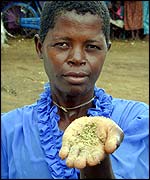
The food crisis in Malawi is now so severe that some of the worst-hit people are reduced to eating grass. Aid agencies fear that nearly a third of the population - about 3.3 million people - face starvation in the coming months if relief funds dwindle and erratic weather does not bring much-needed rain in time for the harvest.
Demonstrating as she speaks, she says: "We take it from the ground, rub it to take away the husks, then grind the seeds to make flour to cook with." She says it is the same for everyone in her village and the next one - up to 1,000 people in all. And that is just the people she knows about. "It tastes sour, and everyone is constipated," she says. "It is not good for the children to eat. Sometimes if we have a little maize we give it to the children. When we have nothing we all eat grass." Survival priority Modesta's village is in Malawi's southernmost Nsanje district, near the border with Mozambique. It is rainy season right now but that does not mean very much. Every river we crossed for 50 kilometres (30 miles) was completely dry. It means the maize cannot grow. Here, as in other, greener, parts of Malawi, the aim of the aid agencies is to help people to help themselves - by giving them fertiliser for their maize crops or chickens, whose eggs add a little protein to their diets. But now in arid Nsanje the priority is survival.
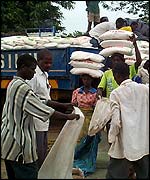
At Tengani 1,000 people wait for up to six hours to collect rations that will keep their family alive for a month. Drawn from eight villages in the area, they have all walked for hours to get here - mothers with babies, the elderly, even one man on crutches. They will have to walk back. It is the same across this district - thousands queue, while thousands more wait at home. The system targets the most needy. You have to be registered to receive - no form, no food. 'Never enough' Invariably people slip through the net, a fact acknowledged by the relief organisations. Abby King from Tearfund, one of Britain's largest aid agencies, said: "We manage to reach some of the most vulnerable people but it's impossible to reach absolutely everyone.
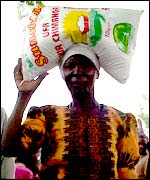
"Our local partner organisations are working flat out but the need is overwhelming and the supplies are never enough." There is precious little to go round: 30 kilograms of maize flour and five kilograms of pigeon peas for a family of five for a month. One grandmother says there are nine in her family. She sets off alone on the 5km walk to her village, balancing three 10kg bags of maize flour on her head. We ask: is it enough? "God willing," she says. Rajesh Mirchandani reports from Malawi for the Julian Worricker programme on Sunday 9 February, starting at 1000 GMT on | |
See also:  20 Aug 02 | Africa 26 Nov 02 | Health 04 Sep 02 | Africa Internet links: The BBC is not responsible for the content of external internet sites Top Africa stories now: Links to more Africa stories are at the foot of the page. | |||||||||||||||||||||||||||||||||||||||||||||||||||||||||||||||||||||||||||||||||||||||||||||||||||||||||||||||||||||||||||||||||||||||||||||||||||||||||||||||||||||||||||||||||||||||||||||
 | |
|  E-mail this story to a friend E-mail this story to a friend |
| |
| Links to more Africa stories |
| | | ||
 | ||||
 | | Back to top
| ||
| ---------------------------------------------------------------------------------- To BBC Sport>> | To BBC Weather>> | To BBC World Service>> ---------------------------------------------------------------------------------- © MMIII | News Sources | Privacy |