|
 |
 | | | | | | ||||||||||||||||||||||||||||||||||||||||||||||||||||||||||||||||||||||||||||||||||||||||||||||||||||||||||||||||||||||||||||||||||||||||||||||||||||||||||||||||||||||||||||||||||||||||||||
| | | You are in: Africa | ||||||||||||||||||||||||||||||||||||||||||||||||||||||||||||||||||||||||||||||||||||||||||||||||||||||||||||||||||||||||||||||||||||||||||||||||||||||||||||||||||||||||||||||||||||||||||||||
|
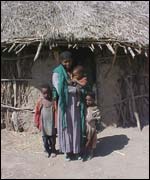
| | Tuesday, 19 November, 2002, 09:25 GMT Ethiopia: The warning signs of famine 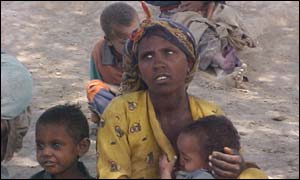 Ethiopia faces a famine dwarfing the 1980 disaster
Drought and famine have been a feature of life in Ethiopia throughout history, from the major droughts in 1888 and 1913 and in more recent times 1972/3 and 1984/5 stand out. Now there are warnings that 2002/3 may have disastrous consequences perhaps even greater than those of 1984/5. This raises the questions why is it that Ethiopia has been and remains subject to drought and why is drought associated with such tragic consequences for the people of Ethiopia? Rainfall in large parts of Ethiopia shows a high level of year to year variability. 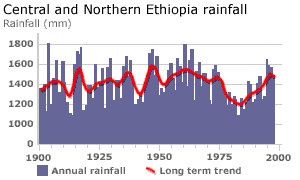 This means that unlike in many temperate regions, such as northern Europe, farmers have to contend with high uncertainty in the timing and amount of rainfall which has consequences for their ability to reliably produce food. A number of exceptionally dry years have occurred, such as 1913, and also a sequence from 1979 to 1984 which contributed to the major famine of 1984/5. The events of the 1970s and 1980s were not unprecedented in terms of individual dry years but were unprecedented in terms of the prolonged period of successively drier than average years. A series of dry years are much more likely to produce severe consequences as people's capacity to withstand drought is gradually reduced over time.
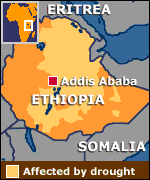
What is an even greater challenge, however, is to predict whether and how such droughts may erode food security and in some cases lead to famine. Difficulty of conditions Ethiopia is a vast and diverse mountainous country almost five times the size of the UK.
In addition, the physical conditions are harsh - the land is mountainous, communications and infrastructure are poor and in places soils have been subject to erosion and decline in fertility. Access to fertilisers and pesticides are extremely limited. This means that for many Ethiopians even in normal years life is very difficult and in some areas food imports are necessary in most years. Agriculture is labour intensive and at subsistence level so that farmers and pastoralists can only produce enough to feed themselves. Living in these marginal conditions drought brings additional pressures and in the case of severe or successive droughts farmers may be unable to produce enough food to satisfy even their most basic needs. Worse case scenario The current estimates of the numbers of people that may be affected by the current drought run well into the millions, even up to 14 million. Whether the worst case scenario materialises depends upon many factors including, the degree of failure of this season's harvest, the international community's response in terms of food and other aid, the Ethiopian people's ability to cope with decline in their own food production, and the Ethiopian Government's capacity to respond effectively to this potential disaster. In 1984/85 the ongoing civil war between the Ethiopian Dergue regime and the people of Eritrea and Tigray greatly exacerbated the effects of the drought. In Ethiopia's favour now is the fact that there is no longer civil war or war with Eritrea. Droughts of varying degrees of severity will continue to occur across Ethiopia - but it is not a given that famine will always follow drought. The immediate concern is for the Ethiopian Government, with the aid of the international community, to work as hard as possible to avert a humanitarian disaster over the coming months. In the longer term, however, it is vital to improve the capacity of Ethiopians and their government to increase overall food security and reduce vulnerability to drought. These goals are only likely to be achieved through good governance, political stability and meaningful assistance from the international community. | |
See also:  18 Nov 02 | Africa 26 Jul 02 | Africa Internet links: The BBC is not responsible for the content of external internet sites Top Africa stories now: Links to more Africa stories are at the foot of the page. | ||||||||||||||||||||||||||||||||||||||||||||||||||||||||||||||||||||||||||||||||||||||||||||||||||||||||||||||||||||||||||||||||||||||||||||||||||||||||||||||||||||||||||||||||||||||||||||
| |
|  E-mail this story to a friend E-mail this story to a friend |
| |
| Links to more Africa stories |
| | | ||
 | ||||
 | | Back to top
| ||
| ---------------------------------------------------------------------------------- To BBC Sport>> | To BBC Weather>> | To BBC World Service>> ---------------------------------------------------------------------------------- © MMIII | News Sources | Privacy |