|
 |
 | | | | | | ||||||||||||||||||||||||||||||||||||||||||||||||||||||||||||||||||||||||||||||||||||||||||||||||||||||||||||||||||||||||||||||||||||||||||||||||||||||||||||||||||||||||||||||||||||
| | | You are in: Africa | ||||||||||||||||||||||||||||||||||||||||||||||||||||||||||||||||||||||||||||||||||||||||||||||||||||||||||||||||||||||||||||||||||||||||||||||||||||||||||||||||||||||||||||||||||||||
|
| | Friday, 25 October, 2002, 14:38 GMT 15:38 UK Analysis: Burundi's tortuous talks 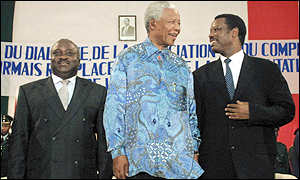 Hopes of peace were high a year ago
The ethnic Hutu rebels insist that President Pierre Buyoya attend in person, to guarantee that any deal would be respected but he has not indicated whether he will make the short trip to Dar es Salaam.
Ethnic Tutsis, who make up about 15% of the population, have traditionally dominated Burundi - as in neighbouring Rwanda - and this has continued since independence in 1961. The latest conflict began in October 1993, when Tutsi paratroopers assassinated the country's first democratically elected president, Melchior Ndadaye, a Hutu. Under a deal brokered by former South African President Nelson Mandela last year, a power-sharing transitional government was set up on 1 November last year. Laurent Ndayuhurume, editor of the BBC Great Lakes service, says that the arrangement has worked fairly well, with none of the squabbling and ministerial walk-outs which ruined previous attempts at power-sharing. Window-dressing Following the assassination of Mr Ndadaye, South African troops are in Bujumbura, protecting Hutu politicians, who are taking part in the power-sharing arrangement. Hutu Vice President Domitien Ndayizeye is due to swap jobs with Mr Buyoya on 1 May next year - half-way through the three year transition period, supposed to culminate in elections.
But rebels from the Forces for the Defence of Democracy (FDD) led by Pierre Nkuranziza and Rwasa Agathon's National Liberation Front (FNL), who have refused to lay down their weapons, argue that while Tutsis control the army, even a Hutu president would be mere window-dressing. "The problem is not who is president, it's far more complex than that," Gervais Rufikiri of the FDD told BBC News Online. Under the Mandela-brokered deal, rebel fighters were supposed to be integrated into the army, so that the ethnic balance was 50-50. But Tutsis, with vivid memories of the 1994 Rwandan genocide, in which around 800,000 Tutsis and moderate Hutus were killed in just 100 days, are wary of giving up their military dominance to the majority. South African Vice President Jacob Zuma has replaced Nelson Mandela as mediator of the Burundi talks. Jobless soldiers And South Africa is well-placed to offer advice on merging rival fighting forces into a single unified army, having done precisely that after black majority rule was introduced in 1994. But Burundi is much poorer than South Africa.
It is estimated that between the two active rebel groups and the army, some 60,000 Burundians are currently armed. With a population of six million, a 20,000-strong army would be more than enough in times of peace. So if the war did end, 40,000 armed men would find themselves without a job. The ceasefire signed earlier this month did provide for a demobilisation of all armed forces and for a completely new defence force to be created, according to the FDD wing which signed it. Their spokesman Jerome Ndiho told BBC News Online that the rebels still holding out in Dar es Salaam would not get a better deal than that. Horse-trading However, even if the main wings of the rebels do accept a similar deal, a peace settlement would still be a long way off. Mr Ndiho said that important questions, such as how big the new army would be and when fighters would be disarmed were "still to be negotiated".
And the agreement also provides for the inclusion of rebel representatives in the transitional government. So, there is likely to be a whole new round of horse-trading over ministerial portfolios, if a ceasefire is signed. In the meantime, both groups continue to fight, with FLN forces close to the capital, Bujumbura, and civilians pay the price. They know that even a trip to the market could prove fatal if shells - from either the rebels or the army - fall in the wrong place. But the BBC's Laurent Ndayuhurume says that while fighting continues in Burundi, Rwanda and by extension much of central Africa, will remain unstable. Burundi and Rwanda have such similar histories and ethnic make-ups that tensions in one country inevitably spill across the border. And the conflicts in these countries have led to "Africa's first world war" in the Democratic Republic of Congo, dragging in the armies of Angola, Chad, Namibia, Uganda and Zimbabwe, as well as Rwandan and Burundi. But equally, if Hutus and Tutsis in Burundi could find a way to share both political and military power, it could provide a model for Rwanda to follow. | |
See also:  21 Oct 02 | Africa 08 Oct 02 | Africa 04 Oct 02 | Africa 12 Aug 02 | Africa 14 Jul 02 | Africa 05 Apr 02 | Africa Internet links: The BBC is not responsible for the content of external internet sites Top Africa stories now: Links to more Africa stories are at the foot of the page. | ||||||||||||||||||||||||||||||||||||||||||||||||||||||||||||||||||||||||||||||||||||||||||||||||||||||||||||||||||||||||||||||||||||||||||||||||||||||||||||||||||||||||||||||||||||
| |
|  E-mail this story to a friend E-mail this story to a friend |
| |
| Links to more Africa stories |
| | | ||
 | ||||
 | | Back to top
| ||
| ---------------------------------------------------------------------------------- To BBC Sport>> | To BBC Weather>> | To BBC World Service>> ---------------------------------------------------------------------------------- © MMIII | News Sources | Privacy |