|
 |
 | | | | | | ||||||||||||||||||||||||||||||||||||||||||||||||||||||||||||||||||||||||||||||||||||||||||||||||||||||||||||||||||||||||||||||||||||||||||||||||||||||||||||||||
| | | You are in: Africa | ||||||||||||||||||||||||||||||||||||||||||||||||||||||||||||||||||||||||||||||||||||||||||||||||||||||||||||||||||||||||||||||||||||||||||||||||||||||||||||||||||
|
| | Monday, 21 October, 2002, 17:16 GMT 18:16 UK Burundi peace talks delay 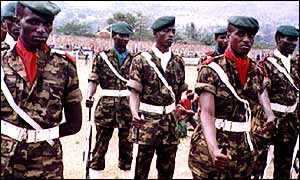 The country is in the grip of a nine-year civil war Talks aimed at securing a ceasefire in Burundi are now due to begin on Tuesday in the Tanzanian capital, Dar es Salaam. The summit, which was supposed to start on Monday, has been postponed because of the absence of the main mediator, South African Vice President Jacob Zuma. Mr Zuma, who will chair the talks, is expected in Dar es Salaam on Monday evening. Most of the parties in the Burundian civil war - the Tutsi-dominated government and the two largest Hutu rebel groups - have arrived in Dar es Salaam, a Tanzanian official told French news agency AFP.
Regional leaders have warned the warring parties to reach a ceasefire in 30 days or face possible sanctions. Talks last month between the Burundian Government and some of the main rebel groups failed to make any headway, and fighting has been intensifying in recent weeks. 'No negotiations' On Friday, one of the rebel groups, the National Liberation Forces (FNL), said it would send delegates to explain its position to the mediators, but not to negotiate with Burundi's interim power-sharing government. The other rebel group, the Forces for the Defence of Democracy (FDD), began negotiations with the government in August, but pulled out after accusing mediators of bias. But the FDD now says it is ready for negotiations.
"We have not come to sign, we have come to negotiate to reach the end of the war," FDD leader Pierre Nkurunziza told the BBC's French service. "We must start real negotiations between the real belligerents," he said. Two smaller factions of the main rebel groups already signed a ceasefire with the government last month. The assassination of the democratically elected Hutu president, Melchior Ndadaye, on 21 October 1993, sparked off the war between mostly Hutu rebel movements and the regular army, which is dominated by the Tutsi minority. At least 200,000 people, most of them civilians, have been killed, but many deaths go unreported. | | See also:  25 Aug 00 | Africa 09 Nov 01 | Africa 08 Oct 02 | Africa 04 Oct 02 | Africa 12 Aug 02 | Africa 14 Jul 02 | Africa 05 Apr 02 | Africa 07 Mar 02 | Country profiles 04 Jul 02 | Africa Internet links: The BBC is not responsible for the content of external internet sites Top Africa stories now: Links to more Africa stories are at the foot of the page. | ||||||||||||||||||||||||||||||||||||||||||||||||||||||||||||||||||||||||||||||||||||||||||||||||||||||||||||||||||||||||||||||||||||||||||||||||||||||||||||||||
| |
|  E-mail this story to a friend E-mail this story to a friend |
| |
| Links to more Africa stories |
| | | ||
 | ||||
 | | Back to top
| ||
| ---------------------------------------------------------------------------------- To BBC Sport>> | To BBC Weather>> | To BBC World Service>> ---------------------------------------------------------------------------------- © MMIII | News Sources | Privacy |