|
 |
 | | | | | | ||||||||||||||||||||||||||||||||||||||||||||||||||||||||||||||||||||||||||||||||||||||||||||||||||||||||||||||||||||||||||||||||||||||||||||||||||||||||||||||||||||||||||||||||||||||||||||||||
| | | You are in: Africa | ||||||||||||||||||||||||||||||||||||||||||||||||||||||||||||||||||||||||||||||||||||||||||||||||||||||||||||||||||||||||||||||||||||||||||||||||||||||||||||||||||||||||||||||||||||||||||||||||||
|
| | Monday, 12 August, 2002, 15:07 GMT 16:07 UK Ceasefire call at Burundi talks 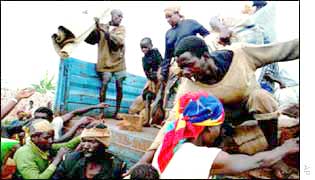 Hundreds of thousands have been displaced by the war The first ever direct talks between the Burundi Government and rebels have begun in the Tanzanian city of Dar es Salaam. Host President Benjamin Mkapa urged all participants to stop fighting while the talks are underway, reports the French news agency, AFP.
A power-sharing government between the ethnic Tutsi-led army and some Hutu groups was inaugurated last year but the FNL and the FDD refused to participate. The nine-year civil war has intensified in recent weeks. The FNL is traditionally hostile to any form of negotiations with the government - but in a surprise move last week the group ousted its hard-line chief, Agathon Rwasa, and said yes to talks. Unacceptable All warring parties should "declare a temporary suspension of hostilities during this period of negotiations as a sign of goodwill and an illustration of a genuine commitment to the peace process," Mr Mkapa said according to AFP. Negotiators from Gabon, Tanzania and South Africa will first meet envoys from the government and from the two factions of the FDD. The FNL is not expected to join the talks until two weeks later.
Analysts warn that the talks will not necessarily result in a ceasefire. The BBC's Helen Vesperini says that some of the rebel demands - such as the return to barracks by the regular army - will be unacceptable to government negotiators. There are also tensions between outside participants and some of the negotiators. South Africa is perceived as favourable to Burundian President Pierre Buyoya, while Tanzania tends to back the FDD. Burundi has frequently accused Tanzania of allowing the rebels to use its territory to launch attacks. Tanzania, which host hundreds of thousands of Burundi refugees, denies the accusations. The one thing that has not changed - at least not so far - is the situation on the ground. Despite the declarations about ceasefires and the new willingness to negotiate, the fighting continues unabated. Under last year's deal brokered by Nelson Mandela, President Buyoya is due to step down in April 2003, to be replaced by his Hutu Vice-President, Domicien Ndayizeye. More than 200,000 people have been killed in Burundi's nine-year civil war. | |
See also:  08 Aug 02 | Africa 05 Aug 02 | Africa 17 Jul 02 | Africa 14 Jul 02 | Africa 05 Apr 02 | Africa 25 Dec 01 | Africa 04 Jul 02 | Africa Internet links: The BBC is not responsible for the content of external internet sites Top Africa stories now: Links to more Africa stories are at the foot of the page. | ||||||||||||||||||||||||||||||||||||||||||||||||||||||||||||||||||||||||||||||||||||||||||||||||||||||||||||||||||||||||||||||||||||||||||||||||||||||||||||||||||||||||||||||||||||||||||||||||
| |
|  E-mail this story to a friend E-mail this story to a friend |
| |
| Links to more Africa stories |
| | | ||
 | ||||
 | | Back to top
| ||
| ---------------------------------------------------------------------------------- To BBC Sport>> | To BBC Weather>> | To BBC World Service>> ---------------------------------------------------------------------------------- © MMIII | News Sources | Privacy |