
|
 |
 | | | | | | ||||||||||||||||||||||||||||||||||||||||||||||||||||||||||||||||||||||||||||||||||||||||||||||||||||||||||||||||||||||||||||||||||||||||||||||||||||||||||||||||||||||||||||||||||||||||||||||||||||||||||
| | | You are in: Africa | ||||||||||||||||||||||||||||||||||||||||||||||||||||||||||||||||||||||||||||||||||||||||||||||||||||||||||||||||||||||||||||||||||||||||||||||||||||||||||||||||||||||||||||||||||||||||||||||||||||||||||||
|
| | Wednesday, 24 July, 2002, 12:55 GMT 13:55 UK Zimbabwe urged to take GM grain 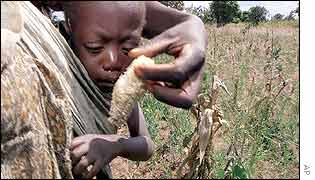 As many as 12 million people are at risk Zimbabwe could suffer from a famine by September if the government continues to refuse food aid containing genetically-modified organisms (GMO), according to a senior United States aid official.
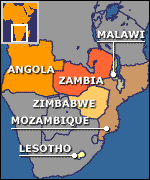
In the wider region, arguments over genetically modified food are threatening to derail efforts to help the 12 million people across southern Africa who are facing a critical food shortage, according to the BBC's Martin Plaut in Zambia. But few in Zimbabwe are really aware of the arguments over GM foods. BBC reporters there say that most people just want food. They do not know what GM food is and are not worried about its quality when they are so hungry. But they could be influenced if the government issued warnings that GM food might be unsafe, says the BBC's Lewis Machipisa in Harare. Stark choice A number of Zimbabwe's neighbours are also concerned about the possibility of their own crops being contaminated by the American aid. The government's stance over GM food was limiting the amount of food the United States Agency for International Development (USAid) could supply, the agency's assistant administrator Roger Winter said, according to the Reuters news agency. "We do not have other products that do not have GMO in the volumes and within the time frames that are necessary to keep the food pipeline full,", he said.
He also stressed that the food was safe. "It is the same food that Americans eat every day. It is the same food that has been approved by our Environmental Protection Agency," he said. Mr Winter argues that countries across southern Africa affected by the food crisis have a stark choice. "Famine and food-related deaths are not pretty. I argue that they are certain in this case if there is not an adequate food pipeline. You are going to start in all likelihood seeing serious impacts of at least a localised nature as soon as September." Mozambique is refusing to allow its ports to be used for trans-shipment to Malawi and Zimbabwe, two of the worst-hit countries in the region. Change of plans For Richard Ragan, the UN World Food Programme representative in Zambia, this could mean re-thinking the whole transport strategy. "If GMO maize can't transit Mozambique, and it's likely it would have to come in from Dar es Salaam, so that means that we have to begin to consider different options with respect to both rail and trucking opportunities in the region," he said.
One possibility would be to grind the maize before it arrives in southern Africa. This could not only be costly, but also logistically difficult, according to the BBC's Martin Plaut. And aid agencies worry that the United States might not accept conditions being imposed on its donations. Mr Winter says that if US-supplied food is not accepted, it would cause massive problems because, "the volumes that the US is offering to supply cannot be made up for by any other country or group". | |
See also:  22 Jul 02 | Africa 22 Jul 02 | Africa 19 Jul 02 | Africa 03 Jul 02 | Science/Nature 16 Jul 02 | Africa 19 Feb 02 | Africa 14 May 02 | Science/Nature Internet links: The BBC is not responsible for the content of external internet sites Top Africa stories now: Links to more Africa stories are at the foot of the page. | ||||||||||||||||||||||||||||||||||||||||||||||||||||||||||||||||||||||||||||||||||||||||||||||||||||||||||||||||||||||||||||||||||||||||||||||||||||||||||||||||||||||||||||||||||||||||||||||||||||||||||
| |
|  E-mail this story to a friend E-mail this story to a friend |
| |
| Links to more Africa stories |
| | | ||
 | ||||
 | | Back to top
| ||
| ---------------------------------------------------------------------------------- To BBC Sport>> | To BBC Weather>> | To BBC World Service>> ---------------------------------------------------------------------------------- © MMIII | News Sources | Privacy |









 TALKING POINT
 Facing famine


