

Steve Pemberton. Steve Pemberton, Steve Pemberton, Steve Pemberton. Where do you start with the man? His acting credits include the acclaimed Happy Valley, Doctor Who and Blackpool. He’s written for Whitechapel, appeared in numerous stage hits, like the National’s celebrated 2012 production of She Stoops to Conquer, and somehow finds time for everything from radio to the big screen. And, yes. I know. But do we really have to run through his comedy credentials? I mean…
We caught up with Steve recently and began chatting about his early career. As we talked it struck us that he was over-flowing with great, practical tips for aspiring writers/comedians. And therefore this week’s ‘A Quick Chat With…’ is a two-parter cos we didn’t want to lose any of Steve’s thoughts. So here’s part one… A fascinating look at the business and practicalities of writing from one of the UK’s finest…
BBC Writersroom: How did you first start writing?
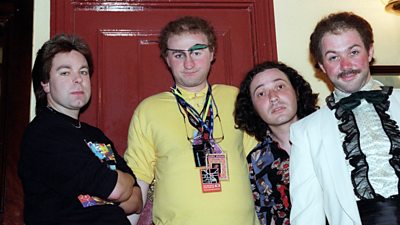
Steve Pemberton: I started writing when I met my colleagues Mark Gatiss and Reece Shearsmith at Bretton Hall. [Bretton Hall College was a college in West Bretton in the West Riding of Yorkshire, England]. We were friends at college and we started writing sketches that turned into a live show that we put on and eventually took to Edinburgh. It did rather well, and everything goes back to that, really. We spent about 5 years doing theatre jobs and developing life skills, but it was the connections we made at that place that have given rise to all our careers.
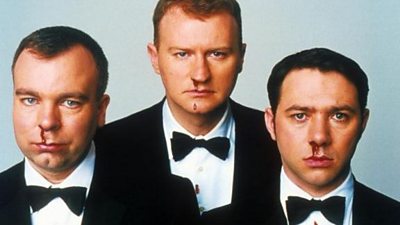
BBC WR: That’s interesting, because a lot of people talk about the League of Gentlemen as if you guys met and boom! It was there! Fully formed and the finished article! But you spent five years honing your craft?
SP: Yes. We weren’t always doing comedy, though. We all applied for jobs as actors but it’s very tough out there when you’re not coming from one of the big London drama schools. But what we learnt from being at Bretton is that if you put your own work on and get people to come and see it, that’s a great way in.
It was expediency, really. There was a festival called, I Wish I’d Seen That where they wanted to put on the best of what had been on at the Fringe that year. One of the shows dropped out so we filled in a slot and put a comedy show on which was called This Is It, and the rest came from there…
BBC WR: Have you got any tips for anyone looking to get into TV writing?
SP: Well, when I think back to when I was a novice writer… What I learnt was: don’t go back to the beginning every morning! I would always focus so much on that first scene. Those first five lines of dialogue. I would wake up and go back to the beginning. Just push on to the end! Because you will learn so much about progressing your stories and progressing your characters, so the first lesson is there’s no such thing as writing. Only rewriting.
The other thing is, it’s a marathon and not a sprint. You’re in this for the long haul. You’re not necessarily going to crack it with your first script. Don’t spend three years working on one single idea that you’re sure you will get absolutely right and it will crack it for you. Because in that time you could have written eight, nine, ten things! So, don’t be over-precious. Keep going! Keep generating! And the more you write the better you’ll get.
And specifically with comedy, we always used to ask ourselves, when is the penny going to drop for the audience that this character is funny? So, when you’re presenting a character for the first time, just be really clear what’s funny about them. And then you can go on and complicate it and have other characters coming in and interacting. But I think sometimes people have characters who are a little passive. They’re not actively funny. Make sure - certainly for your central characters – that they are actively funny. Even if you decide to give them only one funny characteristic – that’s your starting point. Don’t forget to do that!
BBC WR: Okay. It’s your 100th birthday. You’re at the Palladium and the King (or whoever!) shakes your hand and asks what was the secret of your success… What do you tell him?
SP: [Laughs] I think… It goes back to meeting the right people at the right time. I think none of the four of us in the League of Gentlemen could have had – well, it’s unlikely we’d have had - the careers we’ve had if we’d not started that journey together. So that was very fortunate.
And then… Perseverance! Tenacity! Not giving up!
We were very, very fortunate we could present our own work. We took our own work to Edinburgh and people could come and see it. See it’s not just words on a page. It’s actors, acting out a script so it goes from being dry dialogue to a performance. That’s one of the things that helped elevate us along the way.
But meeting Mark and Reece and Jeremy [Dyson] is what I’m thankful for!
Big thanks to Steve Pemberton! In the second and final part of the interview he talks Inside No. 9, Pauline from The League of Gentlemen and what annoys him about the comedy world, as well as sharing some tips about creating characters that audiences will care for.
