

In A Quick Chat With… Steve Pemberton (Part One), Steve talked about getting started in the business and gave a wealth of practical tips for newbie writers. In part two he discusses Inside No. 9, creating empathy for monstrous characters, what keeps him motivated and more…
BBC Writersroom: I’d like to ask you about Inside No. 9. I love the format. At times it reminds me of Armchair Thriller with all those lovely dramas like Rachel in Danger… But how did Inside No. 9 come about? Was the whole thing your idea, or did a commissioner come to you with the suggestion?
Steve Pemberton: Well, we’d done an episode of Psychoville that was all set in one room. It was what we called the ‘Rope episode’ in the first series where we almost created a mini-play. There were three characters and a dead body and we had one set and we enjoyed working within those limitations. The rest of Psychoville was crazy! We had multiple locations all over the country.
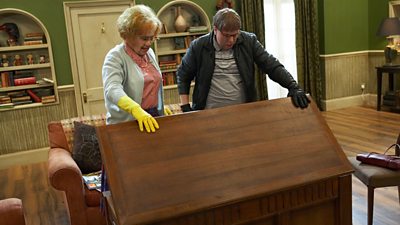
SP (cont) But there was something about going back to basics that made it feel very fresh, even though it’s the way they used to make television with shows like Thriller, Armchair Thriller and Tales of the Unexpected. Because they don’t make TV like that anymore it suddenly felt very new. And so that was, I think, a good way in. We took the idea to the BBC and luckily they liked it.
We pitched it as series of short stories. They’re written by the same two writers, so even though the episodes are in different genres and in different worlds, they do have something that holds them together, I think, and that’s our sensibility.
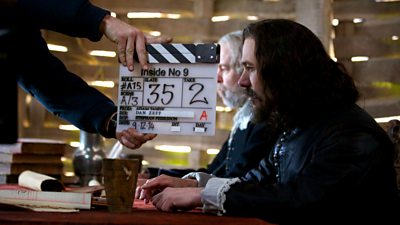
BBC WR: In a lot – all! – of your work you create a real empathy with your characters – sometimes characters that should be quite repellent. We’re not just laughing at them. It goes beyond that. Any tips about how to achieve that? And do you have any tips for getting the blend of drama and humour exactly right?
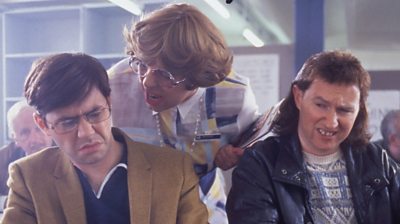
SP: Yeah! We’ve always been interested in having quite flawed characters. When we did the League of Gentlemen we created some quite monstrous characters, for example, and we always felt it was important to have a moment where they look vulnerable. Where you see under the skin. And just one tiny moment of that buys you an awful lot.
So, the use of pathos with a character like Pauline, who is to all intents and purposes a monster! She’s an absolute harridan! But when we reversed the usual scenario and had Ross being horrible to her, people felt very sorry for her… It infuriated Reece! But I think it’s really important to love your characters, no matter how awful and monstrous they are. And give them that moment – that moment when we see behind the mask.
SP (cont) And in terms of adding drama to your scripts, the stakes have to be high. It doesn’t matter if it’s a trivial thing, as long as it’s important to your character – to them it’s the biggest thing in the world that they’re trying to achieve.
We’re lucky, Reece and I, because we have each other to talk to. We have lots of ‘What if..?’ conversations. It’s something you can do in your own head – your first instinct for what a character will do is not always what you’ll end up going with. You say, what if this was to happen? Or what if she did this? Or what if this person was to come in and you find they’re not what they thought they were…
So, constantly challenge what you’ve set up in the first ten pages. I think it’s a really good exercise to give yourself. Give yourself a self-contained script, even if it’s just 5 pages or 10 pages or whatever… Just to tell that kind of story to see if you can get people to believe in a character then pull the rug from under the audience’s feet… I think that’s a really good exercise!
BBC WR: And finally… After having achieved so much, what keeps you motivated? What makes you get up on those days when you’d much rather stay under the duvet?
SP: I think it’s a lot easier to motivate yourself when you have a writing partner because if you don’t get up and go to the office you’re letting someone down! Writing with someone else is a very different experience and Reece and I have been through almost 20 years of writing together now… Not constantly, but we’re into a really nice pattern and he makes me laugh! We genuinely have fun when we’re writing so it’s very social for us.
And I think doing a series like Inside No. 9 is fantastic because with each episode you’re moving onto new characters and new storylines and very often a new genre, so that keeps us motivated.
Also, I suppose fear is a big part of it, as well. How do you do something so people won’t say, ‘They’re not as good as they used to be… They’ve gone off the boil…’ That kind of fear keeps you motivated!
Massive thanks to Steve Pemberton for his time and generosity! And if you’re missing Inside No. 9 there are loads of clips from the show, plus galleries and more on its official website.
