 | | | | | | | ||||||||||||||||||||||||||||||||||||||||
| | |||||||||||||||||||||||||||||||||||||||||||||
Business: Flying in the face of adversity | ||||||||||||||||||||||||||||||||||||||||||||||
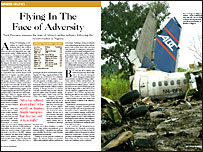
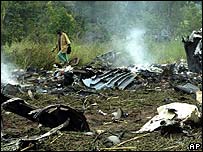
On 29 October, a Boeing 737 belonging to ADC Airlines in Nigeria dropped from the skies and crashed - and with it went any reputation or confidence left in the country's airline industry. The loss of 96 lives - among them the spiritual head of Nigeria's 70 million Muslims, the sultan of Sokoto - occurred soon after the plane took off from the capital, Abuja. But the tragedy, the third in a year, has meant industry watchers are throwing their hands up in collective exasperation at what they see as typifying the state of much of the continent's airlines. It was only in September that another major crash killed 10 of Nigeria's top army generals - and that was only nine months after an aircraft operated by Sosoliso Airlines crashed killing more than 100 people, most of them children, and 11 months after a Bellview Airlines carrier killed 117 people soon after take-off from Lagos airport. These crashes have been variously ascribed to malfunctioning engines, poor weather and pilot error. Beyond Nigeria, the Aviation Safety Network notes that Sudan, DR Congo, Algeria, Kenya, Sao Tome e Príncipe, Chad and Libya also feature in a list of countries which have had air fatalities in the year to November 2006. In all, Africa has suffered about a third of the world's air disasters, despite having less than 4% of its air traffic. Banned from Europe According to a report in South Africa's Business Day newspaper, Africa has seen its average of fatal crashes rise from 5.1 in 1993 to 9.2 in 2005 - making the continent 10 times more dangerous than North America, Europe and Asia, and four times more dangerous than Latin America.
Countries where the lives of passengers are most at risk include Sudan, Nigeria, DR Congo, Angola and Kenya. Tellingly, in March last year the European Aviation Safety Agency (Easa) banned 83 airlines from five African countries landing in Europe because of serious concerns over their safety records. Easa said that even though most of these airlines did not actually fly to any European destinations, the ban was a preventative measure to avoid these airlines being subcontracted by larger carriers and so "sneaking in through the back door". At the root of these fatalities is a lethal mix of inept airline management, poor training of pilots, corruption and, perhaps most crucially, the absence of any binding regulation in the industry. The African Airlines Association, Afraa, has also noted that African-grown staff - at least those who can boast some measure of competence and professionalism - are increasingly being lured away by more established and wealthy carriers, particularly from the Middle East. They suggest that institutions such as the African Development Bank should provide funding to establish training for the continent's most under-resourced airlines to meet these skills shortages. 'Flying coffins' But even the most skilled and motivated pilot may find it difficult to fly what the European Union's transport commissioner, Jacques Barrot, has labelled "flying coffins". Often, African airlines purchase old and rickety Soviet-era aircraft, including decommissioned military planes, without any safety records and for which spare parts are almost impossible to find.
Meanwhile priorities seem rather misplaced. Even though Nigeria set aside $150m in an emergency fund early last year to improve its airports, one government agency allegedly spent $1m on cutting the grass at the airport in Lagos. Afraa has concluded that a grand African alliance is needed, in which members would give each other access to aviation markets and routes without the need for bilateral trade agreements. This would be liberalisation on a massive scale in response to what Afraa sees as fierce competition from European carriers such as British Airways, which are increasing their presence in Africa. But this fails to take into account that, with some exceptions, African airlines may have to accept that the size of their fleets and the experience of their pilots will mean that they will not be able to compete for routes to Europe and North America. Instead, they should consolidate their own operations, even if that means scaling down and focus on domestic routes - as well as getting their passengers there safely. *This is a free online version of the article that appears in the January - March 2007 edition of BBC Focus on Africa magazine. |
EXTERNAL LINKS The BBC is not responsible for the content of external internet sites | |||||||||||||||||||||||||||||||||||||||||||||
| ||||||||||||||||||||||||||||||||||||||||||||||
| ||||||||||||||||||||||||||||||||||||||||||||||






 At the root of these fatalities is a lethal mix of inept airline management, poor training of pilots, corruption, and the absence of any binding regulation in the industry
 SUBSCRIBE: With the sharpest writing and the finest photography, a Focus on Africa magazine subscription will keep you abreast of all the important developments across the continent.

