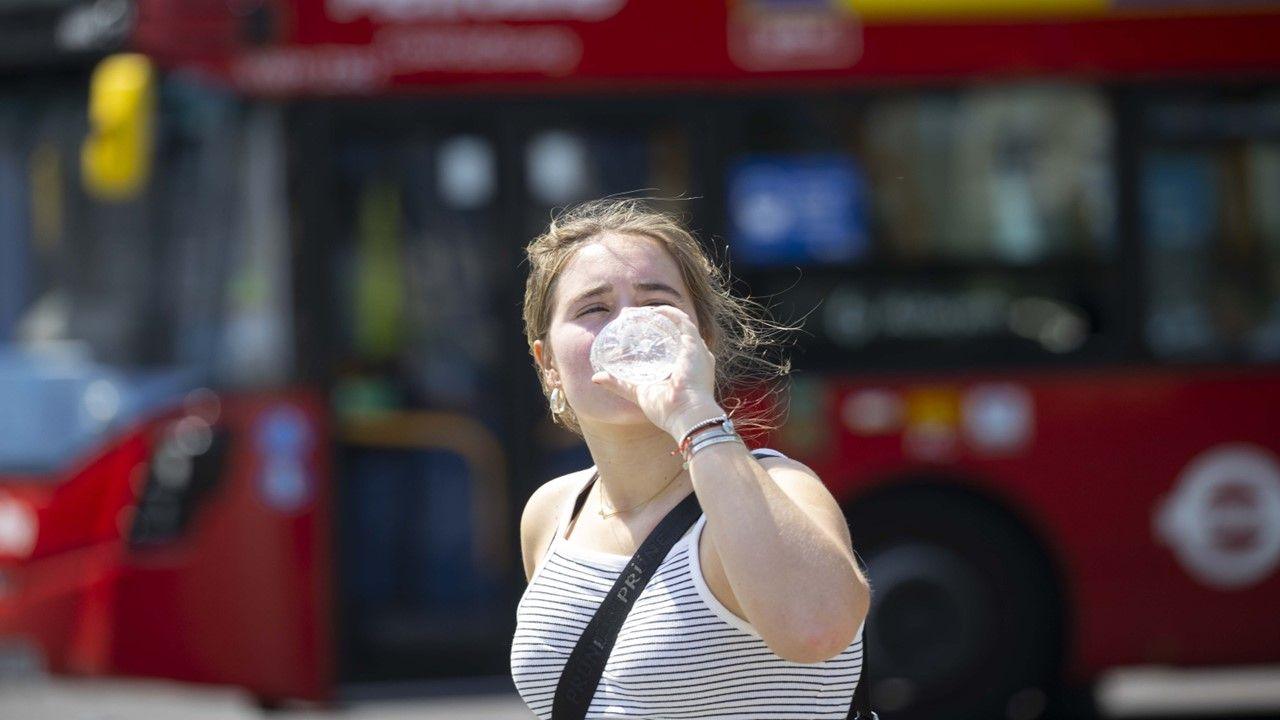
Will heatwaves become our new normal?

- Published
The world is getting hotter, and the rate of temperature rise is faster than at any point in recorded history.
According to climate scientists at NASA, external, the speed of change since the mid-20th century is unprecedented.
As a weather forecaster I'm all too aware how we are already feeling the impact of higher temperatures. What would have been a 'hot' day 30 years ago, would now be considered pretty normal - during our cooler spells people often tell me they feel 'hard-done by'.
Whilst it is nice to be the bearer of 'good' weather news, it is becoming harder to report on heatwaves as a good news story without talking about the bigger picture of our changing climate and addressing the impact it is having on our lives
Heatwaves: The New Normal?
How hot is too hot? From heat labs to firefighting helicopter pilots and wineries, we look at how extreme heat impacts people and environments in the UK.
In the filming of 'Heatwaves: The New Normal' I had the chance to delve deeper into the issues facing us as a society about coping with spells of extreme heat. From the physical impacts on our bodies, to rethinking the way we build our homes, to exacerbating the spread of wildfires - this issue affects so many aspects of our lives.
How often do we see extreme heat in the UK?

Average temperatures in the UK have been steadily rising since the industrial revolution
The average global temperature has risen by just over 1.1C since the pre-industrial era. This might not sound like a lot but it is enough to drive a large increase in the frequency, intensity and duration of heatwaves.
In the UK, a number of major heatwaves have occurred in recent years, including during the record-breaking summer of July 2022 in which we saw the first official recording of temperatures exceeding 40°C.
I was working at the BBC Weather Centre when we hit that record temperature. A national emergency was declared and The Met Office issued the first Red Extreme Heat Warning. It was something I never thought I would experience during my lifetime.
The heatwave of summer 2022 was described by the Met Office as "a milestone in UK climate history" and deemed "virtually impossible" without human-induced climate change.
In fact the Met Office says that heatwaves are now 30 times more likely than before the industrial revolution and are projected to potentially occur every other year by the 2050s.
How do our bodies handle this heat?

Dr Simon Hodder at Loughborough University puts me through my paces in the heat lab and tracks my physical reactions to extreme heat
Like many people, I love getting outside to walk or run, and I was interested to know what effect higher temperatures would have on me doing these things I love.
I visited Loughborough University and had the chance to try out their heat chambers which can simulate a range of weather conditions.
I got a taste of how it felt to exercise in temperatures of up to 40C - simulating the UK's hottest ever day - whilst running on a treadmill. It was an eye opening experience.
My heart rate increased rapidly and I started to feel really thirsty and exhausted as my body tried to process the extra heat. I experienced a very mild taste of how 'heat stress' can affect the body - and see just how anyone and everyone can become vulnerable very quickly.
The impact of extreme heat on drought and the spread of wildfires

I spoke to pilot Guy Stephens about how fire-fighting helicopters are used to tackle wildfires
Of course it is not just the body that extreme heat affects. Droughts and wildfires can also be associated with heatwaves.
Several factors affect droughts. Scientists are still studying the links between human-induced climate change and the risk of drought events.
What we do know is that extreme heat increases evaporation of moisture from the ground leading to drier ground. Drier ground heats up more quickly, which in turn pushes the temperature of the air above it even higher.
Following the UK's warmest and sunniest spring on record, and the driest in more than 130 years, drought has been officially declared by the Environment Agency in north-west England and Yorkshire. Much of Scotland is experiencing moderate or significant water scarcity, and Welsh Water have also declared a drought developing zone for parts of mid-Wales.
By the end of April this year the area of the UK burnt by wildfires was already higher than any year for more than a decade. During filming, I saw first hand the devastation caused, fuelled by dried out vegetation.
Scientists expect the UK to see an increase in weather conditions conducive to extreme wildfires as the temperature increases, even though there's variation from year to year.
A study led by the Met Office, external, found that the extreme "fire weather" that helped spread the destructive blazes of July 2022 when we experienced those record breaking temperatures were made at least six times more likely by human-caused climate change.
- Published27 June 2025