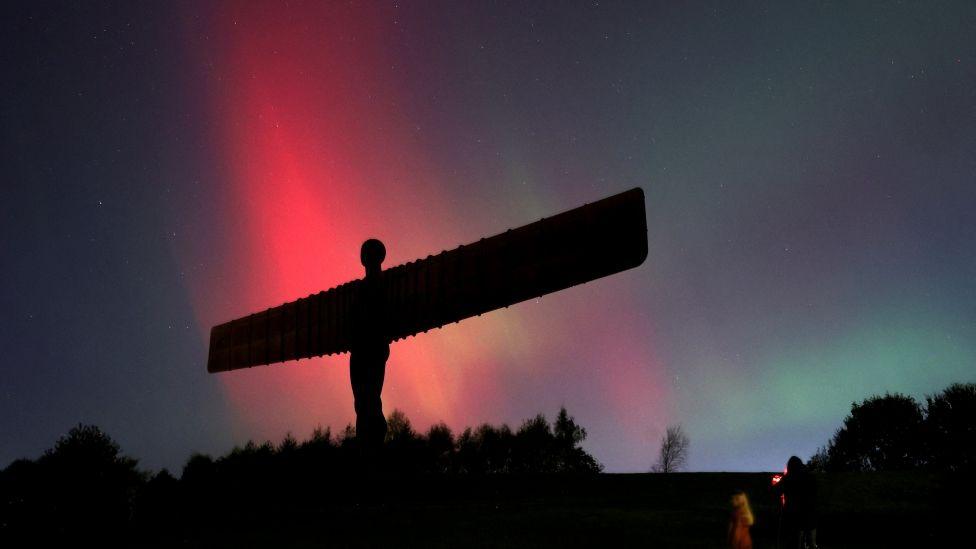
Northern Lights shimmer over Scotland in stunning photos

Gardenstown, Aberdeenshire
- Published
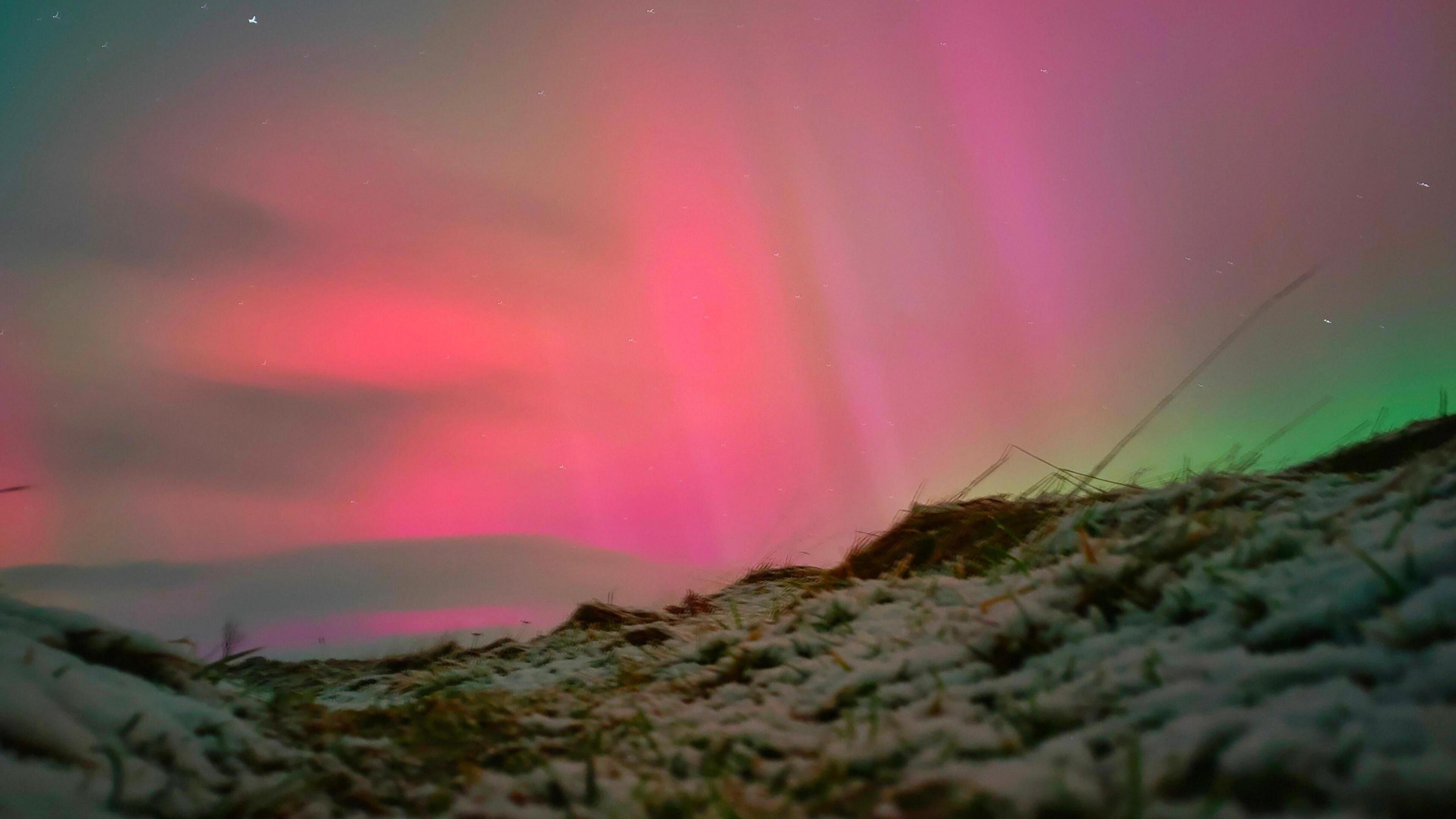
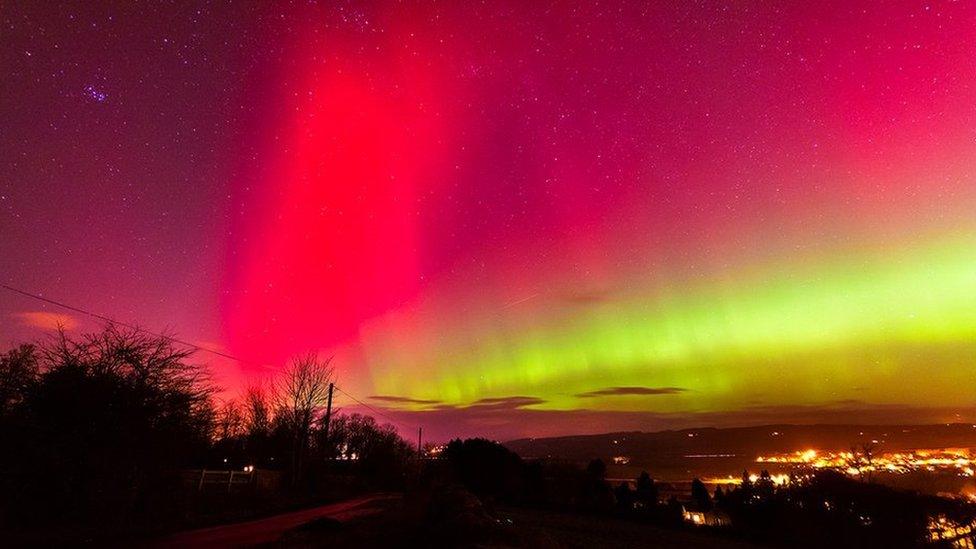
The Northern Lights have splashed vivid colour across Scotland's night skies, with stunning images captured by BBC Weather Watchers.
The lights, also known as aurora borealis, have been making an appearance over the past two nights due to a recent increase in solar activity.
The aurora signal will still be present for northern Scotland on Tuesday night and many parts of Scotland will have clear skies.
Sky-watchers in the Shetland Islands and north-west Scotland have the best chance of spotting them.

Busta, Shetland Islands
What used to be a once-in-a-lifetime event for people in the UK – or a bucket list trip to the Arctic circle – has become more common in the last couple of years.
The auroras were particularly visible in 2024 due to the biggest geomagnetic storm since 2003, according to Sean Elvidge, a professor in space environment at the University of Birmingham.
Meteorologists advise using a long exposure camera when trying to capture the auroras, as the phenomenon is not always visible with the naked eye.

Findochty, Moray
Aurora displays occur when charged particles collide with gases in the Earth's atmosphere around the magnetic poles.
As they collide, light is emitted at various wavelengths, creating colourful displays in the sky.
The auroras are most commonly seen over high polar latitudes, and are chiefly influenced by geomagnetic storms, which originate from activity on the Sun.

Busta, Shetland Islands
The UK saw more of the Northern Lights in 2024 than in many recent years.
Increased UK sightings have been helped by the Sun reaching a "maximum" in its 11-year solar cycle.
During this maximum, the number of sunspots increases which leads to more Coronal Mass Ejections sending charged particles to Earth, creating the aurora.

Mid Yell, Shetland Islands
With overall high activity on the Sun with lots of sunspots, there is a high chance we'll get more of these Coronal Mass Ejections directed to Earth in the coming months.
However, experts say whilst it will still be possible to see the Northern Lights in the UK once the Sun passes its peak, stargazers should expect a "gradual decline" in visibility.
- Published2 January 2025
- Published2 January 2025
- Published11 October 2024