Your pictures of the 'Blood Moon' total lunar eclipse

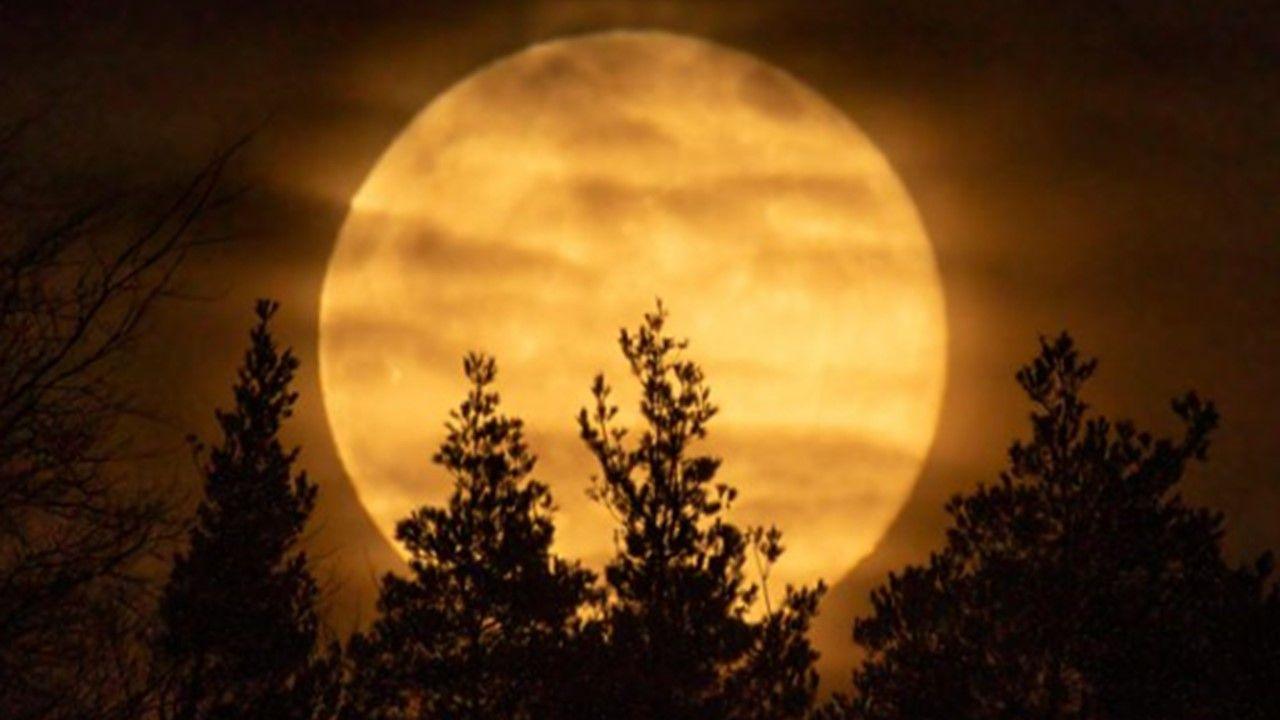
A lucky break in the clouds in Narborough, Leicestershire allowed mikespencerpics to take this stunning photograph
- Published
BBC Weather Watchers were out in force to capture the full "Corn Moon" on Sunday evening as it turned red during a total lunar eclipse.
Parts of the country were lucky enough to see the clouds part and the Moon put on its stunning display.
In the UK the total eclipse started at 18:30 BST and lasted until 19:52. It was only visible after the Moon rose which depended on your location. A partial eclipse continued until 20:56 and then a faint penumbral eclipse lasted until 21:55.

The Moon's yellow-reddish hue on full display at Frinton-on-Sea, Essex, as seen by 1936Matt

Hanging low over a field in Clanfield in Hampshire, as seen by GRAEME

The Moon pictured as the eclipse is almost complete seen by BuzzyBeeGirl over Porthleven, Cornwall

There was a clear view of the Moon for racergirl751 in Malpas, Cheshire

CharlieWoodward captured the eclipse from Tidmarsh, West Berkshire

The Moon photographed in Sumburgh on the Shetland Islands
Why does the Moon turn red during a lunar eclipse?
The Moon often turns a deep red colour during a lunar eclipse and this is why it is called a "Blood Moon".
However, the colour of the Moon during the lunar eclipse depends on how much dust is present in the atmosphere, along with water droplets, cloud and mist. All these particles affect how much light entering our atmosphere is left to illuminate the Moon during a total lunar eclipse.
When sunlight enters the Earth's atmosphere it gets scattered in different directions by these particles. Colours with shorter wavelengths, especially violet and blue, are scattered more and consequently often removed leaving the longer wavelength reds and oranges to be refracted around Earth to reach the Moon.
This gives the famous reddish-orange glow we see in a total lunar eclipse.
When is the next Blood Moon?
The next Blood Moon in the UK will likely occur at the partial lunar eclipse on 28 August 2026.
You will have to wait until 31 December 2028 for the next total lunar eclipse visible across the UK.
Here at BBC Weather we will keep you across the weather forecast for those events, nearer the time.
- Published7 September 2025
- Published13 March 2025