What is the spring equinox?

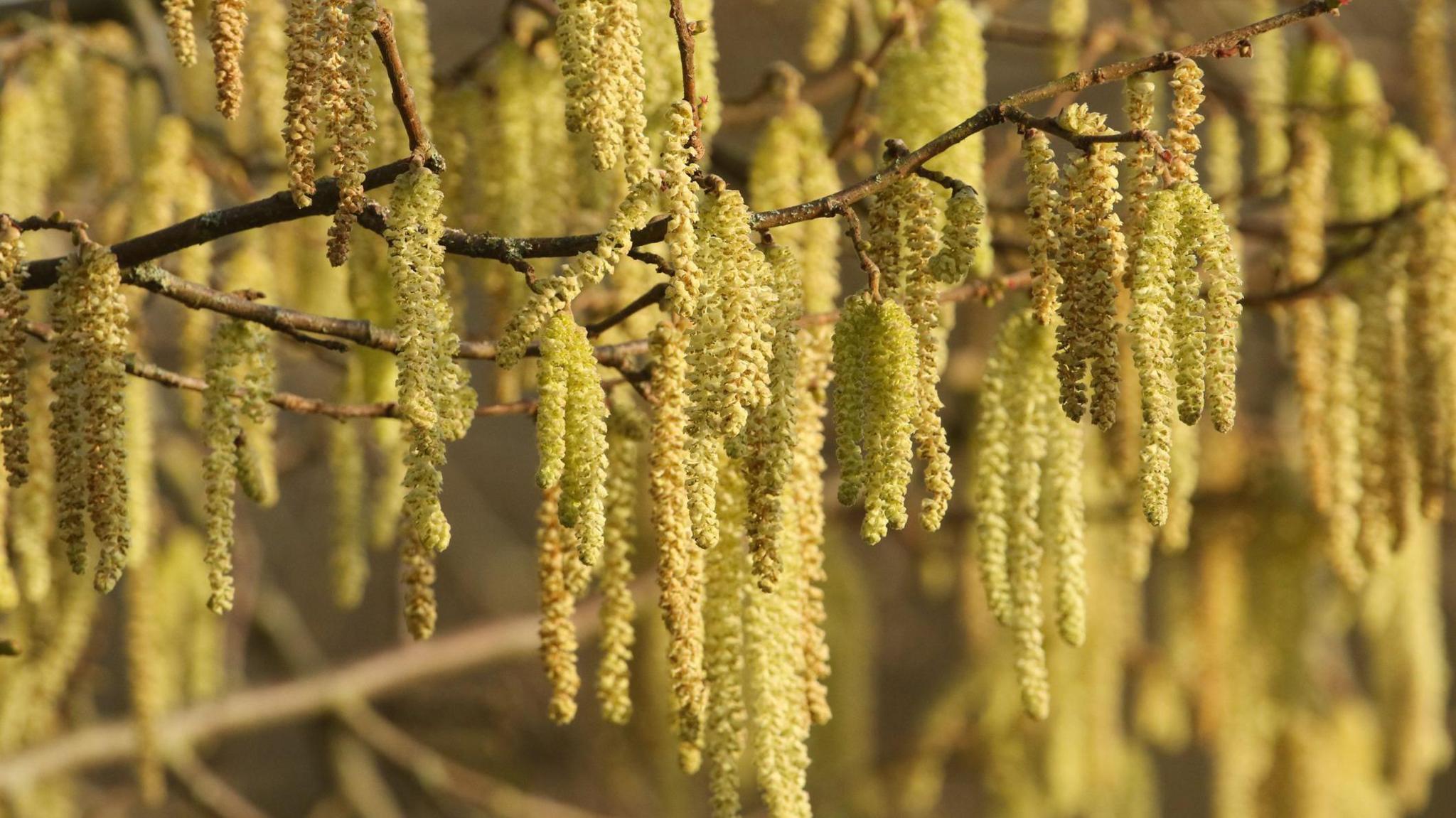
Spring day in Barnsley
- Published
The spring equinox marks the start of astronomical spring.
Wherever you are on the planet, the equinox occurs at the same moment. For those south of the equator, where the seasons are reversed, the event will mark the first day of autumn. It happens twice a year - in March and in September.
The spring (or vernal) equinox took place on 20 March at 09:01 GMT.
The date is determined by the Earth's tilt on its axis as it travels around the Sun.
At the equinox, the Earth's axis is tilted neither towards nor away from the Sun, making day and night nearly equal in length.

At the equinox the Earth's axis (shown by a black line) is neither tilted towards or away from the Sun
What does equinox mean?
The word "equinox" comes from Latin, where equi means "equal" and nox means "night."
It would be easy to assume that day and night would be of equal length of 12 hours each. However, that is not entirely correct.
At the equinox, the measurement is taken from when the centre of the Sun is at the horizon and there are12 hours between sunrise and sunset.
The top edge of the Sun is visible first at sunrise and last at sunset. Due to light refraction, there is still light for a short time even when the sun is no longer visible. This adds a little extra time to daylight hours.
In spring, this means that the date when day and night are actually equal happens before the equinox - known as the equilux which means "equal light".
This year the equilux fell on 17 March in the UK.

The start of spring can be a contentious issue
The first day of spring?
There is a difference of opinion about when spring starts.
The equinox marks the start of astronomical spring - favoured by astronomers. It can vary slightly each year along with the equinox.
Meteorological spring - favoured by weather forecasters - starts in the northern hemisphere on 1 March. It is fixed every year to ensure statistics are consistent throughout time.
You may also want to consider phenology - the behaviour of plants and animals in response to the changing weather and climate - as another marker for the start of spring.
The dates for the start of phenological spring are highly variable due to the weather conditions and species.
Frogspawn, for example, may appear in late February whereas bluebells sometimes appear in early April.
But climate change is also having an impact on these dates.
Meteorological spring starts with sunshine in the forecast
- Published1 March 2025
Why the Northern Lights are enhanced around the equinox
- Published24 March 2025
Celebrating the spring equinox
The spring equinox determines the date of Easter, falling on the Sunday after the first full moon following it.
It is often associated with the rebirth of nature and fertility rituals and was celebrated by ancient civilisations such as the Egyptians, Greeks, and Persians.
Psychologically it is often seen as when warmer weather begins and a time to venture outdoors after the cold of winter.
- Published1 June 2025