 | 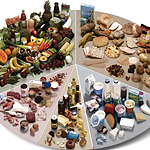 Portion Guidelines Portion Guidelines
A balanced diet includes all food types. Every day include foods from each of the food groups listed below. Each section gives you information about portions. |  |
Fruit and vegetables
Most of us don't eat enough of these foods, so EAT MORE! Aim for at least 5 portions of fruit and veg every day.
You can include fresh, frozen, dried and canned fruit and vegetables to make up your 5 portions.
A portion is approximately 80g (about 3oz) - roughly equivalent to:
1 medium apple, banana or orange
2-3 heaped tablespoons of cooked or raw vegetables (e.g. green beans, cabbage, sweetcorn, chick peas, carrots, spinach)
1 cereal bowl of salad
1 tablespoon of raisins or other dried fruit
a grapefruit or avocado
2 plums or other small fruit (e.g. satsumas, kiwi fruit, tomatoes)
1 teacup of strawberries, raspberries or other soft fruit
1 glass unsweetened fruit juice
Bread, other cereals and potatoes
A healthy balanced diet should be based on the foods in this group so aim to include some at each meal.
A portion is:
1 medium slice of bread
1 small bread roll
2-3 rice cakes, crackers or crispbreads
2 heaped tablespoons of cooked rice
3 heaped tablespoons of cooked pasta
1 medium baked potato, 2 egg-sized boiled potatoes or 1 scoop of mash
1 small bowl breakfast cereal or porridge
Meat, fish and alternatives
The foods in this group should be eaten in moderate amounts. Choose lower fat versions wherever you can.
A portion is:
2-3 thin slices of lean meat, chicken or turkey
2- 3 thin slices of ham
1 small chop (pork or lamb)
small tin of oily fish
1 small fillet of fish
2 fish fingers
1 large egg
1 small can of baked beans, chick peas or butter beans (3-4 tablespoons)
2 tablespoons of nuts
4oz (100g) of Tofu or TVP
Milk and dairy foods
Aim to eat moderate amounts of foods from this group.
A portion is:
1/3 pint of semi-skimmed milk
1 125g pot of yogurt or fromage frais
1 pot soya yogurt-style dessert
1 small pot cottage cheese
1oz full fat hard cheese
1 matchbox-sized piece edam or other reduced fat cheese
1 heaped tablespoon reduced fat soft cheese
Fat and sugar
The foods in this group are either high in fat or high in sugar (or both) and should only be eaten occasionally in small quantities.
This includes:
butter, other spreading fats and low-fat spreads, cooking oils, mayonnaise, cream, fried foods (including fried chips), crisps, chocolate, biscuits, pastries and pies, cakes, ice-cream, rich sauces and gravy, sweets, jam, sugar and soft-drinks (but not diet or sugar free drinks).
Where possible, look for low-fat and sugar-free versions instead - there is plenty of choice around.
| 







 Share your experiences on the