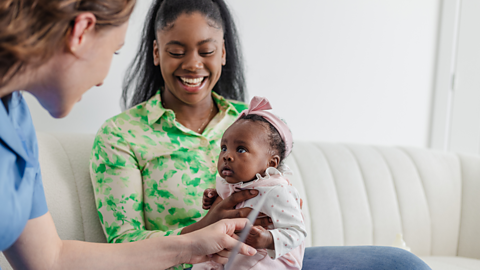
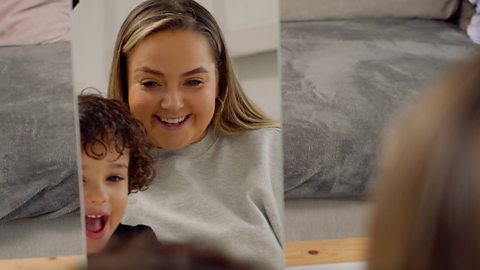
As they get better and better at using their hands and fingers, you might find that your toddler starts pointing a lot in their everyday life.
But did you realise that this was an important way of them connecting words with the things they point at?
Watch the short video explainer to find out how.
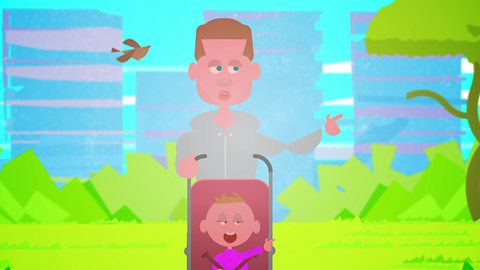
Point, point - fetch this, point, point, point - get that! Do you think you’ve got a bit of a bossy baby on your hands? Well the good news is: all that pointing is good for their brain! As they approach their first birthday, babies often start pointing. At this stage, they point to say ‘I want that!’. It might seem bossy but studies show adults are more likely to use the names of objects when babies point at them. Which could explain why pointing is linked with language development–babies actually hear me language when they point.
And Research shows, when they get a lot older, their pointing will really pay off. Studies show that babies who point more, will go on to know more words and use better sentences! So, though it might seem bossy, pointing is a little bit brilliant. It’s a good thing to encourage your young baby to point. You can do that by responding to them, giving them the object, they want and then talking about it. They’ll even learn to respond to your points too.
So, why not try this: take your little one somewhere new, point to the things they are interested in and then talk about them. You’re not being bossy, you’re teaching them new things and showing them that adults can tell them about the world. This will encourage them to point more, hear more language and communicate better!
When do babies start pointing?
Babies often start pointing as they approach their first birthday. Some may start earlier, while others start to do this later - every baby is different.
Why do babies point at things?
Babies point at things they are interested in. It's their way of telling you that they want you to pay attention to the same thing as them.
This is your cue to chat to them about those things, because if you speak to them about the things that interest them most, the more likely they are to learn. This is often referred to by speech and language therapists as 'joint attention'.
Research has shown that the more children point at things, the more adults will name those things for them. And the more often your child hears a word in connection with something they see and point at, the more it reinforces the meaning of that word.