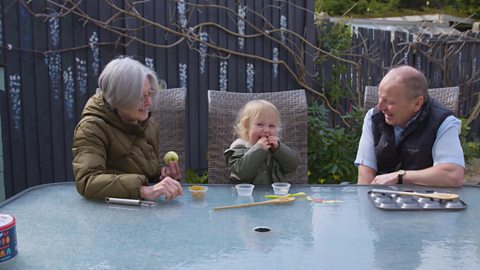
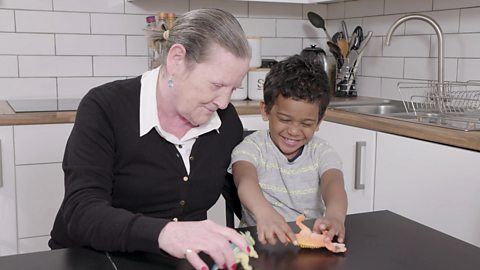
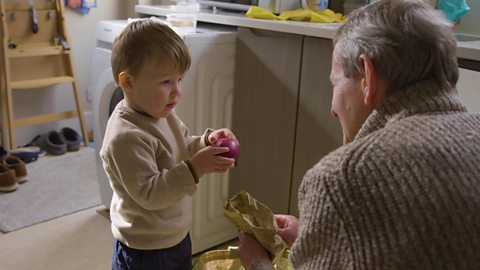
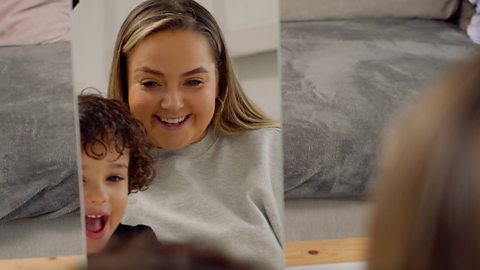
Does your grandchild often say words that are almost right but not quite there? You might be wondering what the best way to get them over the line is?
Watch the film below as Dr Michelle Peter explains 'recasting', a way to subtly correct words with your grandchild to reinforce the correct way to say them.
Michelle
You can help your child say words and sentences correctly by repeating the words back to them. This is called re-casting. So you might notice children mispronouncing words, so saying "lellow" instead of"yellow" is quite common .Yeah, he did start off pronouncing it like that. The best way to help them learn is to repeat the right word back to them, but without obviously correcting them. So if they say "lellow", you say "yes, that's yellow."
Grandma
Okay. How about this one?
Child
Purple.
Grandma
Purple. Purple.Yes, it's a purple colour.
That's great how you produced the right word there, purple, for him, and in time, he will understand that that's how you say that word. Okay. So speaking in sentences takes practice. Repeating their sentences back to them correctly is also a form of re-casting. I'll try that with him. It's on your head. Yeah, it's on my head. So the more you practice this and the more your child hears your sentence produced correctly, the better. It can be really tempting to start by trying to correct your child when they say things wrong or they get mixed up.
Grandmother
So I shouldn't tell him that's he's wrong?
Michelle
No. What you really need to do is say the word correctly and by doing that, he will hear how the words should be spoken. Okay.
Child
Cat.
Grandmother
It's a caterpillar! Caterpillar.
Michelle
So that's really great what you did, because it could be really tempting to say "no, that's not a cat, it's a caterpillar" but you didn't do that. Try doing this in lots of different situations, at home, but also out and about. They may not copy you straight away, but they're absorbing everything you say, so keep repeating and building on what they know.
What is recasting?
Recasting is a way to respond to your grandchild when they say words but slightly mispronounce them, shorten them or otherwise get them wrong in some way.
It lets your child hear the words without drawing attention to the mistake. That way you don't put them off trying again, but allow them to hear it said correctly each time.
How to help toddlers saying words wrong
If your grandchild says a word slightly wrong, repeat the word back to them correctly without obviously correcting them or telling them they've got it wrong. So for example, if they say 'lello', you can respond by saying 'yes, that's yellow'.
They might also be struggling to build sentences properly. Again, the best way to respond is to work out the sentence they're trying to say and say it back to them correctly - so if they say 'your head', you could say 'yes, it's on my head'.
They might not get it right away, but keep repeating things correctly and they'll be taking it in. Over time you will hopefully hear the changes.