Halloween is a great opportunity to explore different foods. However, it can also be worrying to think about our children eating a large number of sweets - particularly when there is so much focus placed on how important it is to eat a balanced diet.
If you’re a parent to a toddler or pre-schooler, is it best to skip the sugary Halloween snacks altogether?
We heard from Lucy Wood, ‘The Early Years Dietitian’, about sugar and sweets at Halloween and how they can be great tools for teaching eating in moderation…
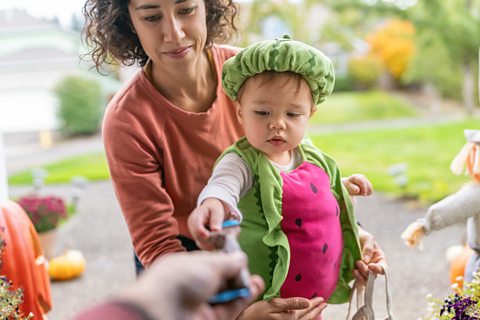
Sugar – Trick or Treat?
So what’s the deal with sugar? Well, perhaps there’s more to food than just whether or not it’s healthy.
“I kind of have two focuses,” Lucy explains, “One of course is around nutritious food and making sure that kids are healthy etc."
“But the other side of that,” she said, “which is also important, is that food plays a really integral role within the family."
“Culturally and traditionally, food is wrapped up in relationships and traditions. Just being able to enjoy time like Halloween and take it for what it is is really good, without us having to stamp a health label on it.”
Eating lots of sugary food can cause negative health effects like weight gain and teeth problems.
But you can also enjoy times like Halloween as a family – a rare occasion where children can eat sweets without worrying too much about the sugar content.
No such thing as a 'bad' food
“All food should really have the same moral hierarchy, Lucy explains, “I don't believe in the word ‘treat’. Food should just be what it is. Calling it a treat just puts it on a pedestal and makes it more desirable”
Rather, Lucy continues, it should be considered in the context of your general diet.
If a child eats a lot of sweets regularly, it’s not a great diet, but it doesn’t mean that sweet foods should never be enjoyed on days like Halloween.
In fact, normalising sweets can have a more positive impact. Things that are forbidden become much more exciting to a child and it can mean that they become worse at eating them in moderation, Lucy adds.
“Often parents are looking in the wrong place,” Lucy says, “They're freaking out about things like Halloween and sweets, when actually, day-on-day, the biggest impact that we have from sugar is the everyday foods that parents are giving.”
One of the biggest sources of sugar in UK children’s diets is cereals and cereal products, as well as products like juices and smoothies.
Managing these everyday factors means that parents can ‘choose their battles’, and holidays like Halloween can be enjoyed without worry, Lucy adds.
Start developing healthy eating habits early
It’s important to try to set good habits early, because children will start to develop flavour preference right from the start.
Everyone will have food preferences, but babies and toddlers tend to eat for hunger, Lucy explains. If we can normalise eating sugar in moderation on days like Halloween and allow access to these foods early on, this makes it a lot more likely they will be able to control this moderation in the future.
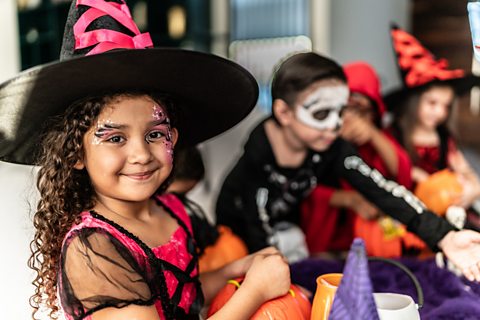
“What it would be much better to do, where possible, is to reduce the everyday sugary foods and then be able to just say to kids, 'yeah, sure, you can have some sweets,'” Lucy says.
“Because normalising and letting kids have access to sweets long-term, has a more positive impact than gatekeeping them and making them forbidden.”
Safe foods and new foods
Lucy says a great skill to have is the ability to incorporate new foods alongside ‘safe’ foods, in order to develop a healthy diet over time.
A ‘safe food’ means a meal or snack that your child usually enjoys eating, and they can act as a gateway for children trying new foods.
Laying strong emotional foundations, for example by serving new and familiar foods together, is going to make a child feel a lot more secure.
Steps like eating together at a dinner table, and putting all the food in the middle of the table so that children can have access to things without being scared, can also make a massive difference.
“Imagine you've gone out to a restaurant, your food arrives, there's a spider on your plate, it hasn't touched your food but it's contaminated it right? And you don't want to eat it,” Lucy explains.
“This is how like a young child's mind or someone that doesn't like certain foods will think.”
“It might just be broccoli. But if it's on the plate, it's contaminated everything, we're going to get a big emotional response - we want to leave the table, I don't want to look at my plate.”
“But it’s also important to know when you're putting foods down in the middle of the table and exposing kids to them, it might take 20, 25 times for it to be there before they've even started taking an interest and looking at it.”
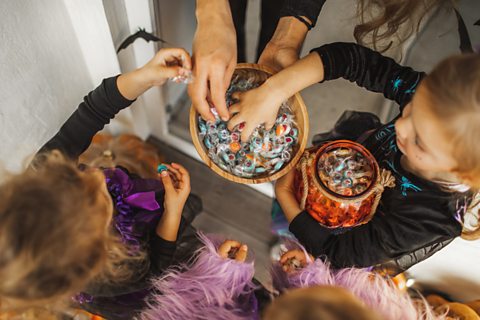
The second you start pressuring and encouraging them to eat foods, the less they’re going to want to try it, she added.
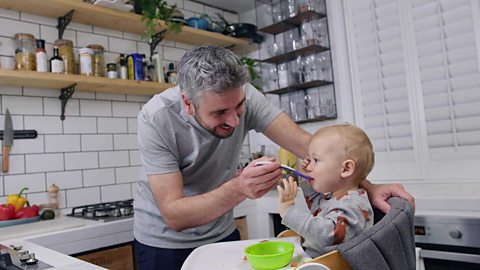
Another good tip is to think of other ways kids can get involved with food, whether it’s unpacking shopping, putting things on the table, or even washing and cutting things.
“The more that kids get food on their hands, the more that they are interacting with it without being asked to put it in their mouth, the more they're going to learn and understand and reduce those anxieties around food,” Lucy says. “And over time, it's those things that are going to make them want to put that food in their mouth.”
Tips for parents
It’s important to remember as parents to aim towards improvement, not perfection, and how Halloween fun can be helpful in meeting these goals.
An easy way this can be done is thinking about adding rather than taking away. By serving healthy foods alongside familiar foods, this means that a child will always have something to eat.
Allowing your child to enjoy the foods they love is also important, and parents don’t need to feel guilty if their child has a taste for unhealthy foods - most adults would probably rather have a sugary snack than a piece of fruit!
Most importantly, the best thing for a parent to focus on is normalising food and not worrying too much about the nutrition of one meal, day or event like Halloween.
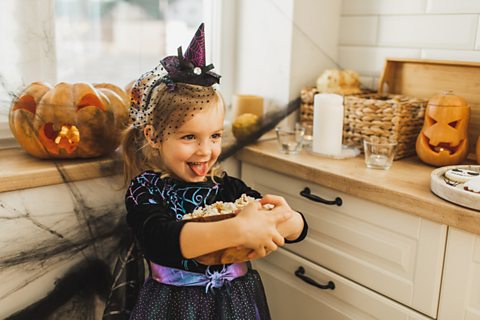
Lucy also adds that trying to introduce healthy nutritious snacks throughout the day will take the pressure off when it comes to trick or treating.
This approach of thinking about food throughout the day, puts less pressure on the evening meal, and being able to enjoy food without thinking is a massive health win, she adds.
We've all got those happy memories as a kid,” Lucy says, “and the happy food memory isn't the time when you went out and you were told you were allowed two sweets.
The happy memory comes from enjoying the time with your parents together. You don't want the memory to be sitting eating carrot sticks and on Halloween because you weren't allowed sweets!”