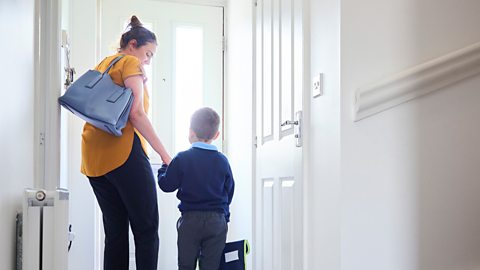
"Starting school is a big milestone. If you’re worried your child might not be ready, you’re not alone."
As we approach the start of the new school year, you might be preparing your child for their first experience in formal education - and the transition from home to school can feel a little daunting!
We spoke to clinical psychologist and mum of two, Dr Martha Deiros Collado to hear what she had to say about parents' worries as their child starts school.

Starting school is a process, and it takes time to build confidence and safety in a new environment. There’s lots you can do to help.
Children learn and grow at their own pace
All children grow and develop in a unique rhythm that continually changes with time.
If your child is one of the youngest in the year, or they appear to have neurodivergent traits (whether they have a diagnosis yet or not), it can take a little longer for some skills to emerge.
They may benefit from reassurance that ‘not feeling ready’ is not something to worry about - you can work on it together. For example, “It’s okay if you don’t know how to do that yet. Your teacher will teach you and I will be here to help you practise.”
Tell-tale signs your child might feel wobbly about starting school (and what you can do)
It’s normal for children to feel a bit nervous before starting school. It’s an unfamiliar environment with new people and settling in takes time.
If your child shows some of the signs below, it doesn’t mean there is a problem. See them as small clues where your time and energy might help.
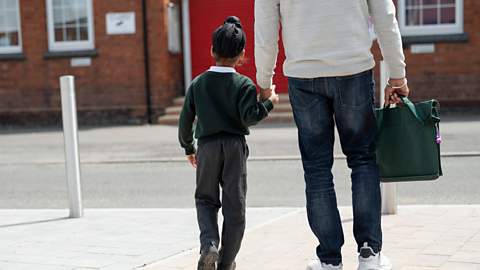
Separation anxiety at school
Crying, clinging, or fear of being away from you is a symbol of the strength of your relationship.
1.Listen. If your child repeatedly says they don’t want to go to school, stop and listen: “I think you’re feeling nervous. Tell me what’s worrying you.”
2.Name the feeling. Anxiety is physical. Naming it helps make sense of it: "It's normal to feel anxious before starting to school. Anxiety can give you bad butterflies in your tummy, or make you feel hot. Do you have any of those sensations? That’s normal. We can work through this."
3.Validate and encourage. “I know you feel worried, and I believe you can handle this. Let’s try…”
4.Practise calming skills. Embed these daily, for example at bedtime. Practise blowing out a candle - take a deep breath in and then blow out slowly to make the light flicker. See how long you can keep the flame dancing. Repeat 3 times.
Tears during separation
Tears on separation are a sign your child will miss you, which is healthy but can tug at your heartstrings. Don’t be afraid of tears or try to stop them. Offer soothing with confidence…
1.Get close. Acknowledge tears: “It’s ok to cry. Going to school is a big deal. I am going to miss you too”.
2.Remind your child that you ‘always come back’. Use concrete information: “when the bell goes I will be there to pick you up”.
3.Offer a message of trust. Don’t hang around the class entrance for too long. Walking away is not abandoning, it’s sending a strong message of trust in their teacher: “Look Miss Ruth is here. She will take good care of you. I cannot wait to see you when the bell rings!”
Dented confidence
Transitions can temporarily dent confidence. Praise efforts and practise daily so that your child goes to school with an “I can” attitude.
Focus on:
Using the toilet as independently as possible (wipe, flush, wash hands)
Putting on coats, undoing buttons/zips, and getting shoes on and off
Opening and closing lunchboxes and water bottles
You can make some of these tasks easier with things like zips over buttons, simple lunch boxes, and slip on trainers.
What can you do to help?
Set up a visual timetable
Visual prompts help. You might do this for:
A few steps before leaving home (brush teeth, pack bag, put shoes on)
What they will eat at school
What happens after school (one or two activities to ground them)
Find your ‘goodbye ritual’
A moment of connection that predicts a goodbye. This might be a special hug with some special words (e.g. a bear hold saying, “love you to the moon and back!”), or a shared phrase (e.g. You: “See you later, alligator.” Your child: “In a while, crocodile”).
Help them get comfortable asking for help
Use role play and everyday chat to make ‘asking for help’ normal.
If your child is stuck with a zip, rather than jump in to help, say: “Looks like you are stuck. Can you say, ‘I need help with my zip, please?' Great! You can say the same to your teachers if you get stuck and they will help you.”
Stay connected when you are apart
Let them take you metaphorically to school…
Pop a note, joke, or doodle into their lunchbox
Slip a family photo into their bag
Give them a token from home
When to seek extra support
Asking for help is not a sign that you are failing. When you ask for help so your child can thrive at school, you are parenting well. Seek support if…
Your child’s anxiety is so strong they refuse school and/or show daily physical symptoms
They struggle to communicate their needs or join in with peers despite support
They appear upset at pick up, not just drop off
The distress doesn’t lessen after four weeks.
You can talk to…
Your child’s teacher: They can reassure you about what’s typical and adjust routines
Your GP: To rule out medical issues and refer for assessment or extra support
School readiness is not a race.
It can take weeks for children to feel settled in a new environment. If you find yourself feeling wobbly too, it’s a sign of how much you care. Your presence and sturdy support is all your child needs as you take this next step together.