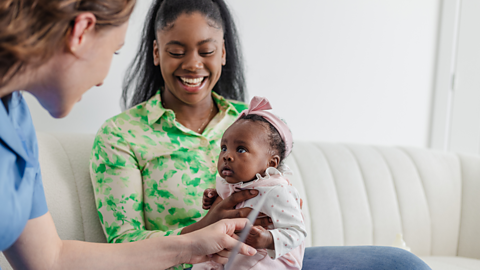
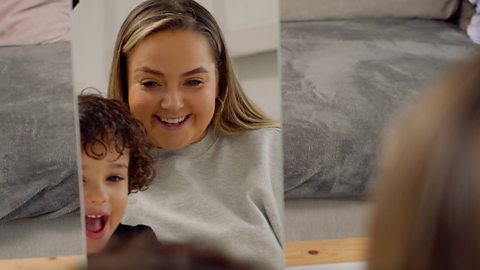
Play takes all sorts of forms, changing from family to family. But one thing stays the same: its importance in your little one’s development.
Autistic children often have a specific way of playing and, like many children, it can be tricky to discover what their preference is. But once you do, the rewards can be huge for parent and child alike.
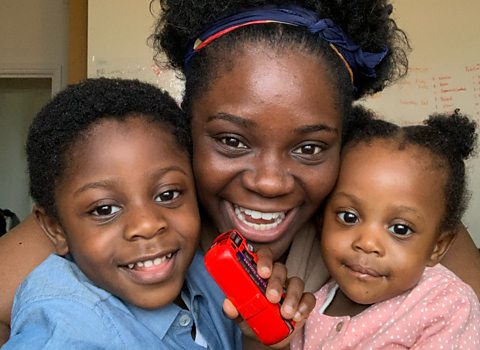
Tinuke Awe is a mother-of-two from London. Her first child, Ezekiel is autistic – she tells us her family story, from early expectations, to Ezekiel’s diagnosis and how London buses unlocked a new way to play.
"I thought motherhood would be a breeze"
I'm the eldest child out of three and there is a significant age gap between my siblings and me.
The nine-year age gap was enough for me to be helpful and involved in raising my siblings.
Unlike most first-time parents, I had changed a nappy before and had great experience with babies, so naturally I thought stepping into motherhood would be a breeze.
However, that couldn't have been further from the truth. I ended up having quite a tough pregnancy: I didn’t glow like all the women in the movies and adverts. I became really unwell towards the end and had a traumatic labour experience.
Those first few months were very full on and intense with all the sleepless nights and figuring out our 'new normal'.
I was the first one to have a baby out of my friendship group, so at the time I didn't have much to compare his development to. I was just so excited to finally be a mum to my son who was the most perfect baby. At first, I didn't notice any early signs of autism in my son Ezekiel, who is now eight years old.
"Something felt different"
Up until Ezekiel was around one year old, he was developing quite normally and for the most part he hit most of his milestones as we expected.
However, just before he turned two years old, I noticed he had a speech delay and wasn't saying any words.
Looking back, I can see all the signs were there. It wasn't just his speech that caused me concern. There were also social communication differences and he had extra energy and would run up and down repeatedly showing ‘sensory-seeking behaviours’ too.
Friends and family at the time thought his lack of speech was because, ‘boys are much slower to develop than girls,’ which is such an outdated stereotype, but nonetheless, I took Ezekiel to see a speech and language therapist.
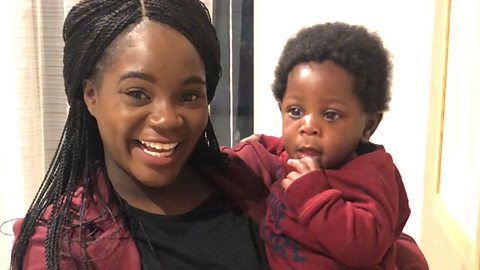
By the time Ezekiel was two-and-a-half, he was diagnosed with social communication disorder and was referred to a paediatrician for an autism assessment.
We then fell into lockdown and had to wait around a year for his official autism diagnosis. As a family we sort of expected the diagnosis and, at first, it felt like a relief.
We finally had answers and could work towards getting him adequate support, but slowly, as the realisation set in that this was going to be our reality, and our lives going forward, it became quite tough to deal with.
I went through a range of emotions from calmness, to shock, then grief - mainly mourning the life I thought I would have for him and what this diagnosis meant for our family.
He was completely non-verbal at the time and it was a challenge at first to get him communicating, which led to frustrations and meltdowns.
But as time went on my grief turned into acceptance and I was able to move into action mode, trying to figure out different ways to play and communicate with him, and ultimately ensure he could navigate the world confidently.
"Finding our way through play"
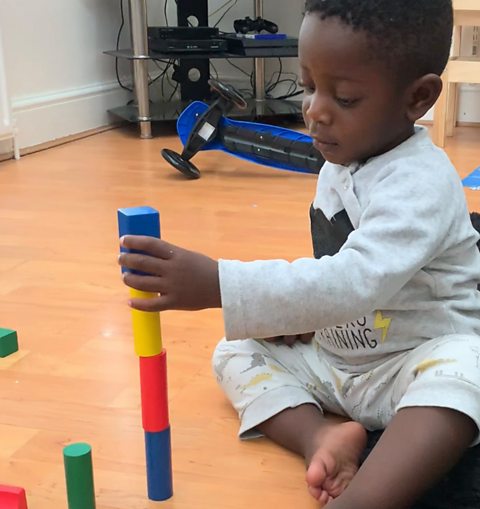
Since Ezekiel was little, I was always very intentional about how we play as I knew the power it held for both of us.
As he was non-verbal at the time I was initially quite nervous about putting him in nursery and delayed going back to work for six months longer than planned.
In this time, we played at home and also went on regular trips and days out together. At home, I would use play to teach him phonics and numbers.
His attention was fleeting - I would only have around two minutes at a time before he lost interest and would run off and find something else to do, so I would try short activities while I had his attention.
I would also do things like read out loud while he was running up and down, which felt weird at first - it's not the way people tend to read to children, but in my head I wanted to expose him to as much language as possible.
I would still read and, if he was interested, he would come over.
The turning point in our playtime was when I realised I could use his love for big red London buses to get his attention for longer periods of time.
Ezekiel was completely obsessed with buses as a toddler (he still is!) and this was important for me to connect with Ezekiel through play and teach him different concepts.
I remember counting buses with him. He would point to the correct numbers and it would reassure me that not only did he understand what was being taught, but that there was so much power in following his interests.
"Play looks different now"
Ezekiel and his younger sister Eden have developed so much over the years.
Now that Ezekiel is older and his understanding and words have developed in leaps and bounds, play looks different for us.
For example, when they get home from school we might have a dance party for 15 minutes to help dance away some of that excess energy.
I also follow a lot of occupational therapy strategies in our play and movement breaks to help with his sensory needs and I have lots of activities we can do so we keep it fresh every time.
Ezekiel still loves buses, so we incorporate that into our imaginary play by pretending to be bus drivers and passengers, but we also make space for calming activities like drawing, colouring and painting together so he gets the best of both.
Play was essential to my relationship with Ezekiel, it was a form of communication when he had no verbal language.
The journey has taught me that it is very important to stay close to my children and connect with them, constantly finding ways to have fun with them and bring joy, laughter and learning into my home.
What started as a way to reach my non-verbal toddler has become the foundation of how our family connects. Play isn't just about fun, it's how we understand each other, and it's brought us closer than I ever imagined possible.