It can be difficult for babies and challenging for parents too, but teething is a normal milestone in your little one’s development.
“It’s a different experience for everyone. Some babies will sail through the experience, others will find it more difficult,” says health visitor Kerry Bennett from Better Start Bradford.
“Getting through it is all about being in tune with your baby and recognising their individual cues, so you can pick up on their discomfort and respond to them.”

What is teething?
Teething is the process of your baby’s first teeth pushing through their gums. They are sometimes called milk teeth, baby teeth or primary teeth.
In total, children usually grow 20 milk teeth – 10 on the top and 10 on the bottom.
“We use the word teething to describe the time it takes for all these teeth to emerge,” explains Kerry.
What happens during teething?
Your baby’s teeth will emerge in different stages, commonly starting with the two bottom front teeth (called central incisors).
It’s natural to compare the development of your little one’s teeth with other babies and to worry that there’s something wrong or different about their experience of teething, explains Kerry.
“But as with all aspects of their development, remember that babies develop at different speeds," says Kerry.
“Sometimes a baby is born with a tooth, sometimes they don’t have any teeth at 10 months.”
Why do babies experience discomfort?
Even as an adult, experiencing a pain or unusual sensation can be unsettling. And it’s no different for your little one.
“The experience of their teeth emerging is a new sensation for babies – they know there's something going on,” explains Kerry.
When do babies start teething?
Although it can be earlier or later, most babies will start teething around 6 months. By 12 months, most babies will have their first teeth.
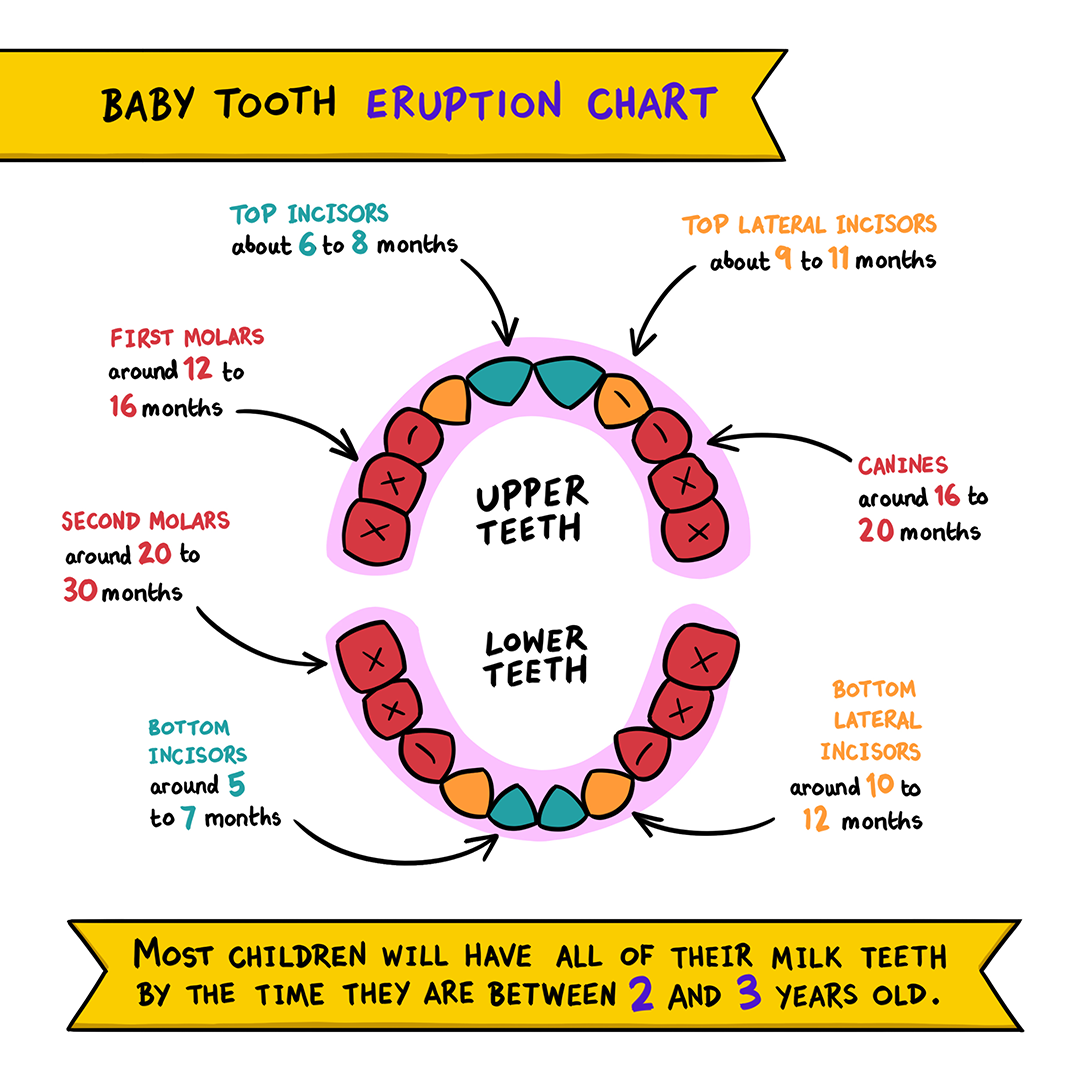
“By the time they’re between 2 and 3 years old, most children will have all of their milk teeth,” adds Kerry.
“If you are worried about how your baby is developing, speak to your health visiting team or local wellbeing clinic for reassurance.”
Early teething
Some babies are born with their first teeth, or their teeth start to emerge before they are 4 months old.
Average age for teething
Most babies start teething at around 6 months old.
Late teething
Some babies will start teething later than 6 months old and sometimes after 12 months old.
“Babies born prematurely or with a low birth weight may develop their teeth later than other babies,” adds Kerry.
Teething chart: Timeline and tooth order
“Usually, the first teeth to emerge are the bottom front two (bottom incisors) but there's nothing wrong if they come through in a different order,” explains Kerry.
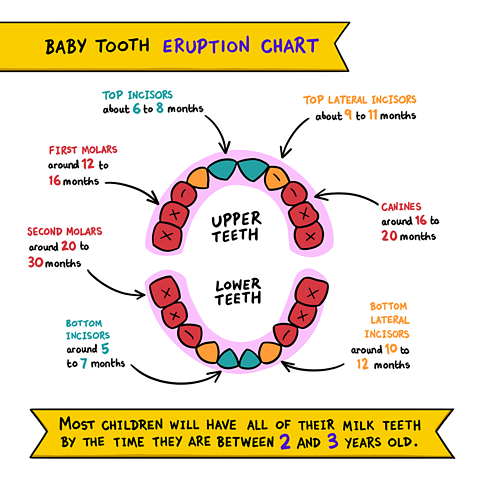
Here's what the NHS offer as a rough guide…
- bottom incisors (bottom front teeth) – these are usually the first to come through, usually at around 5 to 7 months
- top incisors (top front teeth) – these tend to come through at about 6 to 8 months
- top lateral incisors (either side of the top front teeth) – these come through at around 9 to 11 months
- bottom lateral incisors (either side of the bottom front teeth) – these come through at around 10 to 12 months
- first molars (back teeth) – these come through at around 12 to 16 months
- canines (between the lateral incisors and the first molars) – these come through at around 16 to 20 months
- second molars – these come through at around 20 to 30 months
When do baby teeth fall out?
“Children start to lose their baby teeth when they’re around 6 years old,” says Kerry.
It takes a few years after this for all their adult teeth to emerge – they won’t lose their final milk teeth until they’re around 12 or 13 years old.
Recognising teething signs and symptoms
The experience of teething is individual to your baby, Kerry explains. “They may show some of the common signs and symptoms, but not all of them.”
“So again, it’s about responding to your baby’s specific cues and needs. You know your baby best.”
It’s not a straight, linear process either. There will be ups and downs as you go through teething, explains Kerry.
“In the initial stages, your baby will probably respond more noticeably to the experience of teething.”
“Then, as it becomes a known feeling or sensation and you learn what helps soothe them, it will become easier for your baby to cope.”
However, just as you think you’ve got through it, the discomfort can return.
“When you think of the size of the back teeth (molars) that come through later, they will feel huge and different for tiny mouths.
“So you may find that after getting through early teething, it can feel like you’ve regressed,” adds Kerry.
Common signs of teething
“Before teething symptoms start, when you’re feeding your baby, you may notice that their gums are a slightly different colour. They may seem whiter or more translucent, which is the teeth getting ready to emerge,” says Kerry.
“If they've started weaning, so around 6 months, you may notice that they're opening their mouth more.
“They may be exploring their face, around their jaw and pulling at their ears to understand what’s happening in their mouth.
“And they may want to clamp down on your finger more or put things to their mouth more than usual.”
Physical and behavioural symptoms of teething
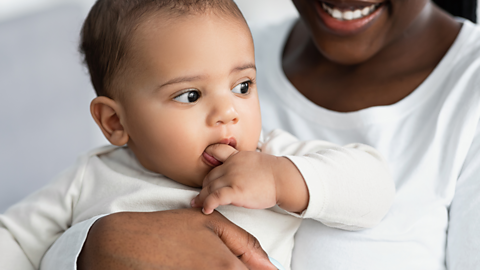
Some babies will not experience pain or discomfort, but common symptoms include:
Sore and red gums. When they’re opening up their mouth, you may see swelling and redness on their gums. “There shouldn’t be ulcers or blisters but you may see raised bumps,” says Kerry.
A mild temperature – but not a fever – and a flushed cheek. “If your child's got a fever, you need to understand what’s causing it and respond to it rather than putting it down to teething.”
Gnawing and chewing. “They may want to gnaw and chew on things for some relief.”
Dribbling more than usual. “And this can cause a rash on their face – this is called teething rash.”
More fretful or whingy than usual. “This is because they’re experiencing real discomfort.”
You may notice your baby is out of sorts in other ways. Their sleep patterns may be disrupted.
“Although evidence doesn’t suggest teething causes diarrhoea, I know from my own experience that some babies will get looser stools and a bit of a sore bum,” adds Kerry.
Remedies and care for teething babies
“The first thing we would say is to try non-medical approaches first, including comforting and distracting your baby,” recommends Kerry.
“As it’s an individual experience, it’s about trial and error and seeing what works for your baby.”
How to soothe teething discomfort
Safety is key, says Kerry.
“This is a time when your baby will be naturally pulling things to their mouth and wanting relief by chomping down on things, it’s important that you’re vigilant about safety and potential choking hazards.”
Non-medical and home remedies for teething
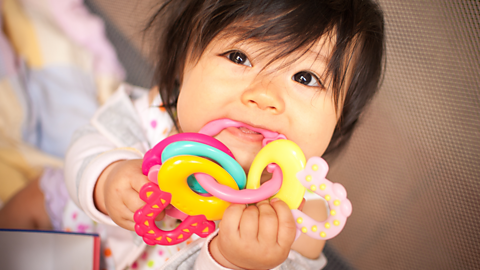
Specially designed teething rings and aids can give your baby something to chew on safely.
“Make sure your baby can hold it and bring it to their mouth themselves. You shouldn’t be pushing anything into their mouth. They should be in control.”
Some can be cooled in the fridge first to provide extra relief. “But never in the freezer as this could damage your baby’s gums. And never give them ice cubes,” says Kerry.
“If your child is of weaning age, so 6 months and over, they might find that some healthy foods might act as that cooling aid, such as raw cucumber or melon,” recommends Kerry.
To look after their dental health, make sure you’re choosing healthy non-sugary snacks, so avoid rusks.
“Part of their whingeing is wanting to tell you that they want your attention,” adds Kerry.
Comforting your baby and distracting them can be helpful too. Cuddle them, play with them or have a change of scenery – take them to the park or rhyme and singing group.
Teething gels, painkillers and homeopathic remedies for teething
“There’s not enough evidence to say teething gels are effective, that’s why we say try non-medical options first. There are also homeopathic gels available but there’s no evidence to suggest that these work,” says Kerry.
“If you’ve tried the non-medical options first and decide that you want to try a gel, whether a regular or homeopathic version, always speak to a pharmacist first and make sure it’s safe and suitable for your baby.”
If your baby is in pain, you may want to give them a child-friendly paracetamol or ibuprofen.
“Again, always speak to a pharmacist first to make sure it’s safe for your baby. And be aware that if you’re using a gel that contains pain relief, it may not be safe to give them an oral medication on top of this,” recommends Kerry.
Teething at night: Tips for better sleep
Teething discomfort can seem worse at night, but it’s hard to know if that’s about our perception of things – everything feels more difficult in the middle of the night.
That said, the disruption caused by teething at night can be really tough on parent and baby alike.
“It can feel demoralising to have got into a good routine with sleep, only for teething to disrupt it. Trying to be a responsive parent when you’re exhausted is hard,” says Kerry.

Night-time remedies for teething
“My advice would be to go through [those easy steps we talked about](https://www.bbc.co.uk/tiny-happy-people/articles/z7mq3qt#z82jvj6] to try soothe your baby,” says Kerry.
“All those things that you’ve worked out that give your baby instant relief from the discomfort, such as their teething ring and comforting them.”
Creating a calm environment
“On top of that, try and keep your usual nighttime routine and a calm environment, with low lights so you’re not overstimulating your baby. Make sure they’re not too warm.”
But think about coping strategies that can help you too.
“Don’t forget to reach out for support from friends and family, local parent groups and your health visitor.
“It is a challenging phase. There's no sort of quick-fix solution, but remember, it will pass,” adds Kerry.
Oral hygiene during teething
It’s important that you look after your baby’s teeth as soon as they start to come through.
“It will help protect your little one’s teeth and get them used to the routine of brushing too,” says Kerry.
When to start brushing baby teeth
Start brushing your baby’s teeth when they emerge.
“You may be worried their gums are too sore or too sensitive, or think their teeth aren’t big enough but don’t delay brushing your baby’s teeth,” recommends Kerry.
Choosing the right toothbrush and toothpaste
Brush twice a day, just before bed and one other time in the day. Brush all sides of their new teeth.
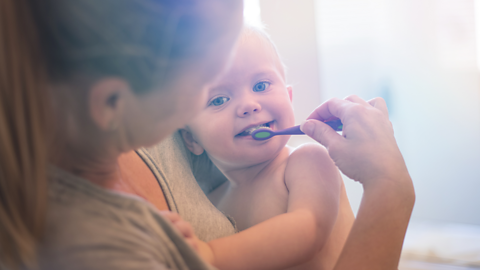
“Use a soft baby toothbrush and a smearing of baby toothpaste and do small, gentle circular motions over their emerging teeth,” says Kerry.
Always check the packaging when you’re selecting a suitable toothpaste.
“Baby toothpaste should contain around at least 1,000 ppm (parts per million) fluoride,” adds Kerry.
Tips for brushing your baby’s teeth
Any brushing is better than none, so don’t worry if it doesn’t go perfectly – keep going.
Make brushing fun. “Avoid it being forced, try and keep it fun. Let them hold the brush and explore it. Sing a song and talk them through the process,” says Kerry.
Find a comfortable position. “What I've always found is that if you sit your baby on your lap with their back to your chest or slightly to the side, you’ll have extra support. Hold them with one hand and have the toothbrush in the other.”
Let them be curious. “It's about getting your baby used to this idea of a toothbrush along with something that’ll taste different to what they've tasted before.”
Be patient. “It might not go smoothly at first – they’re going to wonder what you’re putting in their mouth and chomp down on their toothbrush. But, at the same time, the light pressure of brushing might also give them some relief from their teething discomfort.”
Don’t worry about rinsing after brushing. “Not rinsing will help keep the fluoride on their teeth.”
Get into a (flexible) routine. “In the early days, it’s about fitting brushing in around whatever else is going on, being responsive, not putting any pressure on yourself that it must be done at a set time every day.”
Visiting the dentist: When and why
Teething is time to think about registering your baby at your dentist and getting them used to the environment there too.
“Their first visit might just be sitting on your lap in the dentist’s chair,” says Kerry.
Your little one will have their milk teeth for years – they won’t start losing them until they’re around six years old, so looking after them is a must.
“The health of your child’s teeth can affect their confidence, how and what they eat and their speech and language development, so it’s really important to start healthy dental habits early,” adds Kerry.
FAQs

How do I know if my baby is teething?
The average age to start teething is 6 months old, but it’s completely normal if your baby starts teething earlier or later than this.
The experience varies from baby to baby. Some babies will sail through without any problems at all. But common signs and symptoms include sore and red gums, a mild temperature, dribbling more than usual, gnawing and chewing on things a lot and being more fretful or whingy than usual.
How can I relieve my baby’s teething pain?
Try non-medical options first, including specially designed teething rings or toys. Some can be cooled in the fridge to provide extra relief.
Comfort your baby or try and distract them, perhaps with playtime or a change of scene. If your baby is weaning, give them healthy snacks to chew on. Soft fruit, such as melon, can be soothing.
If you’ve tried these non-medical approaches and your baby is in pain, speak to your pharmacist for advice before trying teething gels or painkillers.
Is it normal for teething to cause fever or diarrhoea?
Your baby may have a slightly raised temperature when they’re teething, but they shouldn’t have a fever. If they have a fever while they’re teething, don’t put it down to teething and treat the fever.
Although diarrhoea is not recognised by the NHS as a symptom of teething, some parents report that their babies have looser stools and a sore bum.
When should I take my baby to a doctor for teething?
Teething can cause your baby lots of discomfort and disrupt their sleep, but it is a normal part of their development. It’s important to remember that it’s a different experience for every baby, so try not to compare your baby to others.
You know your baby best. If you’re worried about your baby’s development or about their teething symptoms and need advice, speak to your GP.
Your health visiting team or local wellbeing centre can also support you through the teething process and your pharmacist can advise on teething gels and painkillers. Reach out to friends and family, and other parents for emotional support too.
How long does teething last?
'Teething' is the word used to describe the whole process of your baby’s teeth coming through.
Although it can be earlier or later, most babies will start teething around 6 months and by 12 months, most babies will have their first teeth. Teething will last until they are between 2 and 3 years old and they have all 20 milk teeth.
When should children brush their own teeth?
Start brushing your child's teeth as soon as their first milk teeth appear.
The NHS recommends that children can start to brush their own teeth at seven years old.
To help you encourage your child to brush their teeth, whether they have your help or are on their own, you could use this Hey Duggee toothbrushing reward chart!
- **CBeebies' morning routines guide has lots of ideas to make the toothbrushing ritual more fun