Most children struggle with certain sounds in speech at one point or another. What can you do to help them along?
If your child is getting muddled up, or unable to say certain sounds at all, take a look at these top tips from speech and language therapist Ruth Crampton…
Ruth: Many children can find the speech sounds and words tricky. They can muddle their sounds or struggle to make certain signs at all. You can help them by recasting their words which means repeating the words correctly without highlighting their mistakes.
Ruth: But here's a few extra tips you can try at home when there's more time to focus and chat.
Ruth: Preparing your space before chatting by removing any distractions will help your child to focus on you. Turn off any noisy devices, make sure your child has nothing to obstruct their talking such as a dummy, then sit face to face with them and on their level if you can.
Ruth: Young children do not always have awareness of their mouths and how sounds are made. Playing with single sounds can help your child if they're not ready to use certain sounds and words. For example, use the sound with snake toys.
Ruth: Try to use as many words with the sounds they are struggling with.
Mum: There's thunder today, it might turn into a thunderstorm.
Child: Thunderstorm.
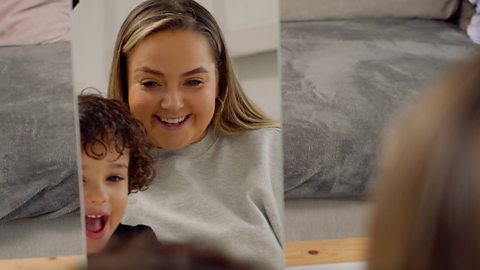
Ruth: You could also try this in front of a mirror so your child can see both yours and their own mouth movements when you're making the sounds.
Mum: Spider.
Child: Spider!
Mum: Good boy.
Ruth: Listening to the sounds in words really helps your children with learning how to say sounds. Make some cards with pictures using things that sound slightly different.
Mum: I can see a hat. Well done.
Ruth: And this will help them to recognise the range of different speech sounds.
Child 2: Three!
Dad: Ice cream.
Ruth: All children will develop at their own pace. Creating quiet moments to practise all these activities can really help. And remember to give them lots of praise when they get it right.
Mum: Good boy!
Try 'recasting' their words
This means repeating the words back to your child correctly, no matter how their attempt sounds.
"It's really important," Ruth explains.
"Children need to hear a really good model of a word to be able to think about how they're saying it."
"Give good examples of how you want your child to pronounce words accurately."
Plan and avoid distractions from chat
By removing toys and other things you know will distract your child from the environment, you can help your child focus on what you're saying and the sounds in words.
Remember to sit face to face with them whenever possible.
Have fun with sounds
Your child might not be ready to use certain sounds in words. Can you have fun making those sounds at playtime?
Use lots of words that contain the sound they're struggling with too.
Try using a mirror
This is a great way for your child to get a good look at both of your mouth movements as you say certain words and sounds.
Turn it into a game
In the film above, one mum makes some simple picture cards with objects that sound slightly different. For example, 'bat', 'cat' and 'hat'.
What if they get the same sounds wrong again and again?
"Continue to repeat those words back to them," Ruth says.
There are all sorts of things that could contribute, "can your child actually hear the difference between the accurate sound and the sound they're using? Sometimes children's hearing might be reduced so they're not picking up on some of these sounds, and they do think they're saying it accurately."
"Quite a lot of children will start to correct them themselves, but if it is persistent, get a referral to a speech and language therapist."